
Tony’s Superhero Saturdays™: Deadpool: The Merc With a Mouth Who Hid Pain Behind the Punchline

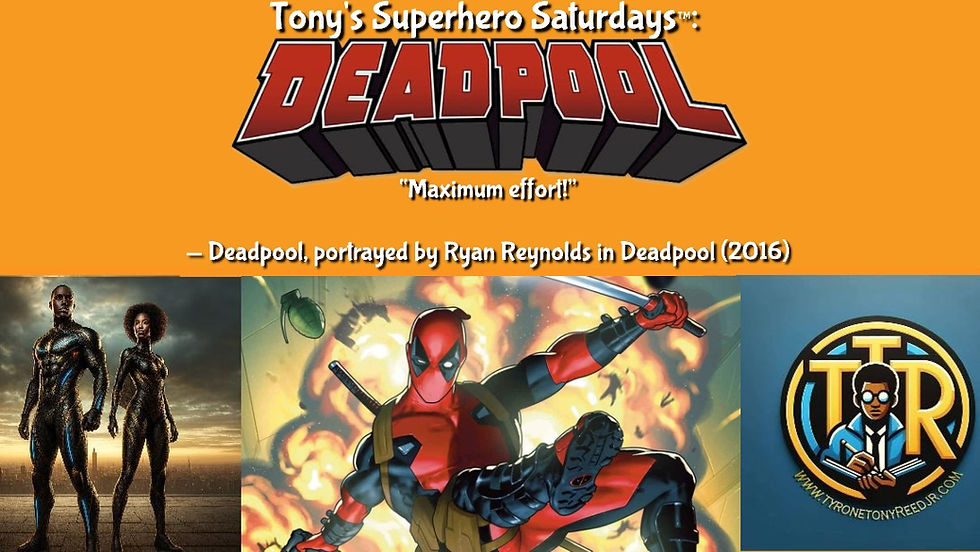
Deadpool walks into a story like he already knows how ridiculous everything is. The costume is loud. The mouth is louder. The swords are sharp. The guns are loaded. The jokes never stop long enough for the room to breathe. He mocks the villains, annoys the heroes, insults the plot, talks to the audience and treats danger like it is just another setup for a punchline.
But underneath all that noise is the reason Deadpool works. Wade Wilson is funny because he is broken. He jokes because silence would ask too many questions. He laughs because pain keeps trying to speak first. He turns violence, trauma, rejection and regret into sarcasm because if he can make the world laugh, maybe the world will not notice how deeply wounded he really is.
That is what makes Deadpool more than a gimmick. He is not just Marvel’s “Merc with a Mouth.” He is the man behind the mask who uses humor like armor, chaos like camouflage and madness like a survival strategy. His story may be bloody, bizarre and inappropriate in all kinds of ways, but at the center of it is something very human: a damaged man trying to live with himself.
For Tony’s Superhero Saturdays™, Deadpool deserves the spotlight because his popularity says something about us too. People love him because he is outrageous, but they also recognize something honest in him. A lot of people know what it feels like to laugh so they do not cry. A lot of people know what it feels like to perform confidence while carrying pain. A lot of people know what it feels like to hide a wound behind a joke and hope nobody asks what is underneath.
And today gives us another reason to spotlight him. October 3 is the birthday of Rob Liefeld, the artist and co-creator who helped bring Deadpool into the Marvel Universe alongside writer Fabian Nicieza. That makes this the perfect moment to look past the red suit, the swords, the jokes and the chaos to explore why Wade Wilson became more than a loudmouth mercenary. He became one of Marvel’s most unforgettable survivors.

Who Is Deadpool?
Deadpool is Wade Wilson, a mercenary whose life becomes twisted by experimentation, cancer, healing abilities and a mind that never seems to stay inside the lines. Created by Rob Liefeld and Fabian Nicieza, Deadpool first appeared in The New Mutants #98 in 1991 before growing into one of Marvel’s most recognizable and unpredictable characters.
At first glance, Deadpool looks like a walking contradiction. He can be heroic and selfish. Hilarious and cruel. Loyal and reckless. Ridiculous and tragic. He can save the day while making everyone wish he would stop talking. That tension is part of the appeal.
Wade is not the polished hero who always says the noble thing at the right time. He is not the clean symbol on a poster. He is messy, violent, wounded, unstable and often his own worst enemy. Yet somehow, beneath the chaos, there is still a person who wants connection. He wants love. He wants meaning. He wants to matter, even when he acts like nothing matters at all.
That is why Deadpool has lasted. The joke got people’s attention. The pain kept him interesting.
The Healing Factor That Could Not Heal Everything
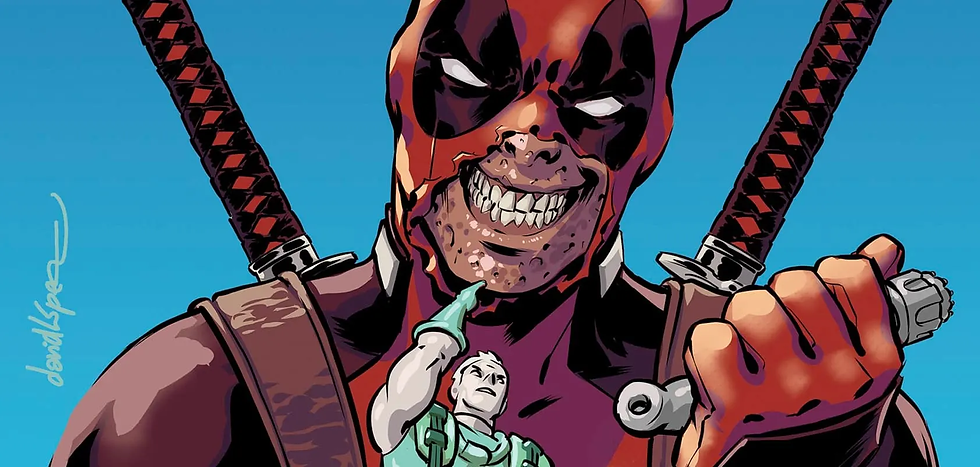
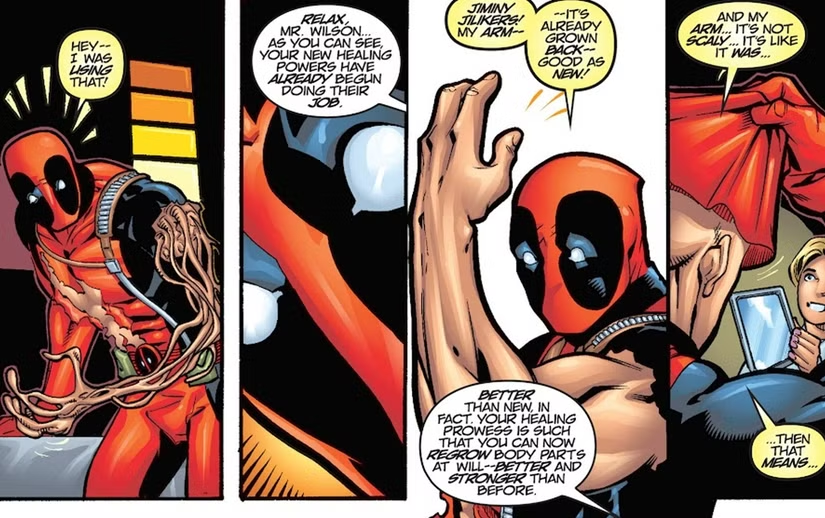
Deadpool’s healing factor is one of his most famous powers. He can recover from wounds that would kill almost anyone else. He can be shot, stabbed, burned, crushed, dismembered and still come back. His body refuses to stay down, which makes him one of Marvel’s most difficult characters to kill.
But his healing factor is also one of the saddest things about him. Because it does not heal everything. It does not erase the trauma. It does not restore his old life. It does not remove the loneliness. It does not fix the damage inside his mind. It does not give him peace. In some ways, it forces him to keep living with pain that never fully leaves.
That is a powerful idea. Sometimes people survive what should have destroyed them, but survival is not the same as wholeness. They keep moving. They keep joking. They keep showing up. They keep functioning. But inside, there are wounds that no one sees because the outside looks like it recovered.
Deadpool’s body can repair itself. His soul is more complicated. That makes him more than a violent cartoon character. It makes him a strange reflection of people who have learned how to keep going while still carrying what hurt them.
Humor as Armor
Deadpool’s mouth is one of his greatest weapons. Not because every joke is funny. Because every joke tells us something.
Wade Wilson uses humor to control the room. He jokes when things get dangerous. He jokes when things get awkward. He jokes when things get serious. He jokes when he is scared, angry, lonely or in pain. He makes himself the punchline before anyone else can.
That is defense. Comedy becomes his shield. Sarcasm becomes his mask. If he can keep everyone laughing, he does not have to sit still long enough for the hurt to catch him.
That is why his humor connects with so many people. Behind all the madness is a truth many people understand. Sometimes the funniest person in the room is not the happiest. Sometimes the person who keeps everyone entertained is also the person trying hardest not to fall apart. Sometimes laughter is not proof that nothing hurts. Sometimes laughter is how someone survives what still hurts.
Deadpool is excessive, but the emotional truth underneath him is real. He shows us what happens when a broken person turns pain into performance.
Breaking the Fourth Wall
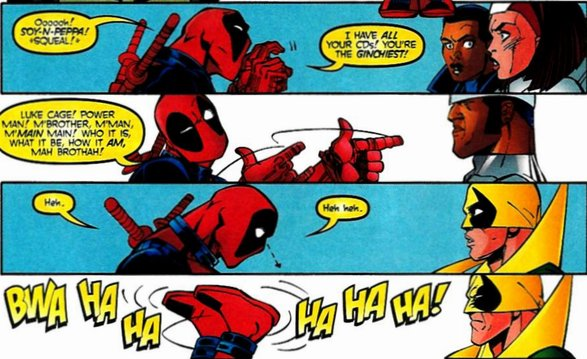
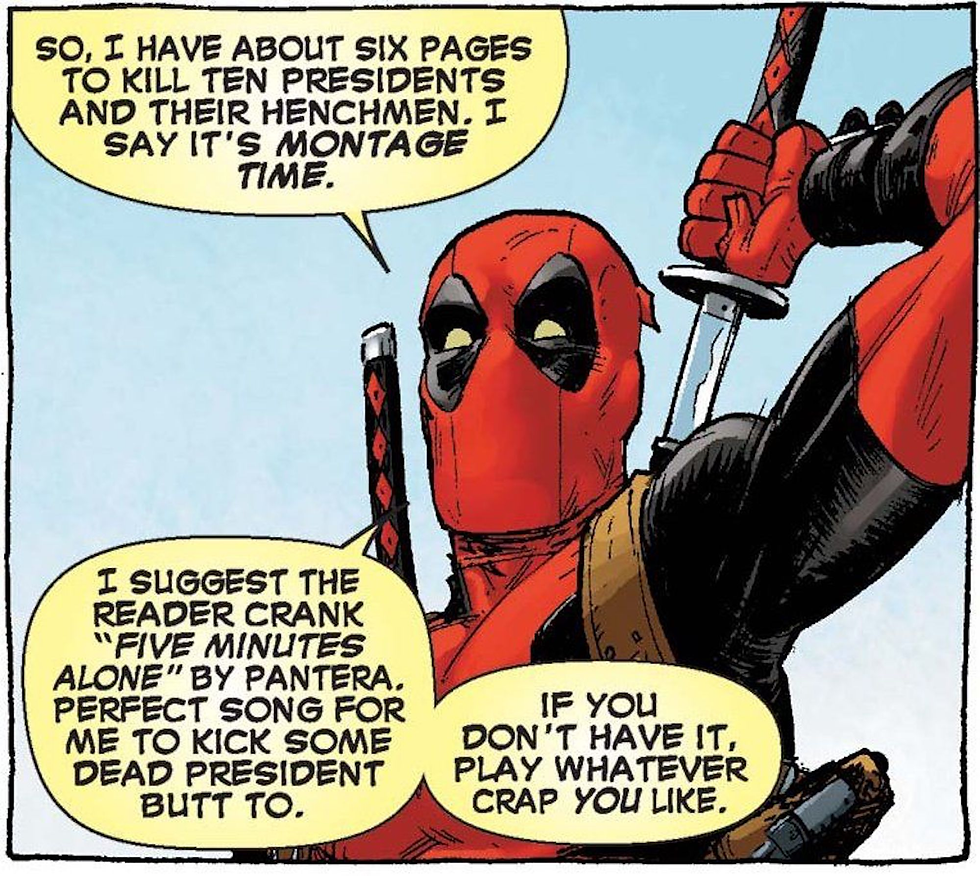
Deadpool’s fourth-wall breaking is one of his signature traits. He knows he is in a comic. He talks to the reader. He comments on the story. He mocks the rules of the medium. In the movies, Ryan Reynolds’ version of Deadpool took that same energy and made it one of the character’s biggest mainstream strengths.
That fourth-wall humor makes Deadpool feel unpredictable, but it also says something deeper about him. Deadpool sees through the performance. He knows the world around him is strange. He knows the rules do not always make sense. He knows stories repeat themselves, heroes pose dramatically, villains monologue and comic book universes keep finding ways to resurrect, reboot and complicate everything.
In a way, Deadpool says what the audience is already thinking. That is part of his power.
He cuts through the seriousness with a joke, but the joke often exposes the truth. He reminds us not to worship the costume so much that we forget the person inside it. He reminds us that superhero stories can be fun, absurd, messy and emotional at the same time.
Deadpool breaks the fourth wall because regular walls were never going to hold him anyway.
Ryan Reynolds and the Movie Breakthrough
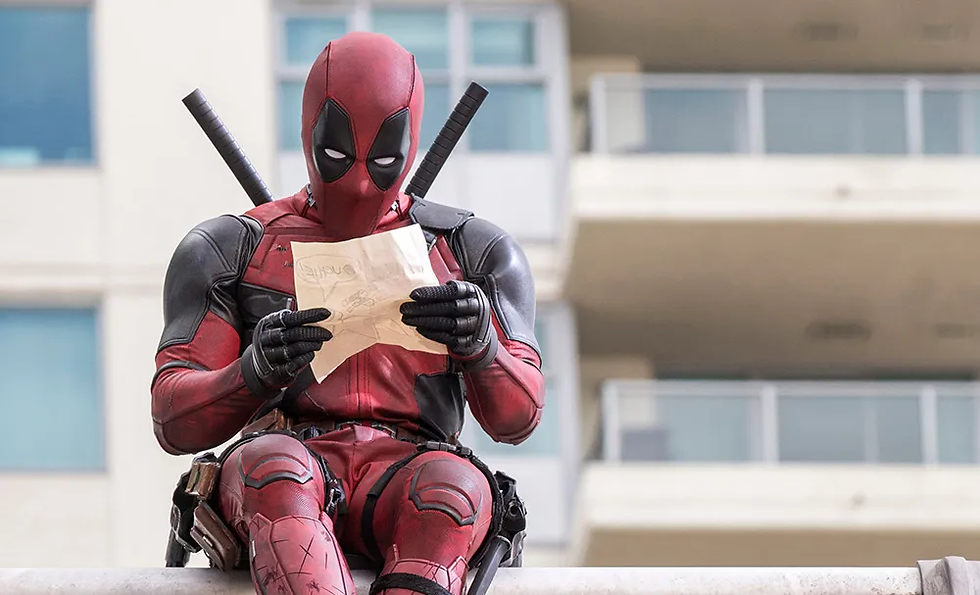
Ryan Reynolds helped turn Deadpool into a pop culture phenomenon. The 2016 Deadpool film gave audiences a version of Wade Wilson that was crude, violent, fast-talking and deeply aware of itself, but it also understood that the character needed heart. The love story with Vanessa gave the madness an emotional center. Wade was not just fighting enemies. He was fighting shame, sickness, loss and the fear that he had become too damaged to be loved.
That mattered. Deadpool 2 pushed the character further by adding grief, found family and the idea that even someone as chaotic as Wade could still care deeply about saving someone else. Then Deadpool & Wolverine brought him into the Marvel Studios conversation alongside Hugh Jackman’s Wolverine, showing once again how well Deadpool works when comedy, violence, friendship and brokenness collide.
The films are outrageous, but Deadpool’s success is not only about shock value. The reason people keep coming back is because Wade Wilson is ridiculous in a way that still feels emotionally recognizable. He says the wrong thing, makes everything awkward, jokes through pain and still somehow wants to be better than his worst impulses. That is a character people remember.

Why Deadpool Still Matters
Deadpool matters because he refuses to fit neatly into one box. He is not a traditional superhero, but he is not only a villain either. He is not a clean role model, but he can still reveal truth. He is not always admirable, but he is often painfully honest. He is not wholesome, but he is human in a way that makes his chaos difficult to ignore.
He speaks to a generation that understands masks. Not just superhero masks, but emotional masks. The online mask. The funny mask. The “I’m good” mask. The mask people wear when they do not want others to know how tired, hurt, ashamed, lonely or afraid they really are.
Deadpool turns that mask into a character. He reminds us that humor can be a gift, but it can also become a hiding place. He reminds us that surviving damage does not mean pretending the damage never happened. He reminds us that people can be loud on the outside because the silence inside is too heavy.
That is what gives Deadpool surprising depth. Behind the swords, bullets, jokes and absurdity is a man who keeps asking whether someone as damaged as he is can still be loved, still be useful and still choose something better. That question is more powerful than the punchlines.

What Deadpool Teaches Us
Deadpool teaches us that pain can wear a smile. He teaches us that broken people are not always quiet, soft or easy to recognize. Sometimes they are loud. Sometimes they are sarcastic. Sometimes they are difficult. Sometimes they make everything a joke because the truth feels too heavy to carry straight.
He also teaches us that healing is not only about surviving. It is about facing what survival did to you. Wade Wilson can regenerate from almost anything, but his deeper journey is not about whether his body can recover. It is about whether his heart can. It is about whether he can move beyond self-destruction, stop hiding behind the joke long enough to be honest and believe that he is more than the worst thing that ever happened to him.
That is a message worth pulling out of the madness. Because many people are walking around with wounds they have learned to disguise. They may not wear red and black. They may not carry swords. They may not break the fourth wall. But they know what it feels like to laugh while hurting.
Deadpool reminds us that the joke may get attention. But the wound still needs care.

Final Reflection: The Man Behind the Mouth
Deadpool is funny. He is violent. He is ridiculous. He is inappropriate. He is chaotic. He is exhausting.
But he is also one of Marvel’s most fascinating characters because beneath the madness is a man trying to survive himself.
Wade Wilson’s greatest weapon may be his mouth, but his greatest battle is internal. He can heal from bullets, blades and explosions, but the harder fight is learning what to do with shame, grief, fear and loneliness. That is where Deadpool becomes more than a punchline.
He becomes a reminder.
Do not assume the loudest person in the room is whole.
Do not assume the funniest person is fine.
Do not assume the mask means there is no wound underneath.
Deadpool may hide pain behind the punchline, but the reason he endures is because the pain is part of the story. The laughter matters. The action matters. The chaos matters. But the heart underneath all of it is what keeps people watching, reading and caring.
Because sometimes the hero is not the person who looks unbroken. Sometimes the hero is the person who keeps fighting even when brokenness keeps talking back. And if Deadpool teaches us anything, it is this: A joke can hide the wound. But it cannot heal it.
Order autographed copies of S.O.L.A.D.™: Soldiers of Light Against Darkness™ at www.tyronetonyreedjr.com/the-shop — because true heroes do not only fight what attacks them from the outside. Some have to confront the pain behind the mask before they can become more than what hurt them.


Comments