
Tony’s Superhero Saturdays™: Jonny Quest — Adventure Runs in the Family


Long before superheroes dominated television schedules, but after animation had already proven it could inspire courage, imagination, and heroism, there came a different kind of animated legend—one that didn’t rely on capes, secret identities, or superhuman strength.
Jonny Quest arrived not to replace superheroes, but to stand beside them.
Premiering in 1964, Jonny Quest introduced audiences to a grounded, pulse-pounding form of heroism rooted in science, exploration, and global danger. Where earlier animated heroes often embodied mythic ideals, Jonny Quest placed its characters in a world that felt startlingly real—one shaped by Cold War anxiety, technological ambition, espionage, and the very human cost of discovery.
At the center of the story was not a masked savior, but a boy—young, brave, and constantly learning—surrounded by adults who understood that knowledge could be both salvation and threat. The Quest legacy wasn’t about invulnerability; it was about preparedness, trust, and intellect under pressure.
This was adventure as education. Danger as consequence. Heroism as teamwork.
SPECIAL NOTE: This series has a very special place in my heart and mind. My dad grew up watching the original series and introduced it and the1980s reboot to me, which I fell in love with. I actively sought out the Jonny Quest television movies when they aired on television and was super excited to watch the 1990s series with my dad. I'll always love Jonny Quest in all of its iterations.
A Family Built for the Unknown
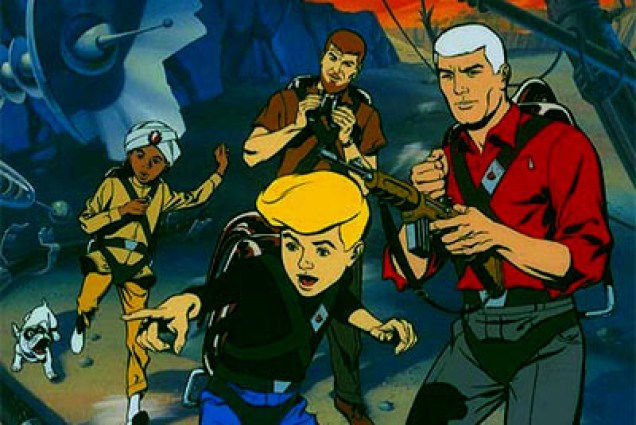
Rather than focusing on a lone hero, Jonny Quest introduced audiences to a team—a family forged not by blood alone, but by shared purpose:
A brilliant scientist pushing the boundaries of human knowledge
A seasoned bodyguard trained to protect at all costs
A loyal best friend whose presence quietly expanded representation in adventure storytelling
And a boy learning—far too early—that curiosity often comes with a price
Together, the Quest Team faced threats that felt ripped from tomorrow’s headlines: rogue scientists, foreign agents, experimental weapons, ancient mysteries, and conspiracies that blurred the line between science fiction and reality.
A Legacy That Endured
Across decades, Jonny Quest has evolved through:
The original 1960s animated series
Later animated revivals and reimaginings
Feature-length animated films
Comic book expansions
Novelizations and adaptations
Toys, collectibles, and pop-culture homages
Yet through every iteration, one truth remained constant:
Adventure belongs to those willing to ask questions—and brave enough to face the answers.
This Tony’s Superhero Saturdays™ will take its time exploring the full Quest legacy—its characters, its villains, its science-fiction fears, and its enduring relevance. Not as nostalgia alone, but as a foundational chapter in heroic storytelling that proved you don’t need superpowers to be heroic—only courage, curiosity, and the right people at your side.
To understand why Jonny Quest still matters, we must begin where it all started.

The Original Series (1964): Where the Quest Began
When Jonny Quest debuted in 1964, it didn’t look or feel like anything else on television.
Produced by Hanna-Barbera and created by Doug Wildey, the series was bold, grounded, and unsettling in ways children’s animation rarely dared to be. Unlike the slapstick comedy dominating Saturday mornings, Jonny Quest leaned into real danger, real weapons, and real consequences.
This was a world shaped by:
Cold War paranoia
Nuclear anxiety
Scientific experimentation gone wrong
Espionage, mercenaries, and shadowy global threats
The animation style itself reflected this seriousness—angular character designs, moody color palettes, and cinematic action sequences influenced by pulp adventure serials and spy thrillers. Characters could be injured. Villains could be terrifying. And death, while not graphic, was implied in ways that lingered.
What truly set the series apart, however, was its premise.
Jonny wasn’t a superhero. He was a child surrounded by adults who understood the stakes.
And they still let him stand beside them.
The Quest Team: Heroes Without Capes
At the heart of the original series was the Quest Team, a found family bound not by blood alone, but by loyalty, trust, and shared danger. Each member brought something essential—and without any one of them, the mission failed.
Jonny Quest — The Boy Who Wouldn’t Back Down
Jonny Quest is the emotional core of the series. Athletic, impulsive, and endlessly curious, Jonny represents both the promise and peril of youth. He doesn’t always listen. He doesn’t always understand the danger. But when the moment comes, he never runs away.
Jonny’s heroism isn’t about fearlessness—it’s about refusal. He refuses to abandon his friends. Refuses to let injustice go unanswered. Refuses to be sidelined simply because he’s young.
In many ways, Jonny is the audience’s stand-in: learning the world is dangerous, complicated, and unfair—but choosing courage anyway.
Dr. Benton Quest — The Man Who Knows Too Much
Dr. Benton Quest is one of animation’s earliest portrayals of the morally burdened genius. A leading scientist working at the cutting edge of technology, Dr. Quest understands that knowledge is power—and power attracts enemies.
He is not reckless. He is cautious, ethical, and deeply aware of the consequences of his work. Yet the very brilliance meant to advance humanity repeatedly places his family in danger.
Dr. Quest represents the adult reality Jonny is growing into:
Intelligence demands responsibility—and sometimes sacrifice.
Race Bannon — The Shield Between Danger and Family
Race Bannon is the muscle, the tactician, and the moral backbone of the team. A former government agent, Race is disciplined, loyal, and constantly alert. He doesn’t underestimate threats—and he doesn’t overestimate himself.
Race’s role is simple and sacred:
Protect Jonny. Protect the mission. Protect the innocent.
He grounds the series in realism, often serving as the first line of defense when things go wrong—and they frequently do.
Hadji Singh — Wisdom Beyond His Years
Hadji Singh is Jonny’s closest companion and one of the most significant characters in the show’s legacy. Calm where Jonny is impulsive, spiritual where others are scientific, Hadji brings balance to the team.
While some elements of Hadji’s portrayal reflect the era in which the show was made, his importance cannot be overstated. He was one of the earliest examples of a non-white co-lead in an American animated adventure series—and he was portrayed as intelligent, capable, and brave.
Hadji often serves as Jonny’s moral compass, reminding him—and the audience—that strength takes many forms.
Bandit — Loyalty With Four Legs
Bandit, the team’s bulldog, may not speak, but he’s as brave as any human member of the Quest Team. Fiercely loyal and often the first to sense danger, Bandit embodies the theme of unconditional trust that runs throughout the series.
In a show filled with advanced technology and high-stakes threats, Bandit is a reminder that companionship itself is a kind of superpower.

The Villains of the Original Era: Fear With a Face
The original Jonny Quest villains were not cartoonish. They were spies, warlords, mad scientists, mercenaries, and shadow organizations—often loosely inspired by real-world fears of the time.
Unlike many animated antagonists, these villains:
Used real firearms
Had believable motivations
Often represented unchecked ambition or corruption
They weren’t defeated by luck or slapstick—but by teamwork, strategy, and moral clarity.
One of the most groundbreaking aspects of the original Jonny Quest was its refusal to soften danger for young audiences. The villains Jonny and the Quest Team faced were not exaggerated monsters or comedic foils—they were credible threats, often rooted in the real fears of the Cold War era.
These antagonists were spies, arms dealers, rogue scientists, warlords, and mercenaries—men driven by greed, power, ideology, or revenge. Many episodes leaned into espionage and global tension, giving the series an almost documentary-level intensity for its time.
The result? A children’s cartoon that trusted its audience to handle complexity.
Dr. Zin — The Face of Global Conspiracy
Dr. Zin is arguably the most iconic villain of the original series. A shadowy criminal mastermind, Zin operated from behind the scenes, orchestrating plots that threatened global stability.
He was brilliant, ruthless, and patient—everything Dr. Quest feared a corrupted scientist could become. Zin’s vendetta against the Quest family made him more than just an enemy of the week; he was a recurring symbol of intellect without ethics.
Zin represented a chilling idea:
Knowledge without conscience is its own form of evil.

Jade — The Silent Assassin
Jade was one of the most unsettling figures to appear in the series. A mercenary assassin often working for Dr. Zin, Jade’s calm demeanor and lethal precision made her especially terrifying.
She rarely spoke. She didn’t gloat. She simply executed her missions.
For many viewers, Jade was the first animated villain who felt truly dangerous—a reminder that evil doesn’t always announce itself loudly.
The International Crime Syndicates
Beyond individual villains, Jonny Quest frequently depicted entire criminal networks operating across borders. These groups trafficked weapons, stole technology, and attempted coups—all reflecting real-world anxieties of the 1960s.
By framing villains as organized systems rather than lone madmen, the show subtly taught viewers an important lesson:
Sometimes the greatest threat isn’t one person—it’s a structure built on corruption.
Mad Scientists and Rogue Innovators
If Dr. Quest represented responsible innovation, many villains represented its opposite: scientists willing to sacrifice lives for progress, profit, or prestige.
These antagonists mirrored society’s fear of:
Nuclear technology
Biological experimentation
Surveillance systems
Unchecked artificial intelligence
In this way, Jonny Quest functioned almost as a warning—an animated reminder that scientific advancement must be guided by ethics.
Why These Villains Still Matter
The villains of the original Jonny Quest era endure because they were believable.
They didn’t want to “rule the world” for fun. They wanted power, leverage, control, and advantage.
They reflected real human motivations—and that realism elevated Jonny’s heroism. Standing against cartoon monsters is easy. Standing against calculated, intelligent, morally empty people? That requires courage.
The End of the Original Run: A Legacy Paused, Not Finished
The original run of Jonny Quest was brief but seismic.
After airing only one season (26 episodes) between 1964 and 1965, the series came to an end—not because it lacked impact, but because it was expensive, demanding, and far ahead of its time. The detailed animation, realistic action, and mature storytelling required resources that network television wasn’t yet prepared to sustain long-term.
Yet cancellation didn’t mean disappearance.
Through reruns, syndication, and word of mouth, Jonny Quest became something rare:a cult classic before that term existed.
Children who grew up watching Jonny didn’t forget him. They carried the memory of danger, intelligence, and globe-spanning adventure into adulthood. And as the years passed, one truth became increasingly clear:
The Quest family was dormant—but not done.

A New Era Begins: The 1980s Revival of Jonny Quest
By the 1980s, animation—and its audience—had changed.
Television networks recognized that viewers who had grown up with Jonny Quest were now adults with nostalgia and influence. At the same time, a new generation was hungry for action-oriented animation that treated them with respect.
That convergence led to The New Adventures of Jonny Quest, which premiered in 1986 as part of The Funtastic World of Hanna-Barbera.
This revival was not a remake—it was a continuation.
The world was still dangerous. The threats were still global. And Jonny was still learning how to survive in it.
What Changed—and What Stayed the Same
Jonny, Older but Still Curious
In the 1980s series, Jonny remained the adventurous core of the show, but he was portrayed with slightly more maturity and self-awareness. He was still impulsive—but more thoughtful. Still brave—but beginning to understand consequences.
Dr. Quest and Race Bannon: Stability in a Changing World
Dr. Benton Quest and Race Bannon continued to serve as the intellectual and protective anchors of the team. Their roles emphasized experience, caution, and mentorship—reflecting an era where adults were once again being portrayed as competent guides rather than background figures.
Hadji’s Continued Presence
Hadji remained part of the Quest Team, maintaining the spirit of loyalty and balance established in the original series. While portrayals evolved with the times, his role as Jonny’s closest ally remained essential.
A Shift in Tone for a New Generation
The 1980s revival softened some of the original series’ harsher edges—but it did not abandon its core identity.
Violence was toned down, but danger remained
Villains were less grim, but stakes were still global
Action became more adventurous than unsettling, but consequences still mattered
This version of Jonny Quest served as a bridge—introducing the franchise to new viewers while honoring the DNA that made it iconic.
Most importantly, it proved something vital:
Jonny Quest could evolve without losing its soul.
Why the 1980s Revival Matters
While The New Adventures of Jonny Quest didn’t achieve the same mythic status as the 1964 original, it performed a crucial function:
It kept the franchise alive
It reintroduced the Quest family to television
It laid the groundwork for future reinterpretations
It affirmed that adventure-driven storytelling still had a place
Without the 1980s revival, the darker, more ambitious reinvention that followed might never have happened.
Setting the Stage for Reinvention
By the end of the 1980s, the Jonny Quest universe stood at a crossroads.
Animation was becoming more sophisticated.Audiences were aging.Stories were growing more serialized and complex.
The question wasn’t whether Jonny Quest would return again.
It was how far the series was willing to go.
Bridging the Generations: The Telefilms That Deepened the Quest Mythos
Before Jonny Quest was reinvented for a new era, the franchise took a crucial step forward through two made-for-television films. These telefilms didn’t simply revive the brand—they expanded its emotional and narrative scope, addressing unanswered questions that had lingered since 1964.
These stories proved the Quest legacy was ready to grow up.
Jonny’s Golden Quest (1993): Legacy, Loss, and the Shadow of the Past
Released in 1993, Jonny’s Golden Quest marked a turning point for the franchise. This was not just another adventure—it was a story about inheritance, responsibility, and the long shadow cast by the previous generation.
The film introduces Jessie, the pre-teen daughter of Race Bannon, was first introduced in Jonny’s Golden Quest, marking a pivotal expansion of the Jonny Quest mythos. Her introduction shifted the franchise’s focus from adventure alone to the personal cost of that adventure, especially on families. Through Jessie, the story acknowledges that Race’s life as a protector and operative had consequences beyond the mission. She is portrayed as intelligent, strong-willed, and emotionally guarded—keenly aware of the danger surrounding the Quest Team and resentful of the instability it caused her upbringing. Jessie’s presence reframes Race not just as Jonny’s guardian, but as a father forced to confront the sacrifices his duty demanded.

For the first time, Jonny Quest openly examines family fractures.
Jonny’s Mother: A Long-Awaited Revelation
Perhaps the most emotionally significant moment in Jonny’s Golden Quest is the long-overdue acknowledgment of Jonny’s mother, Rachel Bannon,—a figure who had been conspicuously absent from the franchise since its inception.
Rather than offering simple answers, the film treats her absence with gravity, reinforcing the idea that:
Adventure often comes at a personal cost.
This revelation reframes Dr. Quest not just as a brilliant scientist, but as a man shaped by loss—and Jonny not just as an adventurous boy, but as a child growing up in the wake of sacrifice.
Jonny Quest vs. the Cyber Insects (1995): Science Without Ethics
Two years later, the franchise leaned harder into science fiction horror with Jonny Quest vs. the Cyber Insects—a story that feels eerily prophetic even today.
This telefilm centers on cybernetic insects, created through unethical experimentation and advanced technology gone awry. The narrative explores themes that echo the original 1960s paranoia but through a modern lens:
Artificial intelligence
Technological dependency
Scientific ambition unchecked by morality
Cloning and Identity
One of the most unsettling elements of the film is its flirtation with cloning and replication, forcing Jonny and the team to confront questions of identity, autonomy, and what it truly means to be human.
These concepts weren’t window dressing—they were warnings.
By confronting science stripped of conscience, Cyber Insects positioned Jonny Quest squarely within the evolving science-fiction landscape of the 1990s, where technology was no longer just a tool—but a threat.
Together, Jonny’s Golden Quest and Cyber Insects accomplished something critical:
They expanded the emotional universe of the Quest family
They introduced generational trauma and unresolved history
They deepened the franchise’s relationship with science fiction
They proved Jonny Quest could handle darker, more complex storytelling
Most importantly, they prepared audiences—both young and old—for what was coming next.
These films were not endpoints. They were bridges.
Standing at the Edge of Reinvention
By the mid-1990s, the pieces were in place:
A legacy built on realism and danger
Characters tested by loss, ethics, and identity
A world increasingly shaped by technology and uncertainty
The franchise was ready for its boldest transformation yet.
The Real Adventures of Jonny Quest (1996): Reinvention for a New World
By 1996, the world Jonny Quest once navigated no longer existed in the same way.
The Cold War had ended. Technology was accelerating at frightening speed.Audiences—especially younger ones—were more media-literate, more skeptical, and hungry for stories that didn’t talk down to them.
That reality gave rise to The Real Adventures of Jonny Quest, a bold reinvention that acknowledged the past while refusing to be bound by it.
This was not nostalgia. This was evolution.
A Shift in Tone: From Adventure to Consequence
The Real Adventures of Jonny Quest leaned into darker storytelling, serialized arcs, and psychological weight. Danger was no longer episodic—it lingered. Actions had ripple effects. Characters carried emotional scars forward rather than resetting each week.
The series recognized a crucial truth:
Jonny was no longer just a boy reacting to danger—he was becoming someone shaped by it.
Updated Character Profiles: Growth, Complexity, and Change
Jonny Quest — From Adventurer to Protagonist
In this era, Jonny Quest is older, sharper, and more introspective. Still brave, still curious—but now questioning why danger keeps finding him.
Jonny struggles with:
Identity beyond his father’s legacy
Responsibility without full control
Anger, fear, and doubt
This Jonny doesn’t just survive adventures—he processes them. He becomes the emotional lens through which the audience experiences the cost of a life spent on the edge.
Dr. Benton Quest — Genius Under Scrutiny
Dr. Benton Quest is portrayed with greater moral complexity than ever before. His inventions are powerful—but increasingly controversial. Governments want access. Corporations want control. Villains want leverage.
Dr. Quest now faces a recurring question:
At what point does knowledge stop serving humanity and start endangering it?
His relationship with Jonny is more strained, more honest, and more human.
Hadji Singh — Wisdom Refined
Hadji Singh receives a more grounded and modernized portrayal. Less mystical spectacle, more cultural intelligence and emotional insight.
Hadji continues to serve as Jonny’s balance—challenging impulsiveness with reflection and reminding the team that strength without wisdom leads to ruin.
Bandit — The Constant
Bandit remains unchanged—and that’s intentional. Amid shifting tones and darker themes, Bandit represents continuity, loyalty, and innocence preserved.
Race Bannon — Protector, Mentor, Soldier
Race Bannon evolves into a hardened veteran carrying years of accumulated experience. He remains fiercely loyal, but his role expands from protector to mentor—guiding Jonny not just through combat, but through moral decisions.
Race understands something Jonny is only beginning to learn:
Survival isn’t just physical—it’s emotional.
Jesse Bannon — Legacy, Defiance, and the Cost of Inheritance
In The Real Adventures of Jonny Quest, Jessie Bannon is more than a supporting character — she is a narrative statement. As the daughter of Race Bannon, Jessie enters the series carrying the weight of her father’s reputation without having asked for it. She has grown up in the margins of missions, secrets, and absences — fully aware that her father’s loyalty to the Quest family has often come at the expense of stability. This awareness shapes her personality: she is sharp-tongued, emotionally guarded, skeptical of authority, and unwilling to romanticize the Quest lifestyle.
Unlike Jonny, who was raised inside adventure, Jessie grew up affected by it.
Jessie challenges the idea that legacy is automatically noble. She questions why danger is normalized, why children are exposed to trauma, and why sacrifice is so easily justified in the name of progress. In doing so, she becomes one of the most grounded voices in the series — often serving as a moral disruptor rather than a cheerleader for heroics.
Her relationship with Race Bannon is one of the most emotionally complex in the franchise. Race is disciplined, duty-driven, and protective to a fault; Jessie is independent, resistant to control, and acutely aware of what that discipline has cost her. Their dynamic reframes Race’s role on the team: he is no longer just the shield — he is a man reckoning with the personal consequences of a life built on protection.
With Jonny, Jessie acts as both peer and provocation. She refuses to place him on a pedestal simply because of his history or proximity to danger. At times she pushes him to mature faster than he’s ready for, forcing Jonny to examine whether he’s participating in adventure by choice or by inheritance. Their interactions underscore one of the series’ central questions:
Are we defined by the lives we’re born into — or the ones we choose?
Jessie’s presence reinforces The Real Adventures’ commitment to realism. She is not fearless. She is not eager to be endangered. Yet when moments demand courage, she steps forward — not out of thrill-seeking, but out of conviction. Her bravery is deliberate, reluctant, and earned.
In a series focused on evolution, Jessie Bannon represents the future refusing to be passive. She embodies the idea that heroism is not about embracing danger blindly, but about deciding when something is worth the risk.
And in doing so, she completes the generational arc of Jonny Quest — proving that the Quest legacy is not just about survival, but about accountability.

Returning Villains: Old Threats, New Depth
Dr. Zin Returns
Dr. Zin reemerges, more calculating and dangerous than before. No longer just a criminal mastermind, Zin now embodies ideological opposition—challenging Dr. Quest’s ethics and Jonny’s future.
His return reinforces the idea that some evils don’t disappear—they adapt.
New Villains for a New Era
Jeremiah Surd
Perhaps the most infamous antagonist of this era, Jeremiah Surd is a technological savant with a personal vendetta against Dr. Quest.
Surd represents:
Technology weaponized by resentment
Intelligence divorced from empathy
The danger of genius fueled by ego
He isn’t interested in chaos—he wants vindication.

QuestWorld: Science Meets the Digital Frontier
One of the most ambitious additions to the franchise was QuestWorld, a virtual-reality environment that blended cyberspace with storytelling.
QuestWorld allowed:
Exploration of digital identity
Visual metaphors for control and entrapment
A bridge between real-world danger and virtual consequence
Long before “the metaverse” entered popular vocabulary, The Real Adventures was already interrogating what happens when humanity escapes into simulations.


Themes and Lessons: Why This Era Mattered
The Real Adventures of Jonny Quest tackled themes rarely addressed in children’s animation at the time:
Ethics of innovation
Legacy vs. autonomy
Trust in authority
The psychological cost of heroism
Growing up under pressure
This wasn’t a rejection of adventure—it was an acknowledgment that adventure changes you.
Why It Was Needed—and Why It’s Missed
The series was ahead of its time.
It anticipated:
Serialized storytelling
Darker, character-driven animation
Moral ambiguity
Sci-fi grounded in consequence
While its run was relatively short, its influence is undeniable. Shows like Young Justice, Batman Beyond, and Avatar: The Last Airbender owe part of their DNA to the risks The Real Adventures of Jonny Quest took.
And that’s why it’s missed.
Not because it replaced the original—but because it proved Jonny Quest could grow up with his audience.
Standing at the End of the Quest
By the time The Real Adventures of Jonny Quest concluded, the franchise had come full circle:
From pulp adventure
To Cold War realism
To generational reckoning
To digital-age reflection
What remained constant was the core truth:
Adventure isn’t about danger—it’s about who you become while facing it.
Comics, Novels, and Expanded Media: The Quest Beyond Television
While Jonny Quest began on television, the story never stayed confined there. Over the decades, the franchise expanded into comics, novels, and crossover storytelling—each iteration adding layers to the mythos and introducing Jonny to audiences who may have never seen the original series.
In the comic book world, Jonny Quest found new life through publishers like DC Comics, which folded the Quest universe into its broader Hanna-Barbera revival initiatives. These modern comics often reimagined the characters with darker tones, sharper dialogue, and themes more aligned with contemporary readers—emphasizing espionage, science ethics, and psychological consequence.
Jonny, Dr. Quest, Race, and Hadji were no longer just animated adventurers—they were characters capable of sustaining long-form storytelling alongside superheroes.

Novelizations and tie-in books also helped cement the franchise’s longevity, allowing readers to sit inside Jonny’s head, explore Dr. Quest’s moral dilemmas, and feel the tension of missions that television runtime couldn’t always fully unpack.
Across all formats, one thing remained consistent:
The Quest universe thrives when it treats intelligence and danger with equal respect.
Films, Merchandise, and Toys: Adventure Made Tangible
Beyond story, Jonny Quest became something you could hold.
From action figures and playsets to lunchboxes, board games, and collectibles, the franchise embedded itself into childhoods across generations. The Quest Team wasn’t just something you watched—it was something you played, reenacted, and imagined yourself alongside.
Telefilms like Jonny’s Golden Quest and Jonny Quest vs. the Cyber Insects functioned as cinematic events for fans, offering a sense of scale and importance that reinforced the idea that this universe mattered.
Even today, vintage Jonny Quest merchandise remains highly sought after, a testament to the series’ enduring design language and cultural imprint. The sharp silhouettes, bold colors, and grounded realism gave the franchise a visual identity that aged gracefully—never feeling disposable or trendy.
Adventure, after all, is timeless.
Cultural Influence and Legacy: Why Jonny Quest Still Matters
Jonny Quest didn’t just entertain—it redefined what animated adventure could be.
Long before serialized storytelling became standard, Jonny Quest trusted its audience with complexity. Long before “dark reboots” became fashionable, it showed that danger and morality could coexist in stories meant for younger viewers.
Jonny Quest proved that heroes don’t need superpowers to be compelling—only courage, curiosity, and community.
More importantly, it presented family as a team:
Not perfect
Not traditional
But united by loyalty and purpose
That idea—that heroism is often collective—remains one of its greatest gifts.

S.O.L.A.D.™ Reflection: The Call to Stand, Learn, and Choose the Light
At its core, Jonny Quest has always been about more than adventure. It’s about standing in the presence of danger and choosing wisdom over fear.
That same truth runs through S.O.L.A.D.™: Soldiers of Light Against Darkness™.
Like Jonny and the Quest Team, the Soldiers of Light are not born into easy lives. They are shaped by knowledge they didn’t ask for, responsibilities they didn’t seek, and battles they cannot ignore. They confront darkness not because they crave conflict—but because silence would be more dangerous.
Both universes ask the same question:
What do you do when you know too much to look away?
Jonny Quest answers it with curiosity, loyalty, and courage. S.O.L.A.D.™ answers it with faith, resolve, and the choice to stand in the light when darkness presses hardest.
If you believe stories should challenge the mind, stir the spirit, and remind us that courage is learned—not inherited—then the S.O.L.A.D.™ novels were written for you.
Explore the universe today at:👉🏾 www.tyronetonyreedjr.com/the-shop
Final Word: Adventure as a Way of Life
Jonny Quest didn’t grow up because the world became safer.
He grew up because the world stayed dangerous—and he learned how to meet it.
Across decades, formats, and generations, the Quest legacy endures because it respects its audience, honors intelligence, and understands a timeless truth:
Adventure doesn’t end when childhood does—it simply asks more of us.
And that may be the greatest lesson Jonny Quest ever taught.


Comments