
Tony’s Superhero Saturdays™: Zorro: The Masked Hero Who Helped Create the Superhero Blueprint


Before Batman stood on rooftops, before the Lone Ranger rode for justice, before superheroes filled comic shops, movie theaters, television screens and video games, a masked rider dressed in black carved a letter into the imagination of the world.
That letter was Z.
Zorro is not just another classic adventure hero from another time. He is one of the foundational figures in the history of masked heroism. He is the nobleman who hides his brilliance behind a public disguise, the swordsman who humiliates corrupt officials, the rider who defends the oppressed and the symbol who proves that justice sometimes needs a mask to survive.
That is what makes Zorro perfect for Tony’s Superhero Saturdays™. He may not fly, shoot lasers or wear armor, but the DNA of the modern superhero runs directly through him. The secret identity. The hidden cave. The double life. The dramatic entrance. The symbol. The fight against corruption. The wealthy man who uses privilege to defend the powerless instead of exploit them. If that sounds familiar, it should. Zorro helped lay the groundwork for what generations would later recognize as superhero storytelling.
And more than 100 years after his first appearance, Zorro still matters because the idea behind him has never stopped being powerful: when injustice rules openly, courage may have to move in the shadows.
Who Zorro Really Is
Zorro was created by writer Johnston McCulley and first appeared in 1919 in the serialized story The Curse of Capistrano. His name means “fox,” and that meaning is central to the character. Zorro is not just strong or skilled. He is cunning. He outthinks his enemies before he outfights them. He embarrasses tyrants, protects the vulnerable and turns fear back on those who abuse power.
In most versions, Zorro is the secret identity of Don Diego de la Vega, a wealthy Californio nobleman living in Spanish or Mexican California. To the public, Diego often appears soft, unserious, passive or uninterested in conflict. That public persona is part of the strategy. It keeps suspicion away from him, allowing him to operate as Zorro when the people need someone brave enough to confront injustice directly.
That duality is one of the reasons Zorro is so important to superhero history. Don Diego is not weak; he is playing a role. Zorro is not a separate person; he is the truth Diego hides in plain sight. The mask does not create courage. It reveals it. That is the brilliance of the character. He understands that identity can be weaponized, not for selfish gain, but for protection, resistance and justice.

The Origin: A Hero Born From Pulp Adventure
Zorro’s first story, The Curse of Capistrano, arrived during the pulp era, when serialized adventure stories captured readers with cliffhangers, danger, romance and larger-than-life heroes. The story was originally intended as a stand-alone tale, but Zorro’s impact quickly proved too strong to stay contained.
The character became even more famous after the 1920 silent film The Mark of Zorro, starring Douglas Fairbanks. That film helped define the visual language of Zorro for generations: the black costume, the swordplay, the athleticism, the charm and the theatrical sense of justice. Fairbanks did not merely play Zorro. He helped turn him into a cinematic legend.

That connection between page and screen has followed Zorro ever since. Unlike some characters who thrive mostly in one medium, Zorro has always moved easily between books, films, television, animation, comics and games. He was built for motion. The sword flashes. The cape moves. Tornado races. The Z appears. Everything about him feels visual, dramatic and unforgettable.
The Superhero Blueprint: Why Zorro Matters to Batman, the Lone Ranger and Beyond
Zorro’s influence on superhero storytelling cannot be overstated. Long before Batman became the Dark Knight, Zorro was already using a secret identity, a dark costume, a hidden base and a theatrical symbol to strike fear into corrupt men. That is why Zorro is often discussed as one of Batman’s most important predecessors. In many versions of Batman’s origin, the Wayne family is leaving a screening of The Mark of Zorro before Thomas and Martha Wayne are murdered. That detail is not accidental. It places Zorro at the emotional root of Batman’s myth.

The parallels are powerful. Don Diego de la Vega is wealthy, educated and publicly underestimated. Bruce Wayne is wealthy, educated and publicly misread. Both men use performance to hide their real mission. Both understand that criminals and corrupt systems fear symbols more than ordinary men. Both turn personal privilege into public protection.
The Lone Ranger also carries clear Zorro echoes. The mask, the horse, the moral code and the fight against injustice connect both characters to an older tradition of heroic riders who defend the vulnerable. Zorro comes first, but his shadow stretches wide. He is one of the reasons the masked avenger archetype became so durable in American popular culture.

That is what makes him more than a swashbuckler. Zorro is a bridge between pulp adventure and the superhero age. He is not just part of the genre’s history. He helped build the road.
The Code of Zorro: Justice With Style and Restraint
Zorro is dangerous, but he is not cruel. That distinction matters. He humiliates bullies and defeats soldiers, but he is not usually defined by bloodlust. His sword is a weapon, but it is also a signature. When he carves the letter Z, he is doing more than marking a wall or clothing. He is sending a message: someone is watching, someone is resisting and someone is not afraid.
That sense of style is part of Zorro’s power. He does not just fight injustice; he exposes it. He makes the arrogant look foolish. He makes corrupt officials feel small. He turns spectacle into resistance, using wit and theatricality to remind people that tyrants are not untouchable.

His restraint also separates him from darker vigilantes. Zorro’s mission is rooted in defense, not destruction. He fights for people who cannot fight back. He stands between ordinary citizens and systems that have failed them. That makes him timeless because every generation understands what it means to need someone brave enough to challenge abuse of power.
Zorro in the Movies: From Silent Film Legend to Modern Swashbuckler
Zorro’s film history is massive because the character arrived on screen almost as soon as he entered popular culture. Douglas Fairbanks’ The Mark of Zorro in 1920 became one of the most important early adventure films and helped establish Zorro as a cinematic hero. Fairbanks brought athleticism, humor and charm to the role, making Zorro feel elegant, dangerous and fun all at once.
Tyrone Power later gave audiences another iconic version in the 1940 film The Mark of Zorro. Power’s performance helped refine the romantic and polished image of the masked swordsman. His Zorro was graceful, sharp and classic Hollywood handsome, giving the character a sophistication that became part of his lasting appeal.

Over the decades, many actors have worn the mask, including Robert Livingston in the 1936 serial The Bold Caballero, Reed Hadley in the 1939 serial Zorro’s Fighting Legion, Frank Langella in The Mark of Zorro television film and George Hamilton in the comedic Zorro, The Gay Blade. Each version shows the flexibility of the character. Zorro can be serious, romantic, adventurous, comedic or mythic, and still remain recognizable.
For modern audiences, Antonio Banderas may be the definitive cinematic Zorro. In The Mask of Zorro (1998), Banderas played Alejandro Murrieta, a new Zorro trained by the older Don Diego de la Vega, portrayed by Anthony Hopkins. That film did something powerful: it honored the legacy while passing the mantle forward. Banderas brought fire, charisma, physicality and emotional hunger to the role, while Hopkins gave the story wisdom, grief and gravitas. Together, they made Zorro feel both classic and renewed.
The Legend of Zorro (2005) continued Banderas’ version, adding more family tension and political stakes. While it was not embraced as strongly as the 1998 film, it kept the character alive for a new generation and reinforced one of Zorro’s strongest ideas: heroism is not only about wearing the mask. It is about what the mask costs the person underneath.
Zorro on Television: The Mask Enters the Living Room
Television may be where Zorro became most personal for many fans. The Disney Zorro series, starring Guy Williams, ran from 1957 to 1959 and remains one of the most beloved portrayals of the character. Williams had the look, the athleticism, the charm and the effortless elegance the role required. His version helped define Zorro for generations of viewers and remains a standard by which many later portrayals are judged.
The Disney series understood the appeal of the character. It gave audiences adventure, humor, swordplay and a clear moral center. Don Diego could move through society with wit and misdirection, while Zorro appeared when justice demanded action. That formula worked beautifully on television because every episode could deliver a new injustice, a new confrontation and a new reminder that the people were not alone.
In 1983, Zorro and Son attempted a comedic continuation, with Henry Darrow playing an older Don Diego training his son Carlos, played by Paul Regina. Though short-lived, the series is still notable because Darrow had a long connection to the Zorro legacy and became an important figure in the character’s television history.
The 1990 Zorro series, starring Duncan Regehr, introduced another generation to the masked hero. Regehr’s version brought romance, athleticism and a more modern television style while still honoring the classic structure. The series ran for several seasons and gave the mythology room to breathe, develop supporting characters and keep Zorro active for viewers who discovered him outside the Disney era.

Recent television has continued to revisit the legend. The Spanish series starring Miguel Bernardeau offered a newer take on Diego de la Vega, while other international productions have explored Zorro through different cultural and stylistic lenses. That continued interest proves something important: Zorro is not trapped in the past. His story keeps being rediscovered because the battle against corruption never loses relevance.
Zorro in Animation and Miniseries: Reimagining the Fox for New Generations
Zorro has also lived in animation, where the character’s action, movement and visual identity naturally fit the medium. Animated versions have introduced younger audiences to the masked rider, often emphasizing adventure, moral lessons and the thrill of a hero who wins with skill and intelligence rather than brute force.
The New Adventures of Zorro in the early 1980s helped keep the character alive in Saturday morning animation, with Henry Darrow voicing Zorro. That matters because Darrow’s connection to the character crossed multiple productions, making him one of the most important Latino performers associated with the role.
Later animated projects, including The New Adventures of Zorro from the late 1990s and The Amazing Zorro, helped continue the character’s appeal for younger viewers. Animated Zorro often leans into speed, swordplay and clear hero-villain conflicts, but the core remains the same: a masked defender fighting injustice with courage and style.
Zorro: Generation Z took the idea in a futuristic direction, imagining a descendant of the original Zorro carrying the legacy forward with modern technology. That kind of reinvention shows how flexible the symbol is. The setting can change. The tools can change. The world can change. But the idea of Zorro as a defender of the powerless still works.
Zorro in Books: The Legend Beyond McCulley
Johnston McCulley continued writing Zorro stories for decades after the character’s debut, expanding the masked hero’s world through serialized fiction and short stories. Those original stories matter because they establish the foundation: Don Diego’s double life, the corrupt officials, the oppressed people, the sword, the horse and the fox-like wit that gives Zorro his name.
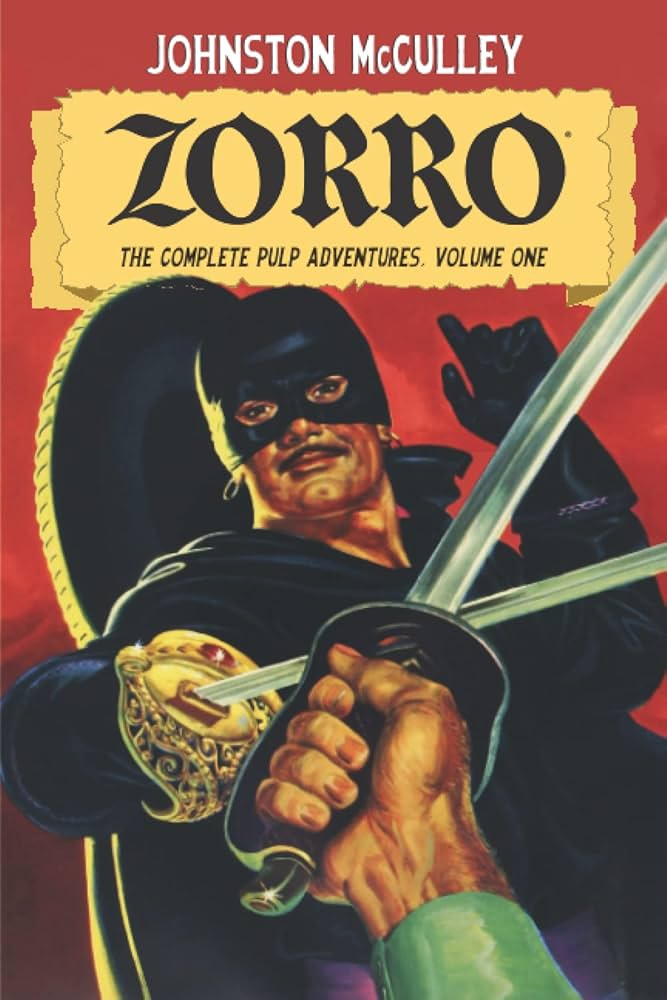
But Zorro did not remain only McCulley’s creation in print. Later authors continued to explore and reinterpret the character. One of the most notable modern literary takes is Isabel Allende’s 2005 novel Zorro, which reimagines Diego de la Vega’s origin with deeper cultural, historical and emotional texture. Allende’s version gives the legend a sweeping literary treatment, exploring identity, heritage, training and the forces that shape Diego into the masked hero.
That is part of Zorro’s power in prose. Books allow readers to explore the man beneath the mask in ways that action-heavy films and shows sometimes cannot. They can slow down and examine Diego’s mind, his values, his conflicts and the world that creates the need for Zorro. The result is a richer understanding of the hero as more than a costume and sword.
Zorro in Comics: The Masked Avenger on the Page
Zorro’s comic book history is extensive and important. The character has appeared in newspaper strips, licensed comics and modern series from publishers such as Dell, Gold Key, Marvel, Topps, Papercutz and Dynamite Entertainment. That long comic book presence makes sense because Zorro already feels like a superhero prototype. Put him in panels, and the connection becomes even clearer.
Comics allow Zorro’s world to expand visually while still preserving the energy of pulp adventure. Sword fights can stretch across panels. The Z can slash dramatically across a page. Tornado can race through moonlit landscapes. The format fits him because he is a character built on movement, mystery and dramatic reveal.
Dynamite Entertainment played a major role in bringing Zorro to modern comic readers, especially through series written by Matt Wagner. Wagner’s work helped reframe Zorro for contemporary audiences while respecting the character’s classic roots. His approach recognized Zorro not as a relic, but as the original masked-and-caped crusader whose influence still echoes through modern superhero storytelling.

That modern comic legacy becomes especially important when discussing Django/Zorro, the crossover series that paired Zorro with Django Freeman from Quentin Tarantino’s Django Unchained. Published by Dynamite Entertainment and Vertigo Comics from 2014 to 2015, the seven-issue series was written by Matt Wagner and Quentin Tarantino, with art by Esteve Polls. It served as a sequel to Django Unchained and a crossover with Zorro, creating one of the boldest meetings in modern western comic storytelling.

Django/Zorro/The Lone Ranger: Three Justice Seekers, Two Explosive Crossovers
The idea of Django meeting Zorro sounds wild at first, but the more you think about it, the more sense it makes. Both men operate in worlds shaped by oppression, violence and corrupt systems. Both understand that justice does not always come through official channels. Both use fear, skill and reputation to challenge people who believe power gives them the right to abuse others.

The comic brings together two different kinds of western heroes. Zorro is elegant, masked, aristocratic and strategic. Django is direct, scarred by slavery and driven by a brutal understanding of American violence. Their pairing creates a fascinating contrast: one hero comes from the tradition of swashbuckling masked adventure, while the other comes from a revenge western shaped by racial terror and personal liberation.

Zorro’s comic book crossover history does not stop with Django. He also crossed paths with another legendary masked rider in Dynamite Entertainment’s The Lone Ranger: The Death of Zorro. That story brought together two of pop culture’s greatest masked justice figures: Zorro, the fox-like swordsman who defended the oppressed in old California, and the Lone Ranger, the masked rider of the American West. The crossover is powerful because it connects two heroes who share similar storytelling DNA—masks, horses, moral codes, symbols and a commitment to defending people crushed by corrupt systems.

What makes The Death of Zorro especially interesting is that it is not just a simple team-up. The story deals with legacy. Zorro’s sacrifice becomes part of what inspires the Lone Ranger’s mission, turning the crossover into a reflection on how heroism moves from one generation to another. That matters because both characters are not just men in masks; they are symbols. When one symbol falls, another must decide what it means to carry justice forward.
That is why the upcoming Django/Zorro film adaptation is such an exciting development. The project has had a long road, and earlier versions connected to Quentin Tarantino and Jerrod Carmichael were reportedly abandoned. But the project reentered development in 2026 with Brian Helgeland attached to write the screenplay, based on the comic series. That does not mean fans should expect a finished film tomorrow, but it does mean the crossover is alive again.

If handled well, Django/Zorro could be more than a novelty crossover. It could explore two legends of justice meeting at the intersection of myth, history and resistance. It could show Zorro not just as a classic hero from the past, but as a figure whose symbol still has something to say when placed beside another man fighting oppression with everything he has.
The Zorro universe also expanded through titles like Lady Rawhide / Lady Zorro, bringing together heroic women connected to the same tradition of masked resistance. These crossovers matter because they show that Zorro is not isolated from the broader world of heroic fiction. He is part of a larger family tree of masked avengers, western heroes and justice-seekers whose influence still cuts across comics today.

Zorro in Video Games: The Fox Goes Digital
Zorro has also appeared in video games, though his gaming legacy is not as dominant as his film, television and comic history. Still, the character’s action-based nature makes him a natural fit for interactive storytelling. Swordplay, horseback riding, stealth, acrobatics and heroic rescue missions are all elements that can translate well into games.
Games such as Zorro for home computers and later titles like The Destiny of Zorro and Zorro: The Chronicles brought the masked hero into the digital space. While not all of these games became major classics, they are part of the larger story of how Zorro has continued to move through different forms of media.
What makes Zorro interesting as a game character is that he does not need superpowers to feel exciting. His appeal comes from movement, precision, timing and style. A good Zorro game should make players feel like a fox: quick, clever, graceful and always one step ahead of the enemy. That is the essence of the character.
Why Zorro Still Matters
Zorro still matters because corruption still exists. Abuse of power still exists. People still need symbols that remind them oppression is not invincible. That is why the character has lasted more than a century. His setting may be old California, but his message is not trapped there.
He represents a kind of heroism that uses intelligence and courage against systems that appear too powerful to challenge. He does not simply defeat villains; he embarrasses them. He exposes their weakness. He reminds the people that fear can be reversed.
That is powerful because Zorro’s greatest weapon is not his sword. It is hope. The people see the Z and know someone stood up. Someone resisted. Someone refused to let injustice have the final word.

Final Reflection: The Mark Still Means Something
Zorro’s legacy is bigger than nostalgia. He is one of the reasons the superhero genre looks the way it does. He helped teach popular culture that a mask could be more than a disguise. It could be a promise. It could be a warning. It could be a symbol that outlives the man behind it.
That is why he belongs in the superhero conversation. He may come from pulp fiction and swashbuckling adventure, but his influence runs through comic books, radio heroes, masked riders, vigilantes and caped crusaders. Zorro is not standing outside superhero history. He is one of the figures holding up the foundation.
And every time that Z is carved into a wall, a door, a uniform or the memory of an audience, it says the same thing it has always said.
The powerful can be challenged.
The oppressed can be defended.
And justice, when carried by courage, leaves a mark.
Order autographed copies of S.O.L.A.D.: Soldiers of Light Against Darkness™ at www.tyronetonyreedjr.com/the-shop — because the greatest heroes do not just fight darkness… they leave a mark of light behind.


Comments