
Tony’s Timeless Thursdays™: Superman: The Animated Series — The Weight of Hope


There are heroes who inspire fear.There are heroes who demand respect.
And then… there is Superman.
Superman: The Animated Series premiered on Friday, September 6, 1996, on Kids' WB, arriving at a time when superhero storytelling on television was already being redefined. Following the groundbreaking success of Batman: The Animated Series, this new chapter didn’t try to replicate Gotham’s darkness—it expanded the universe.
Where Batman operated in shadows, Superman stood in light. Where Gotham City reflected fear, Metropolis represented possibility.
And that contrast wasn’t accidental.
Superman: The Animated Series became a cornerstone of what would grow into the DC Animated Universe (DCAU), continuing the shared storytelling approach that Batman: The Animated Series helped establish.
But what made this series truly timeless wasn’t just its place in a larger continuity. It was its understanding of Superman himself. Because at its core, this wasn’t a show about what Superman could do. It was about who he chose to be…in a world that didn’t always deserve him.
And to understand why this version of Superman still resonates, we have to begin where the series begins—not with the cape, the flight, or the impossible strength, but with the heart of a young man learning that power only matters when it is guided by purpose.
🎬 The Premise — An Alien Learning How to Be Human
At first glance, Superman’s story seems simple: an alien child is sent to Earth, raised by loving parents, and grows into a hero who protects humanity. But Superman: The Animated Series refuses to stay on the surface of that idea.
Clark Kent is not just hiding behind glasses—he is navigating identity. He is balancing two worlds that never fully align. He has the power to dominate, reshape, or rule… but he chooses restraint. He chooses humility. He chooses to live among people not because he has to—but because he believes in them.
And that belief becomes the foundation of the series.
Because Superman is not defined by his strength.
He is defined by his control of it.
🎭 The Cast — Voices That Defined a Generation
Tim Daly gives Superman a grounded, human presence that allows audiences to connect with him beyond his powers. His voice carries calm authority, but also warmth, making Clark feel real even when the situations around him are anything but.

Dana Delany brings Lois Lane to life with intelligence, confidence, and sharp instinct. She doesn’t exist to be saved—she exists to uncover truth, and that makes her just as essential to the narrative as Superman himself.

Clancy Brown delivers one of the most iconic versions of Lex Luthor ever put to screen. Calm, calculated, and always composed, his performance transforms Luthor into a man whose greatest weapon isn’t strength—but belief in his own superiority.

Together, these voices didn’t just support the show.
They defined it.
📰 The Daily Planet — Truth, Pressure, and the People Who Keep Clark Grounded
The Daily Planet is more than a newsroom—it is the place that keeps Clark connected to the human world he has chosen to protect. While Superman operates in the sky, Clark lives among people who fight their own battles every day, often without powers, recognition, or protection.
Lois Lane stands at the center of that world, driven by curiosity, courage, and an unwavering commitment to truth. She walks toward danger not because she is fearless, but because she understands that truth matters. Her relationship with Clark is built on challenge and respect, not dependency, and she forces him to stay grounded in ways his powers never could.

Jimmy Olsen represents growth, optimism, and the willingness to step into something bigger than himself. Through Jimmy, the series shows that heroism isn’t limited to strength—it can also be found in persistence and heart.

Perry White anchors the newsroom with integrity and leadership. He understands that truth carries weight, and that responsibility extends beyond headlines.

Together, they remind Superman why the world is worth protecting.
❤️ Lois and Superman — The Truth Between the Lines
Lois Lane and Superman represent one of the most compelling dynamics in storytelling—not because it is perfect, but because it is layered with tension, admiration, and truth waiting to be revealed.

Lois sees Superman as extraordinary, yet she challenges him like he is human. At the same time, she often overlooks the extraordinary man standing right beside her in Clark Kent. That duality creates a tension that drives their connection forward, revealing how perception shapes relationships.
Clark’s feelings for Lois carry weight because they are complicated by his identity. Loving someone while hiding the truth of who you are creates a distance that no amount of strength can overcome easily. And yet, that tension is what makes their relationship meaningful.

Because it is not built on illusion.
It is built on connection.
🌾 Smallville — Where Power Learned Restraint
Before Metropolis, before the Daily Planet, before the cape and before the world ever looked to the sky for Superman, there was Smallville. And that is where Clark Kent truly begins. Smallville is not just the place he grew up; it is the place where his power was shaped by love, discipline and moral instruction. It is where an alien child learned what it meant to be human, and where strength was taught to serve rather than rule.
Jonathan Kent and Martha Kent are central to that foundation because they do more than raise Clark safely. They raise him wisely. They understand that their son is different, but they never allow his abilities to become his identity. Through patience, compassion and everyday example, they teach him humility, responsibility and restraint. They show him that being powerful does not make someone better than others, and that helping people is not about recognition—it is about character. That kind of upbringing is what keeps Superman from becoming distant, arrogant or dangerous.

Lana Lang represents another important piece of Smallville because she connects Clark to the life he had before the world placed its expectations on him. Through Lana, the series reminds viewers that Clark had friendships, memories, feelings and dreams before he became a symbol. She represents the simplicity of his past, the emotional ties of home and the part of him that understands what it means to be known before being needed.

That is why Smallville matters so much. It is not just Superman’s origin point—it is his moral compass. Krypton gave him his powers, but Smallville gave him his purpose. Metropolis may be where Superman rises, but Smallville is where Clark Kent learned why he should.
🦹🏾♂️ The Villains — Mirrors, Monsters and Tests of Superman’s Soul
A hero like Superman cannot be measured only by how much he can lift, how fast he can fly or how hard he can punch. A hero like Superman is measured by what challenges his heart, his restraint, his patience and his belief in people. That is why the villains of Superman: The Animated Series matter so much. They are not simply colorful enemies who show up to give Superman someone to fight. At their best, they represent corrupted power, wounded identity, unchecked ambition, scientific arrogance, cosmic tyranny and human fear.
Lex Luthor remains the most personal and philosophically rich enemy in the series because he is human ambition sharpened into arrogance. Lex does not need superpowers to be dangerous. He has money, influence, intellect and public respectability, which allows him to hide corruption behind a polished image. His hatred of Superman is rooted in ego, but also in fear. Superman exposes the one thing Lex cannot buy or control: genuine moral authority. Lex does not simply want Superman defeated. He wants the world to stop believing in him.

Brainiac represents intelligence without conscience. His connection to Krypton gives him a haunting significance because he is not just another alien threat—he is tied to Superman’s deepest loss. Brainiac preserves knowledge while disregarding life, which makes him a chilling contrast to Superman. Where Superman protects people because life matters, Brainiac treats civilizations like data to be collected, stored and discarded. He is what intellect becomes when compassion is removed from it.
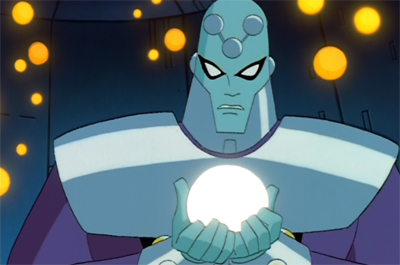
Darkseid raises the conflict to its most terrifying level because he represents absolute power without mercy. Lex wants superiority. Brainiac wants preservation. Darkseid wants domination. He does not simply want to conquer worlds; he wants submission. His battles with Superman feel larger than physical combat because they place hope against tyranny, freedom against control and compassion against cruelty. Darkseid is the kind of villain who proves why Superman’s restraint matters, because power without love becomes oppression.

Metallo brings tragedy into the villain lineup because John Corben is a man whose humanity is stripped away piece by piece. His Kryptonite heart makes him physically dangerous to Superman, but his deeper weight comes from what he represents. Superman is an alien who chooses humanity. Metallo is a human who loses his. That reversal makes him both threatening and pitiful, a warning about technology, revenge and exploitation consuming the person underneath.

Parasite is frightening because his power is based on taking. He absorbs strength, energy and knowledge, turning other people’s gifts into his own advantage. Against Superman, that makes him especially dangerous. But Parasite also exposes a deeper truth: power does not improve a person if the heart remains corrupted. When he gains strength, he does not become noble. He becomes more destructive. His presence shows the difference between having power and being worthy of it.

Bizarro is one of the most emotionally complicated figures in the series because he is not evil in the same way Lex, Brainiac or Darkseid is evil. He is a broken reflection of Superman, a distorted copy with pieces of his power but none of his foundation. Bizarro does not have Jonathan and Martha Kent. He does not have Smallville. He does not have the love, guidance and moral grounding that shaped Clark into Superman. His tragedy reminds viewers that strength alone does not create a hero. A hero needs identity, purpose and a heart trained toward goodness.

Mr. Mxyzptlk brings chaos, humor and frustration into Superman’s world, but he should not be dismissed as lightweight. Mxy forces Superman to win without relying on force. Superman cannot simply punch his way through reality-bending tricks; he has to think, stay patient and outsmart someone who treats consequences like a game. Through Mxy, the series reminds us that Superman’s mind matters just as much as his muscles.

Toyman adds a disturbing contrast by weaponizing innocence. His toys and games may look playful, but the danger behind them is serious. That makes him unsettling in a different way. He twists childhood imagery into instruments of fear, revenge and control, forcing Superman to confront evil that hides behind something familiar and seemingly harmless. Toyman proves that danger does not always arrive looking powerful. Sometimes it arrives smiling.

Jax-Ur and Mala expand the Kryptonian side of Superman’s mythology by showing what Kryptonian power looks like without Clark’s moral foundation. Their presence matters because they separate Superman’s biology from his morality. Clark is not good simply because he is Kryptonian. In fact, Jax-Ur and Mala reveal how terrifying Kryptonian strength can become when guided by pride, conquest and entitlement instead of humility and service.

Livewire brings celebrity, media manipulation and unchecked resentment into Superman’s world. Leslie Willis begins as a loud, controversial media personality whose hatred of Superman becomes part of her public brand. After her transformation, that anger becomes literal electricity, making her dangerous, unpredictable and attention-driven. What makes Livewire stand out is that she represents what happens when bitterness gets amplified. She does not simply want to defeat Superman; she wants an audience while doing it. Through her, the series explores ego, fame and the danger of turning outrage into identity.

Volcana adds a more tragic and sympathetic layer to the villain lineup. Unlike some of Superman’s enemies, she is not driven purely by conquest, greed or cruelty. Her powers make her dangerous, but her story is rooted in fear, exploitation and survival. Volcana represents the kind of person the world mishandles before it condemns. That makes Superman’s response to her important, because he does not treat her as just another threat to destroy. He sees the person beneath the fire. Her presence reminds viewers that compassion is still necessary, even when someone’s pain has made them dangerous.

Bruno Mannheim and Intergang bring Superman into conflict with organized crime and corruption operating on a larger scale. Mannheim is not just a criminal; he is a gateway into a world where greed, violence and outside influence collide. Intergang becomes especially dangerous when human corruption is empowered by advanced weapons and darker forces connected to Apokolips. Through them, the series shows that Superman’s mission is not limited to aliens and monsters. He also has to confront the evil people build through systems, intimidation and greed.

That is what makes this rogues’ gallery so effective. Lex uses influence without humility. Brainiac uses intelligence without compassion. Darkseid uses authority without mercy. Metallo shows technology without humanity. Parasite represents appetite without restraint. Bizarro reflects power without identity. Mxy brings chaos without responsibility. Toyman twists innocence into danger. Jax-Ur and Mala reveal heritage without morality. Mannheim and Intergang expose greed empowered by darkness.
Together, they do more than give Superman battles to win. They give him reasons to keep proving what kind of hero he is.
🦸🏾♂️ Allies and Heroes — Strength Beyond One Man
Superman may be the most powerful hero in the room, but Superman: The Animated Series wisely understands that power does not mean isolation. Some of the strongest moments in the series come when Clark encounters other heroes, because each one reflects a different version of courage, responsibility and service. These team-ups help expand Superman’s world beyond Metropolis and show that heroism is not one-size-fits-all.
His partnership with Batman is one of the most important because it highlights the contrast between light and shadow. Superman leads with hope, trust and openness, while Batman operates through strategy, suspicion and fear as a weapon against evil. Yet the two work because their differences sharpen each other. Batman reminds Superman that some threats require caution and preparation, while Superman reminds Batman that justice should never lose sight of hope.
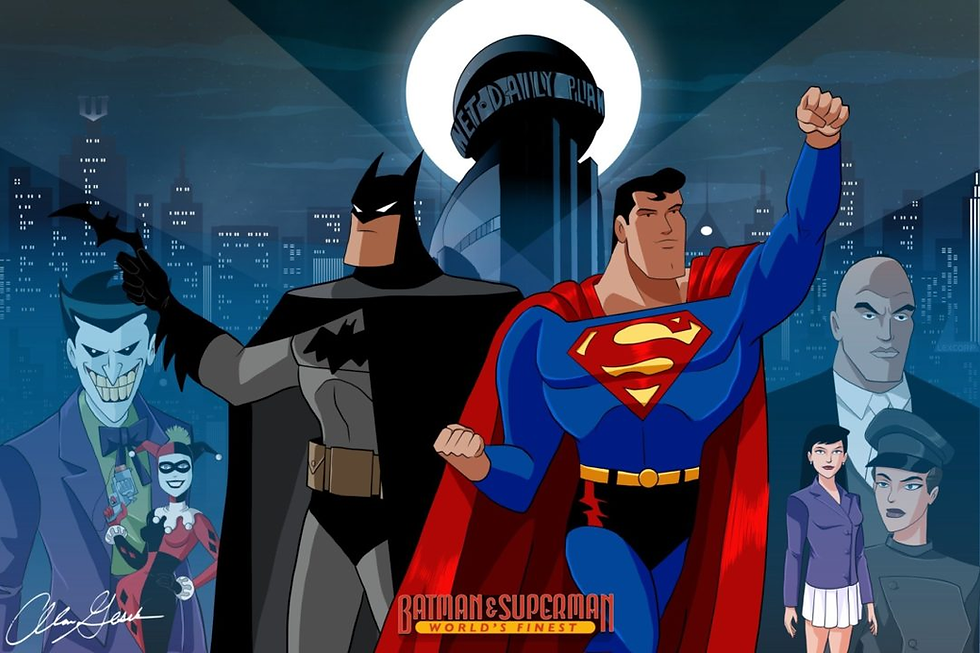
Supergirl adds emotional depth because she connects Clark to legacy, family and the responsibility of guiding someone else through power, loss and identity. Through her, Superman is not just a hero—he becomes a mentor. That matters because Kara’s presence reminds viewers that strength is not only about what a person can do alone, but what they help someone else become.

Green Lantern Kyle Rayner broadens Superman’s world into the cosmic side of heroism. His appearance shows what happens when an ordinary person is suddenly chosen for extraordinary responsibility. Kyle’s power comes with imagination, discipline and courage, but his story also reminds viewers that being chosen does not mean being instantly ready. Sometimes purpose arrives before preparation, and the hero has to grow into the weight of the calling.

The Flash brings speed, humor and public heroism into Superman’s world. His energy offers a lighter contrast to Superman’s seriousness, but that does not make him any less heroic. Flash shows that joy and courage can exist together, and that saving people does not always have to come with a heavy face. His presence reminds viewers that hope can move fast, smile wide and still show up when it matters.

Aquaman introduces the weight of kingship and responsibility beyond the surface world. Unlike Superman, who protects Metropolis and Earth by choice, Aquaman carries the burden of ruling and defending an entire kingdom. His presence expands the series’ sense of duty, showing that heroism can also mean leadership, diplomacy and making difficult choices for people who depend on you.

Doctor Fate brings the mystical and spiritual side of the DC Universe into Superman’s animated world. His presence reminds viewers that not every battle can be explained by science, strength or strategy. Some conflicts involve destiny, unseen forces and powers beyond ordinary understanding. Around Doctor Fate, Superman is reminded that even he does not know everything, and that humility matters even for the strongest hero on Earth.

Steel, also known as John Henry Irons, represents the power of inspiration. He proves that Superman’s greatest impact is not just in the lives he saves, but in the people he motivates to rise. Steel is not Kryptonian. He does not have alien powers. But through intelligence, courage and conviction, he builds his own way to stand in the gap. His heroism shows that ordinary people can do extraordinary things when they decide to serve.

Robin (Tim Drake), standing beside Batman, represents legacy, training and young courage still finding its place. His presence reinforces the idea that heroism is not only inherited through power, but developed through discipline, mentorship and experience. Robin may not have Superman’s strength or Batman’s years of darkness, but he has heart, skill and the willingness to step into danger before he fully becomes the hero he is meant to be.

Together, these allies show that Superman’s greatness is not diminished by standing beside other heroes. It is strengthened. Because even Superman, with all his power, exists in a world where courage takes many forms—and sometimes the greatest victories come when heroes learn to stand together.
🎞️ Superman: Brainiac Attacks — A Direct-to-Video Echo of the Series
Superman: Brainiac Attacks deserves mention because it is a 2006 direct-to-video animated movie tied visually and vocally to the world of Superman: The Animated Series. It uses the familiar animation style associated with the series and brings back several key voices, including Tim Daly as Superman, Dana Delany as Lois Lane, George Dzundza as Perry White and David Kaufman as Jimmy Olsen.
That connection makes the movie feel like a return to this animated version of Metropolis, even though it is generally treated as separate from official DCAU continuity. The story features Superman facing Brainiac and Lex Luthor, while also leaning into the emotional stakes of Clark’s relationship with Lois. So while it should not be framed as a true continuation of the series, it still belongs in the conversation as part of the broader afterlife of this Superman’s animated era.
In other words, Brainiac Attacks is not the official next chapter of Superman: The Animated Series, but it is a direct-to-video companion piece that borrows the look, several voices and familiar emotional ingredients that made the series memorable. It shows how strongly this version of Superman remained connected to fans even years after the show ended.

🔥 Top 10 Episodes — The Stories That Defined the Series
A series as strong as Superman: The Animated Series cannot be reduced to only ten episodes easily, but these stories capture the emotional, heroic, cosmic and character-driven range that made the show timeless. Each one reveals a different side of Superman, from his origin and moral compass to his greatest enemies, deepest losses and most important alliances.
The Last Son of Krypton is the foundation of the entire series. It gives viewers Krypton, Jor-El, Brainiac, the destruction of Superman’s birth world, his arrival on Earth and the beginning of Clark Kent’s journey. More than a simple origin story, it establishes the emotional duality that defines Superman: he is both alien and human, survivor and son, symbol and man.

World’s Finest remains one of the most important animated superhero crossovers ever produced because it brings Superman and Batman together without weakening either character. Their differences drive the story. Superman operates in light, Batman in shadow. Superman trusts first, Batman investigates first. Yet together, they show that justice can wear more than one face and still serve the same purpose.
Apokolips… Now! elevates the series by bringing Darkseid’s threat directly into Superman’s world. This story proves that the show was willing to go bigger, darker and more emotionally devastating when the moment called for it. It also shows Superman facing the kind of evil that cannot be reasoned with, bought off or intimidated—only resisted.
Legacy is one of the boldest and heaviest arcs in the entire series because it places Superman in a position where his image, trust and relationship with Earth are severely damaged. It challenges the very thing Superman represents. If the world begins to fear its greatest protector, what does he do next? That question gives the finale real emotional power.

The Late Mr. Kent is a brilliant Clark Kent episode because it reminds viewers that Clark is not just a disguise. His work as a reporter matters. His pursuit of truth matters. This episode shows that Clark Kent can save lives without lifting a building or throwing a punch, proving that heroism is just as powerful when it comes through integrity and investigation.

Little Girl Lost introduces Supergirl and expands Superman’s emotional world in a meaningful way. Kara’s arrival gives Clark a family connection that reaches beyond memory and loss, while also allowing him to step into the role of mentor. It is not just about adding another powerful hero; it is about legacy, guidance and helping someone else carry the weight of extraordinary gifts.

Speed Demons gives audiences the joy of seeing Superman and The Flash share the screen while also exploring what public heroism looks like when personalities differ. Flash brings humor, quickness and charm, while Superman brings steadiness and responsibility. Their race is fun, but the episode works because it turns competition into cooperation.
Parasite stands out because it turns Superman’s own strength against him. Parasite is dangerous not because he creates power, but because he takes it. The episode works as both an action story and a moral warning about hunger without restraint, showing that stolen power in corrupted hands only becomes more destructive.

Fun and Games gives Toyman a memorable and unsettling introduction by twisting childhood imagery into something dangerous. It is one of those episodes that reminds viewers that evil does not always look massive, cosmic or physically intimidating. Sometimes danger hides behind bright colors, nostalgia and innocence corrupted by obsession.
Tools of the Trade matters because it introduces Bruno Mannheim, Intergang and the larger Apokoliptian influence that would become important later. It shows that Superman’s battles are not limited to supervillains in costumes or aliens from space. Sometimes darkness enters through crime, greed and human systems that are willing to accept power from dangerous sources.
🌌 Beyond the Series — The Journey Continues
Superman’s story does not end with Superman: The Animated Series. In many ways, this series—alongside Batman: The Animated Series—serves as one of the major foundations for what would become the larger DC Animated Universe. Batman’s world introduced audiences to a darker, more psychological style of superhero storytelling, while Superman’s world expanded that universe into light, hope, cosmic threats and larger-than-life heroism. Together, those two shows helped build the bridge that made Justice League feel not like a brand-new idea, but like the natural next chapter.
That continuation matters because Justice League takes the groundwork laid by both series and expands it into something bigger. Superman moves from being the protector of Metropolis to one of the central pillars of a united heroic force. He now stands beside Batman, Wonder Woman, Green Lantern, Flash, Hawkgirl and Martian Manhunter, operating in a world where heroism requires teamwork, trust and shared responsibility. The series allows viewers to see Superman outside of his own city, away from his familiar supporting cast and inside a larger mission where even the Man of Steel must listen, adapt and depend on others.
Justice League Unlimited pushes that idea even further by placing Superman in a world where heroes are numerous, public and increasingly questioned. The stakes become more complicated because power itself becomes part of the conversation. Who watches the heroes? How much authority should they have? Can even good people become dangerous if the world fears what they are capable of? Those questions build naturally from the themes already present in Superman: The Animated Series, making his journey feel larger, more mature and more complete.
That is why Superman’s animated journey feels so meaningful. He begins as a hero learning how to carry hope in Metropolis, grows into a partner among equals in Justice League, and becomes part of a larger legacy in Justice League Unlimited. His story keeps expanding, but the foundation remains the same: power must be guided by purpose, and even the strongest hero is stronger when standing with others.
🌍 Why Superman Still Matters Today
Superman still matters because hope still matters. In a world often shaped by division, fear, cynicism and uncertainty, his character reminds us that power should never be separated from compassion. He is not timeless simply because he can fly, lift impossible weight or survive what others cannot. He is timeless because he chooses to use that power in service of others.
That choice is what makes Superman relevant across generations. He represents the idea that strength should protect, not intimidate. That truth should be pursued, not manipulated. That doing the right thing may not always be easy, popular or convenient, but it is still necessary. In a culture that often confuses dominance with greatness, Superman offers a different standard.
He reminds us that kindness is not weakness. Restraint is not fear. Hope is not childish. And goodness is not outdated. If anything, the more complicated the world becomes, the more powerful that example feels. Superman endures because people still need to believe that strength can be moral, leadership can be humble and light can still stand against darkness without becoming darkness itself.

✨ The Spiritual Bridge to S.O.L.A.D.™
In S.O.L.A.D.™: Soldiers of Light Against Darkness™, that same balance of power, purpose and responsibility carries deep spiritual weight. Just like Superman, Angelo™ and Angeline™ are called into battles that require more than strength. They must learn that being chosen is not about attention, applause or status. It is about service, sacrifice, obedience and the courage to stand in the gap when darkness threatens to overtake the world around them.
That connection is what makes the bridge so natural. Superman’s story reminds us that power without restraint can become dangerous, while S.O.L.A.D.™ reminds readers that gifts must be guided by faith, wisdom and purpose. The battle between light and darkness is not only fought through force. It is fought through choices, character, discipline and belief.
Just as Clark Kent must decide every day what kind of hero he will be, Kevin and Juanita must choose who they will become when destiny interrupts their normal lives. And in both stories, the message is clear: greatness is not proven by having power. Greatness is proven by how that power is used.
For readers who connect with stories about heroes, spiritual warfare, purpose, identity and the ongoing battle between light and darkness, S.O.L.A.D.™: Soldiers of Light Against Darkness™ continues that conversation in a powerful way.
👉🏾 Order autographed copies of the S.O.L.A.D.™ novel series today:www.tyronetonyreedjr.com/the-shop
Because the world does not just need heroes who can fight. It needs heroes who understand why they were chosen.

💥 Final Thought
Superman does not inspire simply because he is powerful. Power alone has never been enough to make someone heroic. What makes Superman endure is the fact that he chooses goodness when he could choose control, chooses restraint when he could choose dominance and chooses service when he could stand above everyone else.
That is why Superman: The Animated Series still holds up. It understood that the heart of Superman was never just flight, strength or the symbol on his chest. The heart of Superman was character.
And in a world constantly searching for strength, that lesson still matters.
Because the greatest heroes are not defined by what they can do. They are defined by what they choose to do.


Comments