
Tony’s Timeless Thursdays™: The Secret World of Alex Mack: The Nickelodeon Girl Who Had Superpowers Before Superheroes Took Over TV


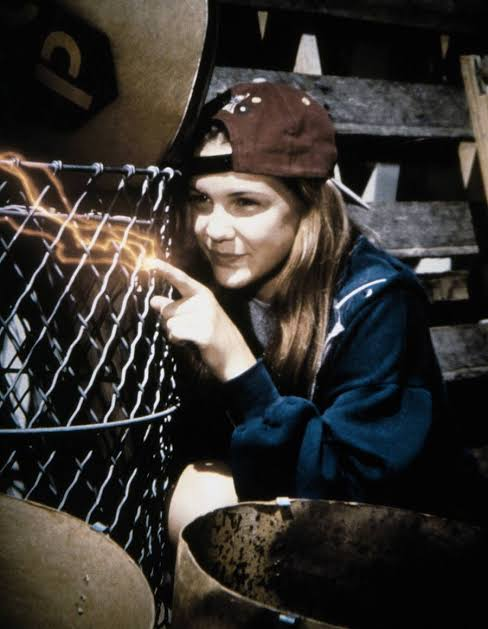
Before superhero movies dominated theaters, before streaming services were overflowing with powered teenagers and before every other character seemed connected to a cinematic universe, Nickelodeon gave us a girl in a backwards baseball cap who could turn herself into a puddle.
And somehow, it made perfect sense.
The Secret World of Alex Mack premiered in 1994 with one of the coolest premises on kids’ television. Alexandra “Alex” Mack was walking home from her first day of junior high when she was accidentally drenched with GC-161, an experimental chemical from the Paradise Valley Chemical Plant. Instead of getting sick, Alex began developing extraordinary abilities. She could move objects with her mind, release electricity from her fingers, morph into a silvery liquid and, inconveniently for a teenager trying to keep a secret, glow when she became emotional.
Suddenly puberty was the second strangest thing happening to her. That combination of science fiction, superhero adventure and painfully familiar teenage life is exactly why The Secret World of Alex Mack became one of Nickelodeon’s defining shows of the 1990s.
Alex Was a Superhero Who Still Had Homework
What made Alex different from many superheroes was that she was not trying to become one.
She did not put on a costume, invent a superhero name and patrol Paradise Valley looking for criminals. Most of the time, she was trying to survive school, friendships, crushes, embarrassing parents and all the other problems that already felt enormous when you were thirteen.
The powers simply made everything more complicated. That was part of the brilliance of the show. Alex could move something with her mind, but she could not magically make adolescence easier. She could transform into liquid, but she still had to worry about fitting in. She possessed abilities other kids could only dream about while constantly fearing what would happen if anyone discovered the truth.
In that sense, the powers worked almost like a metaphor for growing up. Your body is changing. Your emotions suddenly feel stronger. Strange things seem to be happening to you that nobody else completely understands, and you desperately do not want everyone looking at you.
Alex just had a more extreme version of the problem.
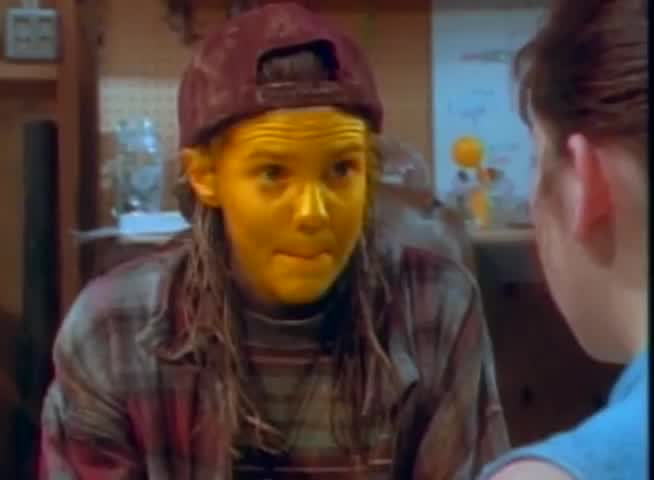
That Backwards Cap Became Part of 90s Nickelodeon
Larisa Oleynik gave Alex exactly the right personality. She was funny and likable without feeling impossibly polished, and she looked like somebody who could actually attend your school rather than a miniature adult created for television.
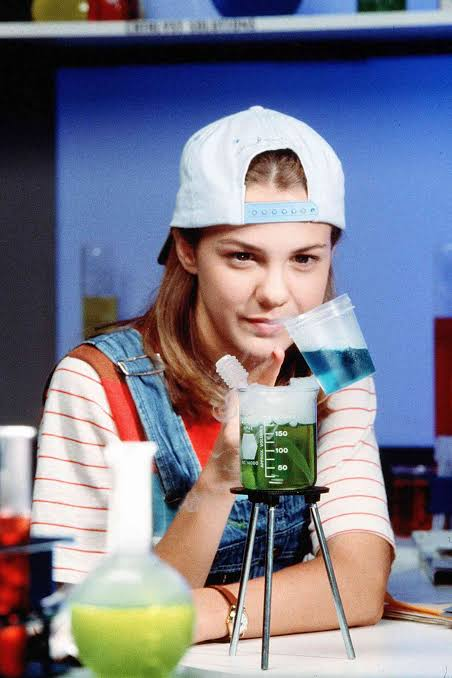
And then there was the backwards baseball cap. That cap became almost inseparable from Alex Mack. Combined with the oversized clothes and unmistakable 1990s style, it helped create a character who looked casual, independent and completely of her time.
Oleynik also had to sell something more difficult than the fashion: the idea that extraordinary powers could exist inside an ordinary kid. Alex could be courageous one moment and insecure the next. She sometimes loved what she could do and sometimes feared what those abilities might cost her.
That made her powers feel less like gimmicks and more like part of her life.
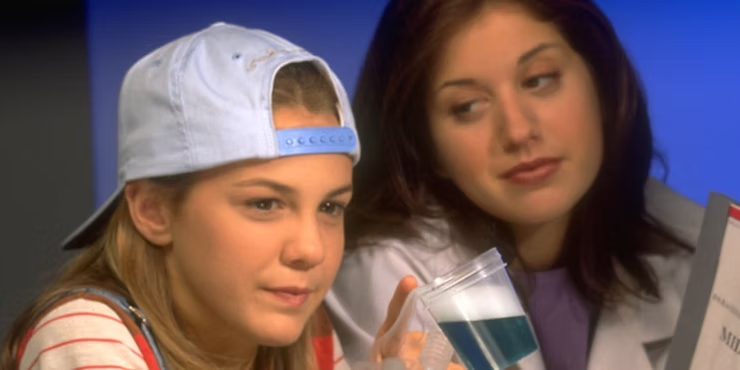
Annie and Ray Were the People You Wanted Holding Your Secret
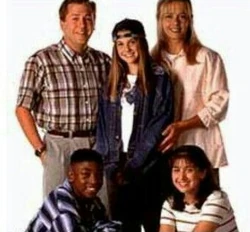
Alex was not alone in carrying her secret. Her older sister Annie and best friend Ray Alvarado became the people she could trust with the truth.
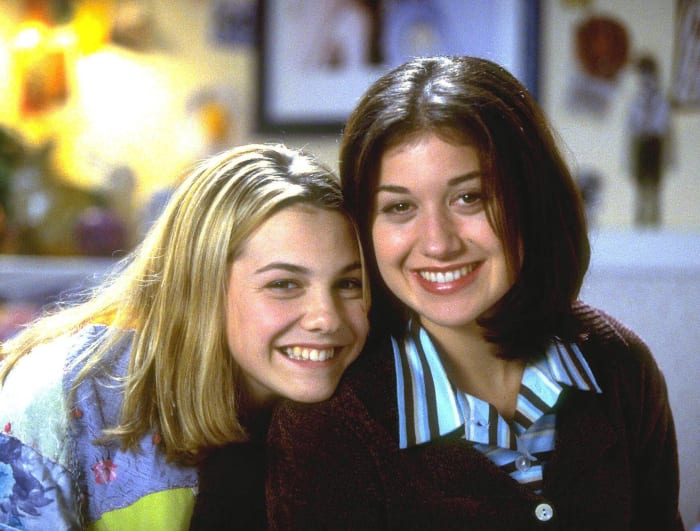
Meredith Bishop’s Annie was brilliant, scientifically curious and often better equipped than Alex to understand what GC-161 might actually be doing to her. Rather than becoming jealous of her younger sister’s abilities, Annie helped investigate them and protect her. Darris Love’s Ray brought a different energy as Alex’s loyal best friend, giving her someone outside the family who knew the real Alex beneath all the secrecy.
Those relationships mattered because the series understood something every good superhero story eventually learns: powers may make someone extraordinary, but trust keeps them grounded.
Alex needed people who knew everything and stayed.

Danielle Atron Made the Secret Dangerous
Keeping Alex’s powers hidden was not simply about avoiding embarrassment.
The people behind GC-161 were looking for her.
Louan Gideon’s Danielle Atron was the ruthless executive running the Paradise Valley Chemical Plant, and Alex’s accidental exposure threatened to expose what the company had been developing. While Alex was trying to navigate adolescence, Atron and her employees were trying to identify the mysterious kid contaminated by their chemical.
That gave the series genuine stakes beneath the comedy.
Alex’s own father, George, worked at the plant without realizing his daughter was the child his employer wanted to find. That irony kept home, school and the larger conspiracy connected. Alex could never completely separate her normal life from the secret one because the danger was woven directly into the community around her.
For a Nickelodeon series aimed at young viewers, that was a surprisingly strong setup.

The Powers Were Just Cool
We can talk about metaphors, adolescence and identity all day, but we also have to admit something.
Alex’s powers were cool. Telekinesis was cool. Shooting electricity from her fingers was cool. Glowing was visually memorable. But turning into that shimmering liquid puddle was the ability everyone remembered.
There was something wonderfully 1990s about the effect. You did not need a $200 million superhero budget. Nickelodeon showed Alex melting into metallic goo, slipping beneath doors or escaping danger, and our imaginations handled the rest.
The limitations of television effects actually gave the show charm. Kids were not analyzing the CGI. We were wondering what we would do if we had Alex’s powers.
And whether we could keep them secret. Probably not.
The Show Made a Girl the Center of the Superhero Fantasy
One of the things I appreciate even more looking back is that Alex Mack put a teenage girl at the center of its science-fiction story and simply let her own it.
Alex was not somebody’s sidekick or the girl waiting for a male hero to save her. The strange powers belonged to her. The danger followed her. The decisions were hers. The show was built around her perspective.
That was important for girls watching, but it also mattered for boys watching. A good hero does not have to look exactly like you for you to connect with the story. Alex’s fear of being exposed, desire to belong and excitement over discovering what she could do were universal enough for anybody to understand.
Great storytelling expands our definition of who gets to be the hero. Alex Mack helped do that.
Even Jessica Alba Passed Through Paradise Valley
Looking back also brings one of those fun “Wait, THAT was her?” moments.
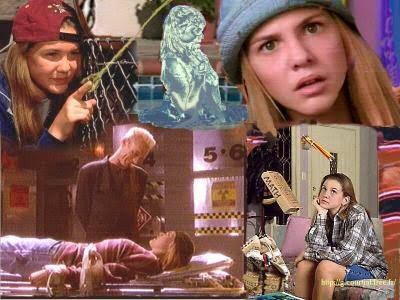
Before becoming an international movie star, a young Jessica Alba appeared during the first season as Jessica, a popular girl at Alex’s school. Long before Dark Angel, Fantastic Four and the films that would make her famous, Alba was part of the world of Paradise Valley.
Those early appearances are one more reason revisiting 1990s television can be so much fun. Sometimes you discover that somebody you later knew from an entirely different era had been standing in the background of your childhood all along.

Four Seasons Gave Alex Time to Grow
The Secret World of Alex Mack ultimately ran four seasons and 78 episodes from 1994 through 1998. That gave the series enough time for Alex to mature alongside its audience.
The danger surrounding GC-161 also grew more serious. By the end, Danielle Atron’s plans were finally closing in on Alex and her family, and the series forced the secret that had defined Alex’s life into the open.
The finale then gave Alex one last fascinating choice: after everything she had experienced, an antidote existed that could potentially return her to normal. Would she take it? The show leaves us with Alex and that choice rather than completely spelling out the answer.
And honestly, that feels right. After years of learning to live with what made her different, perhaps the biggest question was no longer whether Alex could become normal again.
It was whether she still wanted to.

Alex Mack Is Getting Some 2026 Love
More than three decades after the series began, Alex Mack has not completely disappeared into the Nickelodeon slime-covered history books.
This month, Larisa Oleynik is scheduled to reunite with Meredith Bishop, Darris Love and Natanya Ross at 90s Con for the cast’s first convention reunion. That tells you something about the staying power of these shows.
People remember. They remember Alex’s cap. They remember the chemical truck. They remember the glow. They remember the puddle. They remember watching Nickelodeon and wondering what it would feel like to discover something extraordinary inside yourself.
Sometimes nostalgia is really just proof that a story found a permanent place in us.

The Spiritual Bridge to S.O.L.A.D.™: Soldiers of Light Against Darkness™
There is an interesting connection between Alex Mack and S.O.L.A.D.™: Soldiers of Light Against Darkness™ because both explore what happens when an ordinary person suddenly possesses abilities they never requested.
Power creates possibility, but it also creates responsibility. Alex had to decide whom she could trust, when she should use her abilities and whether having power changed who she really was. Angelo™, Angeline™ and the other Soldiers of Light Against Darkness™ face much greater spiritual stakes, but the underlying question is familiar: when something extraordinary has been placed in your hands, what kind of person will you become because of it?
Power does not automatically create character. It reveals it.
Why The Secret World of Alex Mack Is Still Timeless
The Secret World of Alex Mack worked because beneath the GC-161, telekinesis, electricity and liquid transformations was a story almost every kid understood.
Growing up feels weird.
Being different can be frightening.
Secrets can become heavy.
Friends matter.
Family matters.
And sometimes the thing that makes you feel most unusual eventually becomes part of what makes you uniquely you.
Alex Mack never needed a cape. She had a backwards baseball cap, a good heart and enough GC-161 in her system to make junior high considerably more interesting.
For four seasons, that was more than enough. And for those of us who grew up watching her glow, morph and try desperately to keep everybody from discovering her secret, Paradise Valley will always have a little bit of Nickelodeon magic left in it.


Comments