
Tony’s Superhero Saturdays™: Aisha Campbell: The Yellow Ranger Who Redefined Strength, Representation, and Legacy


There are moments in storytelling where everything shifts—and you don’t need dialogue to feel it.
The room feels different.
The rhythm is off.
The energy that once felt familiar now feels… uncertain.
Inside the Command Center, the alarms still sound. The mission still exists. The threat is still real.
But something deeper is missing.
Not just Rangers.
Balance. Identity. Emotional continuity.
Because when something people love changes unexpectedly, the question isn’t just what happens next…
It’s:
Will it ever feel the same again?
That’s the moment Aisha Campbell walks into.
Not a clean slate.
Not a fresh beginning.
But a space filled with expectation, comparison, and resistance.
And what she does in that space?
That’s what makes her one of the most important characters in Power Rangers history.
⚡ The Foundation Before Her: Understanding Trini Kwan’s Impact
Before Aisha ever morphed, before she ever stepped into formation, before she ever fought alongside the team…
There was Trini Kwan, portrayed by Thuy Trang.
Trini wasn’t loud.
She wasn’t flashy.
She wasn’t the center of attention.
But she was something arguably more important:
She was grounding.
She balanced Jason’s leadership, Kimberly’s emotion, Billy’s intellect, Zack’s energy, and Tommy’s intensity.
She was the quiet force that kept things steady.
And when she was gone?
That steadiness disappeared with her.

⚠️ The Real Story Behind the Change: When Business Meets Belief
Let’s deal in truth.
The transition from Trini to Aisha wasn’t a carefully planned narrative evolution.
It was a real-world disruption.
Thuy Trang, along with Austin St. John (Jason) and Walter Jones (Zack), left the show due to contract disputes and concerns over pay.
At the height of the show’s popularity, the actors recognized something:
They were part of something massive.
And they weren’t being compensated like it.
So they walked.
And that decision forced the show into one of the most difficult positions any series can face:
Replacing beloved characters midstream.
🔥 The Challenge: Winning Over an Audience That Didn’t Ask for You
Aisha didn’t enter a neutral space.
She entered:
A divided audience
A skeptical fanbase
A role already emotionally claimed by someone else
And here’s what makes her story powerful:
She never tried to fight that reality.
She didn’t chase approval.
She didn’t beg for acceptance.
She didn’t imitate Trini to make people comfortable.
Instead…
She did something far more difficult:
She showed up as herself—and trusted that it would be enough.

👑 Presence: The Defining Trait That Can’t Be Taught
From the moment Aisha appears, something clicks.
Not because she’s trying to prove something.
But because she’s grounded in who she is.
She laughs without hesitation. She speaks without fear. She engages without insecurity.
She doesn’t shrink to fit expectations.
She expands the role to fit her.
And that’s rare.
Because presence—the kind Aisha has—can’t be written.
It can’t be forced.
It can’t be manufactured.
It has to be real.
💛 Representation in the 90s: Why Aisha’s Presence Was Revolutionary
Let’s zoom out.
The early 1990s television landscape was not what it is today.
Representation existed—but it was limited, often stereotyped, and rarely placed in positions of visible power for young Black women.
Then comes Aisha Campbell.
A Black girl.
A superhero.
A leader.
A fighter.
A friend.
Not a stereotype.
Not a background character.
A central figure.
And that matters more than some people realize.
Because when children see themselves in positions of power, it does something profound:
It reshapes what they believe is possible.

📺 The Work: How Aisha Earned Her Place Episode by Episode
Aisha didn’t rely on symbolism alone.
She delivered in the work.
Let’s break it down deeper.
🔹 “The Ninja Encounter”
Her introduction immediately establishes her as capable, athletic, and fearless. She isn’t hesitant—she’s ready.
🔹 Power Transfer Arc
One of the most important transitions in the series. Aisha accepts the power not with doubt, but with responsibility.
🔹 Team Integration
Her chemistry with Adam is natural. Her interactions with Kimberly feel genuine. She builds trust quickly without forcing it.
🔹 Emotional Episodes
Aisha consistently operates from empathy. She checks on others. She connects. She listens.
She doesn’t just fight monsters.
She understands people.
🎬 The Movie Moment: Aisha on a Bigger Stage
Then comes Mighty Morphin Power Rangers: The Movie.
This is where everything changes again.
Because now:
The audience is bigger
The expectations are higher
The spotlight is brighter
And this is where some characters fade.
But Aisha?
She solidifies.
She doesn’t get lost in the spectacle.
She becomes clearer within it.
More confident.
More present.
More undeniable.

⚔️ Strength Reexamined: The Difference Between Power and Purpose
Aisha could fight.
That’s not up for debate.
But her defining quality wasn’t her strength.
It was her balance.
She understood when to fight.
And more importantly…
She understood when to serve.

🌍 The Defining Choice: When She Gave It All Up
This is the moment that separates Aisha from many other heroes.
She had everything:
Power
Position
Purpose within the team
And she let it go.
Not because she failed.
Not because she was forced.
But because she saw a greater need.
She stayed behind in the past to help others.

🔄 The Continuation: Tanya Sloan Steps In
The mantle passes to Tanya Sloan, portrayed by Nakia Burrise in Power Rangers Zeo.
And just like that…
The Yellow Ranger legacy continues.
But not as a replacement.
As an evolution.

🧬 The Yellow Ranger Legacy: A Rare Lineage of Power
This is something Power Rangers did that many franchises don’t:
It allowed a role to evolve through different women—each bringing something unique.
Trini — stability
Aisha — expansion
Tanya — continuation
That’s not redundancy.
That’s growth.
🕰️ Legacy Confirmed: Aisha Returns
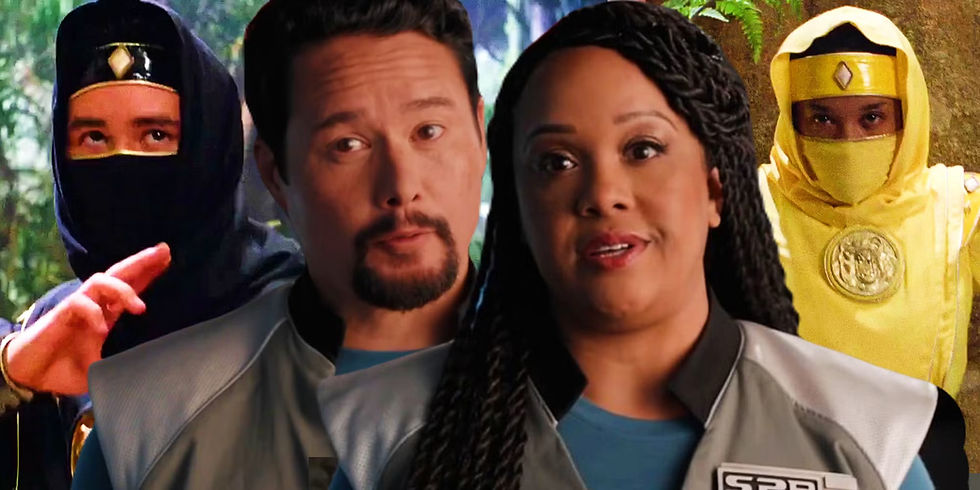
Years later, Aisha returns in Power Rangers Once & Always.
And now?
She isn’t stepping into the role.
She embodies its history.
Her presence carries weight.
Emotion.
Respect.
Especially as the story honors Thuy Trang.
🎭 Karan Ashley: The Responsibility Beyond the Role
Karan Ashley didn’t just play Aisha.
She understood what Aisha meant.
She showed up for fans.
She embraced the responsibility of representation.
She stayed connected.
And that’s why Aisha still resonates today.
Because the person behind the character…
respected the impact of the character.

🌍 Cultural Impact: Why Aisha Still Matters
Because representation still matters.
Because visibility still matters.
Because somewhere right now…
Someone is still waiting to see themselves as powerful.
And Aisha’s legacy still answers:
You already are.

🛡️ Soldiers of Light Against Darkness™: The Shared Truth
Aisha Campbell reflects the same truth found in Soldiers of Light Against Darkness™:
Heroes aren’t perfect.
They’re willing.
They show up.
They choose purpose over comfort.
🔥 Final Reflection: Power Is a Decision
Aisha didn’t just wear yellow.
She chose:
Courage
Service
Purpose
And that choice made her unforgettable.
🚀 Call to Action: Your Moment Is Coming
At some point…
The moment comes.
The moment where something is required of you.
The moment where you either step forward…
Or stay where it’s safe.
Aisha stepped forward.
The question is:
Will you?
🔥 Step into a world where heroes rise, sacrifice, and stand in the light:
Soldiers of Light Against Darkness™👉 www.tyronetonyreedjr.com/the-shop
Because the world doesn’t need perfect heroes…
It needs present ones.


Comments