
Tony’s Superhero Saturdays™: Black Lightning: The Hero Who Brought the Power Back to the People


Some heroes protect planets. Some defend galaxies. Some guard secret kingdoms, ancient temples or cities built on myth. But Black Lightning’s power has always hit differently because his mission begins closer to home.
Jefferson Pierce is not just a man who can command electricity. He is a teacher. A father. A mentor. A leader. A protector. He is a man who understands that saving the world means very little if you ignore the people in your own neighborhood who are fighting to survive every day.
That is what makes Black Lightning one of DC Comics’ most important heroes. He does not simply represent power. He represents responsibility with roots. His heroism is not detached from community, education, fatherhood or justice. It is shaped by all of those things. When Jefferson Pierce becomes Black Lightning, he is not running away from his identity. He is stepping deeper into it.
And that is why he deserves a Tony’s Superhero Saturdays™ spotlight. Because Black Lightning reminds us that the strongest heroes are not always the ones who fly the farthest. Sometimes they are the ones who come back home, stand in the gap and refuse to let their people be forgotten.
Who Black Lightning Really Is
Black Lightning, whose real name is Jefferson Pierce, first appeared in Black Lightning #1 in 1977. He was created by writer Jenny Blake Isabella (who writes under the names Tony Isabella and Jenny Blake) with artist Trevor Von Eeden, and his arrival mattered because he became DC Comics’ first Black superhero to headline his own solo comic book series. That was not a small thing. In an industry where Black characters had often been sidelined, stereotyped or underdeveloped, Jefferson Pierce arrived with purpose, intelligence and a clear connection to community.

Jefferson Pierce is often portrayed as a former Olympic-level athlete who returns to his old neighborhood to make a difference. In many versions, he becomes a teacher and later a principal, which is central to understanding him. His civilian mission is not separate from his superhero mission. Both are about saving lives. Both are about giving young people a chance. Both are about confronting the systems that make survival harder than it should be.
That dual identity makes Black Lightning powerful in a grounded way. He does not need to be a billionaire hiding in a mansion or an alien raised under Earth’s yellow sun. Jefferson Pierce is powerful because he chooses to serve. He looks at crime, poverty, corruption and hopelessness and decides that his gifts must be used where they are needed most.
The Origin: From Jefferson Pierce to Black Lightning
In the classic version of his origin, Jefferson Pierce returns to Metropolis’ Southside, also known as Suicide Slum, and finds a community struggling under the weight of crime and neglect. Rather than simply mourn what has happened, he chooses action. He becomes Black Lightning, a masked hero using electrical power, martial arts skill, athletic ability and strategic thinking to protect people who have been left vulnerable.
That origin is important because it immediately separates him from heroes whose stories begin with personal tragedy alone. Jefferson’s mission is personal, but it is also communal. He is not just avenging one wrong. He is responding to a pattern of wrongs. He understands that his neighborhood does not need pity. It needs protection, investment, education and someone willing to confront the people profiting from its pain.
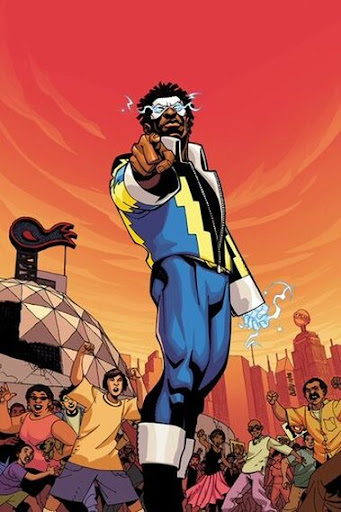
His costume and powers made him visually striking, but his purpose made him unforgettable. Black Lightning’s electricity became more than a superpower. It became a symbol of awakening. When he enters the fight, he brings light into places that systems have tried to leave dark.

A Hero Built on Education and Community
One of the strongest aspects of Black Lightning is that Jefferson Pierce’s work as an educator is not treated like background decoration. It is part of his heroism. Teaching is one of the most heroic professions in the world because teachers are often fighting battles that do not make headlines. They fight hopelessness. They fight low expectations. They fight the idea that some children are disposable.
Jefferson Pierce understands that saving young people is not always about catching them when they fall. Sometimes it is about helping them see they can rise before they ever hit the ground. As a teacher and principal, he is trying to shape futures before violence, poverty or despair can claim them. That makes his classroom another battlefield and his school another kind of headquarters.
This is where Black Lightning becomes especially meaningful. He is not only asking what happens after crime occurs. He is asking what conditions produce it, who benefits from it and what kind of community must exist to defeat it long term. That gives the character a depth that extends beyond punching villains. Jefferson Pierce is fighting for transformation, not just temporary victory.
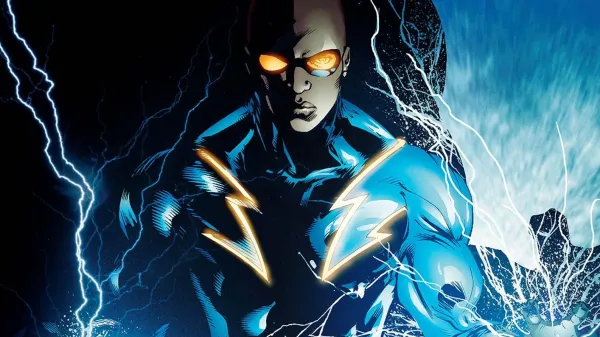
Fatherhood as Heroism
Black Lightning’s story becomes even richer when viewed through the lens of fatherhood. Jefferson Pierce is not just protecting anonymous civilians. In many modern versions, he is also a father trying to protect, guide and sometimes accept the power growing inside his own daughters, Anissa and Jennifer Pierce.
That part of his story matters because it shows the limits of control. Jefferson can face criminals, metahumans and corrupt systems, but fatherhood asks something different of him. He has to learn how to lead without smothering, protect without controlling and trust his children even when the world around them is dangerous.
That tension is powerful because many parents understand it. The instinct to protect can become overwhelming, especially when children inherit gifts, burdens or battles they did not ask for. Jefferson’s love for his daughters makes him stronger, but it also challenges him. It forces him to confront the truth that legacy is not just what we pass down. It is also what we allow the next generation to become.
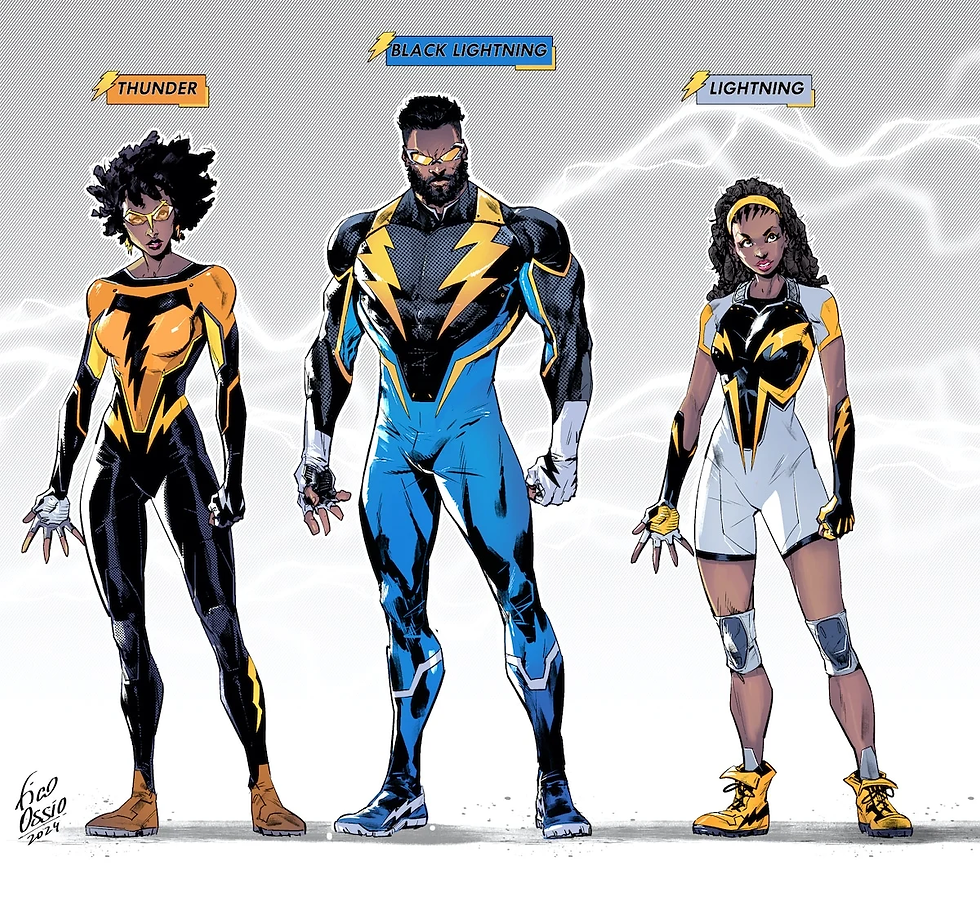
Thunder and Lightning: Anissa and Jennifer Pierce
Black Lightning’s legacy is not complete without his daughters. Anissa Pierce, also known as Thunder, and Jennifer Pierce, also known as Lightning, expand the meaning of the Black Lightning family. They prove that power does not stop with Jefferson. It continues, evolves and takes new shape through the next generation.
Anissa’s role as Thunder is especially important because she brings strength, conviction and representation to the superhero landscape. As a Black lesbian superhero, she carries cultural significance beyond her powers. She shows that heroism has many identities, and that the people who have often been pushed to the margins deserve to stand at the center of the story.
Jennifer’s journey as Lightning brings a different kind of emotional weight. Her powers are intense, unstable and deeply connected to her coming-of-age experience. She is not just learning how to fight. She is learning how to live with something inside her that can either help others or destroy her if she cannot control it. Together, Anissa and Jennifer make the Pierce family one of the most compelling superhero families in DC.
Tobias Whale: The Enemy Who Represents More Than Crime
Every great hero needs a villain who challenges the core of what they stand for, and for Black Lightning, Tobias Whale is that enemy. Tobias is not just a criminal mastermind. He represents corruption, exploitation and the kind of predatory power that feeds on vulnerable communities.
That is what makes the conflict between Jefferson Pierce and Tobias Whale so personal. Tobias is not simply robbing banks or seeking abstract world domination. His evil is rooted in control, manipulation and the poisoning of neighborhoods from within. He represents the systems and people who profit when communities are destabilized.
Black Lightning’s fight against Tobias is not just hero versus villain. It is protector versus predator. It is educator versus corrupter. It is father versus destroyer. That gives their rivalry weight because Tobias attacks the very thing Jefferson is trying to save: the future of his community.

Black Lightning and the Outsiders
Black Lightning has also played a major role beyond his own solo stories, especially through his connection to Batman and the Outsiders. His time with the Outsiders helped place him within a broader DC superhero context, proving that he was not only a community-based hero but also someone capable of standing alongside major players in the DC Universe.
That matters because Black Lightning has always carried both street-level and larger-than-life potential. He can protect a neighborhood, but he can also stand beside Batman, Metamorpho, Katana, Geo-Force and other heroes when the threat expands. His presence on a team shows that his power and leadership are not limited by geography.
Still, what makes Jefferson Pierce special is that he never feels disconnected from his roots. Even when he joins larger superhero conflicts, the heart of the character remains tied to service. He is not chasing fame or status. He is bringing the same sense of duty he carries at home into every battle he enters.

Black Lightning in Animation
Black Lightning has appeared in several animated projects, helping introduce him to audiences who may not have grown up reading his comics. In Superman/Batman: Public Enemies, he is voiced by LeVar Burton, a casting choice that carries weight because Burton himself is connected to education, imagination and cultural impact through Roots, Star Trek: The Next Generation and Reading Rainbow.
That appearance may not be the longest Black Lightning showcase, but it matters because animation has often served as a gateway into DC’s larger universe. Seeing Black Lightning alongside other heroes reinforces his place in the broader superhero world and gives new viewers a chance to ask, “Who is that?” Sometimes that question is the beginning of discovery.
Black Lightning has also appeared in animated DC storytelling connected to younger audiences, including projects like Young Justice, where his leadership and moral seriousness fit naturally into a world full of young heroes learning what responsibility really means. Animation allows the character to reach different generations, and every appearance helps keep his legacy alive.
Black Lightning on Television: Cress Williams Brings Jefferson Pierce to Life
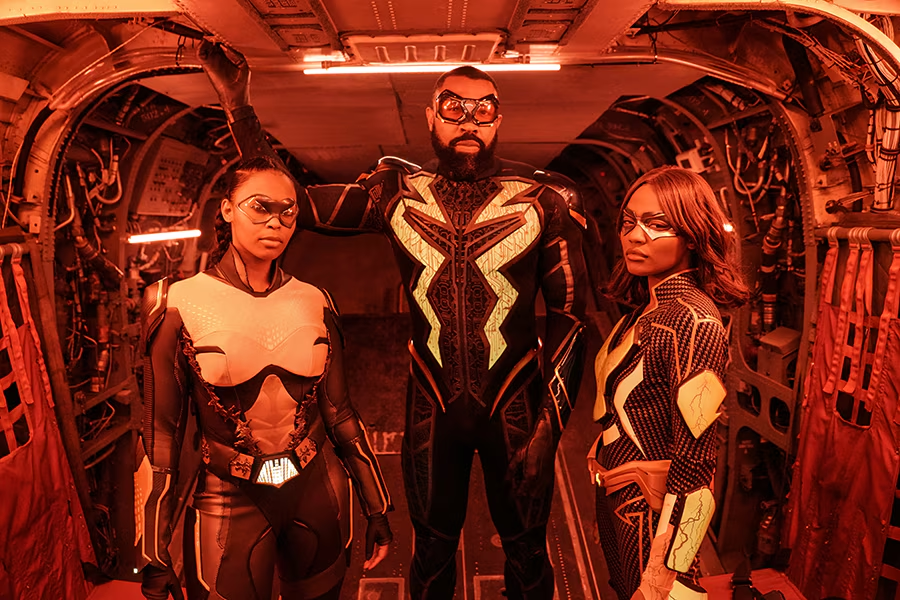
For many modern fans, the definitive version of Black Lightning is Cress Williams’ portrayal in The CW’s Black Lightning, which aired from 2018 to 2021. Williams brought gravity, warmth, strength and emotional maturity to Jefferson Pierce. His performance worked because he never played Jefferson as only a superhero. He played him as a man carrying responsibility in every direction: to his students, his daughters, his city, his ex-wife, his community and himself.
The series made a bold choice by beginning with Jefferson retired from superhero life. That decision immediately gave the show emotional weight. This was not an origin story about a young man discovering powers. This was a story about a grown man who had already fought, already sacrificed, already been hurt and already tried to choose peace. But when his family and community were threatened, he returned to the suit because some callings cannot be ignored.
That is one of the reasons the show stood out. It centered a Black father, a Black family and a Black community in a superhero narrative without treating those elements as side details. Freeland was not just a backdrop. It was part of the story’s soul. Jefferson was not saving an abstract city. He was fighting for a place full of people he knew, loved, taught and felt responsible for.

The Cast That Made Freeland Feel Real
Cress Williams led the series with quiet force, but Black Lightning worked because the family and community around Jefferson felt alive.

Nafessa Williams portrayed Anissa Pierce, bringing strength, intelligence and conviction to a character who becomes Thunder. Her performance helped make Anissa one of television’s most important Black queer superheroes, and she gave the show a bold sense of generational power.

China Anne McClain portrayed Jennifer Pierce a.k.a Lightning, capturing the fear, frustration and intensity of a teenager discovering that her life will never be normal. Jennifer’s powers were deeply tied to emotion, and McClain brought vulnerability and fire to that struggle. Her journey gave younger viewers a character wrestling with identity, pressure and destiny in real time.
Christine Adams portrayed Lynn Stewart, Jefferson’s ex-wife and the mother of Anissa and Jennifer. Lynn was not simply “the worried parent.” She was a scientist, a mother, a partner in complicated history and a woman often trying to hold the family together while confronting the dangers tied to metahuman power.

Marvin “Krondon” Jones III gave Tobias Whale a chilling presence. His Tobias was calm, cruel, strategic and deeply unsettling.

James Remar portrayed Peter Gambi, Jefferson’s mentor and ally, adding layers of secrecy, guilt and loyalty.

Damon Gupton portrayed Inspector Henderson, grounding the law enforcement side of Freeland’s struggle, while Jordan Calloway’s Khalil Payne/Painkiller became one of the show’s most tragic and compelling figures.
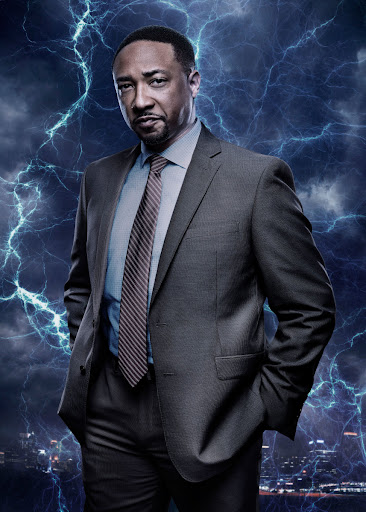

Together, the cast helped Black Lightning feel less like a superhero show with occasional family drama and more like a family drama where superheroics erupted because the stakes were too high to stay ordinary.

What the TV Series Got Right
The Black Lightning series understood that the character’s greatest strength was not just his electricity. It was his connection to community. The show dealt with crime, gangs, government experimentation, addiction, police tension, education, family trauma and the burden of being a public figure trying to do private healing.
It also made the Pierce family central. That was one of the show’s smartest choices. Jefferson’s heroism could not be separated from his fatherhood. Anissa and Jennifer were not just supporting characters waiting to be rescued. They were heroes in formation, each dealing with power differently and forcing Jefferson to evolve as a father and mentor.

The series also gave viewers a rare kind of superhero lead: a mature Black man who was an educator, father, ex-husband, community leader and warrior. Jefferson Pierce did not have to be young, single or emotionally detached to be compelling. His responsibilities made him more interesting, not less.
Black Lightning and the Arrowverse
Although Black Lightning initially stood apart from the Arrowverse, the character eventually crossed over during Crisis on Infinite Earths. Seeing Cress Williams’ Black Lightning stand alongside heroes like The Flash, Supergirl, Batwoman, Superman and others was a major moment because it placed Jefferson Pierce within the larger live-action DC multiverse.
That crossover mattered because it validated what fans already knew: Black Lightning belonged in the room. He was not a side note. He was not an outsider to the larger heroic conversation. He was a veteran hero with experience, wisdom and power.
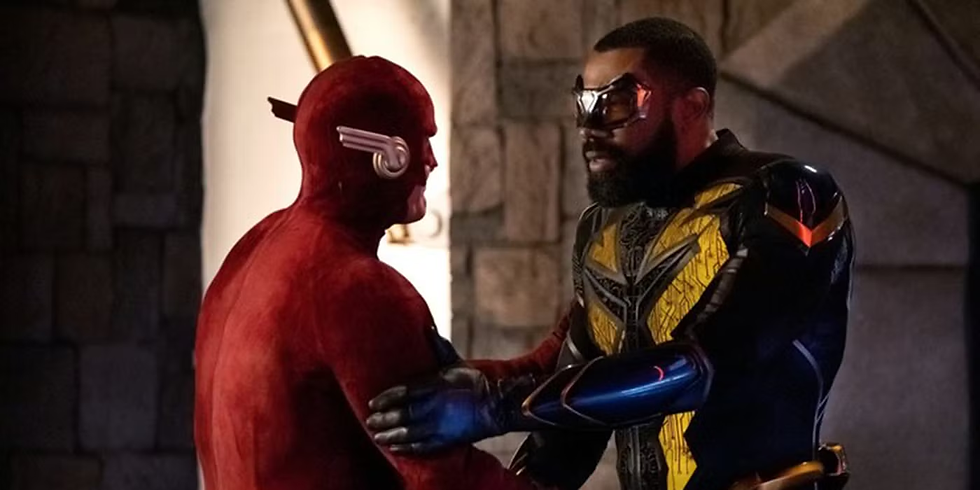
His presence in Crisis also showed how well the character works beyond his own city. Jefferson can stand inside cosmic-level chaos and still bring the grounded seriousness of a man who understands what is at stake when worlds are threatened. That balance makes him valuable in any superhero universe.
The Importance of Black Lightning in Black Superhero History
Black Lightning’s place in Black superhero history is essential. As DC’s first Black superhero to headline his own solo comic, he helped open doors. Representation matters not because every character must carry the weight of an entire community, but because absence carries weight too. When readers do not see themselves reflected as heroes, leaders and protectors, it sends a message. Black Lightning helped push back against that absence.
His importance is also tied to the kind of Black hero he is. Jefferson Pierce is educated, disciplined, community-minded and morally serious. He is not written as a sidekick or comic relief. He is not defined by stereotypes. He is a fully realized hero with his own mission, enemies, family and burdens.
That is why the character still matters. He represents a vision of Black heroism rooted in service, intelligence and accountability. His power is electric, but his true impact comes from what he chooses to do with it.

Why Black Lightning Still Matters Today
Black Lightning still matters because communities still need protectors. Schools still need leaders. Families still need fathers who show up. Young people still need examples of strength that is not rooted in selfishness or ego. Jefferson Pierce represents all of that.
His story reminds readers and viewers that heroism does not always begin with a cosmic accident or a billionaire’s resources. Sometimes it begins when someone looks at their neighborhood and says, “I will not abandon this place.” That kind of commitment is powerful because it is not glamorous. It is costly. It requires staying when leaving might be easier.
Black Lightning’s relevance also comes from the way he connects power to responsibility. Electricity can destroy, but it can also illuminate. That is Jefferson Pierce in one image. He is dangerous to those who prey on the vulnerable, but he is a light to those who need hope.

Final Reflection: Bring the Light Home
Black Lightning’s legacy is not just that he can command electricity. His legacy is that he brings power back to the people. He stands for the neighborhoods others overlook, the students others underestimate, the families carrying pain and the communities still fighting to be seen.
That is why he belongs in the superhero conversation. He is not simply a Black superhero. He is a great superhero whose Blackness, fatherhood, education, community ties and moral courage make his story richer and more necessary.
Jefferson Pierce teaches us that protecting the world starts with caring about home. He reminds us that power without purpose is just force, but power guided by love can become light.
And when darkness threatens the people he loves, Black Lightning does not just strike.
He shines.
Order autographed copies of S.O.L.A.D.: Soldiers of Light Against Darkness™ at www.tyronetonyreedjr.com/the-shop — because the greatest heroes do not just fight darkness… they bring light where it is needed most.


Comments