
Tony’s Superhero Saturdays™: Bruce Banner / The Hulk — The Rage That Protects


When the World Pushes Too Far
A siren wails somewhere in the distance. Neon lights shimmer off rain-slick streets. The city is loud—too loud—like it’s daring the night to break.
In a quiet corner of that chaos, a man tries to breathe through a storm nobody else can see.
His hands tremble. His heartbeat becomes a drumline. His eyes dart like they’re measuring exits, threats, consequences.
And then someone says the wrong thing. Or hurts the wrong person. Or triggers the wrong memory.
A low growl rises from a place deeper than anger—deeper than fear.
Bones shift. Muscles expand. The air itself seems to step back.
And the world learns (again) what it always forgets:
There are forces you do not control. There are wounds you do not understand. There are guardians who don’t want to be guardians… but will become one anyway.
HULK SMASH.
Not because he loves destruction—but because sometimes rage is the last shield between the innocent and the cruel.

The Creation of the Hulk
The Hulk was created by Stan Lee (writer/editor) and Jack Kirby (artist/co-plotter), and he first appeared in The Incredible Hulk #1 (cover-dated May 1962).
What Inspired His Creation
Stan Lee has repeatedly cited classic monster duality as core inspiration—especially Frankenstein and Dr. Jekyll and Mr. Hyde—for the concept of a man wrestling with an uncontrollable other self. Jack Kirby also leaned into the “Frankenstein in all of us” idea when describing why the Hulk worked as a character people could relate to.
That’s the genius of the Hulk: He’s not just a superhero. He’s a myth. A warning. A mirror.
Origins: The Gamma Bomb, the Accident, the Curse
Bruce Banner is a brilliant scientist whose life changes in an instant during a gamma bomb incident. Gamma radiation becomes the trigger that fractures him into something the world can’t categorize:

Monster
Weapon
Protector
Victim
Survivor
Hulk stories are rarely just action—they’re often about trauma, control, and identity: what happens when the part of you you’re most afraid of becomes the part of you that saves lives.
Powers: Why the Hulk Is a Living Force of Nature
The Hulk’s power set is legendary because it’s elastic—it scales with emotion.
Superhuman strength that increases with rage
Durability bordering on indestructible
Regeneration (often portrayed as a rapid healing factor)
Thunderclap / shockwave feats (depending on era)
Leaping across vast distances
Stamina that can outlast armies
And the most important “power” of all? The Hulk is not a machine. He’s a personality. Sometimes several.
Hulk’s Key Allies, Friends, and Relationships
Hulk’s world is packed with complicated relationships—because loving a walking apocalypse is never simple.
Core Allies & Friends
Betty Ross — the central emotional anchor in many eras
Rick Jones — one of the earliest and most important human connections
The Avengers — sometimes teammate, sometimes threat, sometimes both
The Defenders — where Hulk often feels less judged and more understood
She-Hulk (Jennifer Walters) — family, ally, and a different lens on gamma life

Love and Loss
Hulk’s greatest love stories are often tragic—not because he can’t love, but because the world fears what he is. Bruce Banner wants peace. Hulk wants freedom. And the people they love often get caught between those truths.
Greatest Villains and Nemeses
Hulk’s enemies aren’t just “bad guys.” They’re often symbols of what the world tries to do to him: control, exploit, punish, experiment, or provoke.
General “Thunderbolt” Ross — the eternal hunter who sees Hulk as a problem to be solved
The Leader — intellect weaponized against raw power
The Abomination — the gamma mirror that proves rage can be cruelty without conscience
The U-Foes (and other science-gone-wrong threats)
Government/military exploitation — one of Hulk’s most persistent “villains” is the system itself
Famous Battles, Greatest Victories, and Biggest Losses
Top 10 Hulk Fights (Comic-Defining Battles)
Hulk’s most famous fights aren’t just about strength—they’re about what happens when the world pushes him too far.
1. Hulk vs. The Avengers
The benchmark. Hulk vs. Earth’s Mightiest Heroes proves that raw power can challenge teamwork itself.
2. Hulk vs. Wolverine
Savage versus savage. Endurance, regeneration, and ferocity collide—often with no true winner.
3. Hulk vs. Abomination
A twisted mirror match. Same power source, different morality.
4. Hulk vs. Thor
Strength vs. godhood. These battles redefine “epic” every time they happen.
5. Hulk vs. Sentry
Perhaps Hulk’s most emotionally complex fight—two broken gods clashing under apocalyptic pressure.
6. World War Hulk vs. Iron Man (Hulkbuster Armor)
Technology vs. rage. One of Marvel’s most iconic “brains vs. brawn” showdowns.
7. Hulk vs. General Thunderbolt Ross
A lifetime conflict between hunter and hunted, science and fear.
8. Hulk vs. Red Hulk
Power without restraint meets power without mercy.
9. Hulk vs. The Leader
Mind vs. muscle—but also ideology vs. instinct.
10. Hulk vs. Himself
Banner vs. Hulk. Savage Hulk vs. Gray Hulk. Devil Hulk vs. World-Breaker. Hulk’s greatest enemy has always been internal.

Greatest Victories
Surviving worlds that tried to break him
Protecting the innocent even when they fear him
Becoming a champion in hostile lands (especially in “gladiator” style eras)
Proving—again and again—that he is not just destruction, but protection with pain
Biggest Losses
Being treated as a weapon instead of a person
Losing control and hurting what he cares about
The constant cycle of “run, hide, hunted, used, repeat”
The psychological war inside Banner himself
The Hulk endures because the struggle endures.
Team Affiliations
Hulk has been tied to major Marvel teams, sometimes as a founding presence and sometimes as a reluctant ally—especially the Avengers and the Defenders.
He doesn’t fit neatly anywhere. That’s the point.

All Hulks: Gamma Titans of the Marvel Universe
The Hulk legacy is not singular—it is a gamma lineage, each version reflecting a different response to power, trauma, and anger.
Bruce Banner / The Hulk
The original. Created by gamma radiation during a bomb test.
Relationship to Hulk: They are the same being, fractured by trauma.Represents rage restrained by conscience.
Devil Hulk
A manifestation of Banner’s childhood trauma.
Relationship: The protector Banner didn’t realize he needed. Represents survival instinct born from abuse and fear.
Joe Fixit (Gray Hulk)
A separate Hulk persona. Smarter, crueler, morally flexible.
Relationship: Banner’s suppressed ego and streetwise survival instincts. Represents pragmatism, resentment, and moral compromise.
World-Breaker Hulk
An evolved state of Hulk fueled by absolute rage.
Relationship: What happens when pain is no longer contained.Represents grief weaponized into unstoppable force.
Smart Hulk (Professor Hulk)
A fusion of Bruce Banner’s intellect and the Hulk’s strength achieved through science and self-acceptance.
Relationship: Reconciliation—the mind and the monster learning to coexist. Represents balance, integration, and the hope that healing is possible without erasing who you are.
She-Hulk (Jennifer Walters)
Gamma-transfused through Banner’s blood.
Relationship: Family (Bruce's cousin)—proof that gamma power doesn’t have to mean loss of self. Represents balance, identity, and control without surrender.
Red She-Hulk (Betty Ross)
Created through gamma experimentation and resurrection.
Relationship: Hulk’s greatest love transformed—shared pain, shared power, shared understanding. Represents rage shaped by loss, betrayal, and emotional truth rather than raw fury.
A-Bomb (Rick Jones)
Gamma-powered through experimentation.
Relationship: Hulk’s closest human ally turned into something like him. Represents loyalty, sacrifice, and the cost of standing beside a god.
Abomination (Emil Blonsky)
Gamma radiation combined with super-soldier serum.
Relationship: What Hulk becomes without compassion or restraint. Represents cruelty amplified by power.
Red Hulk (Thaddeus “Thunderbolt” Ross)
Created through gamma experimentation.
Relationship: Hulk without humility—power driven by control and ego.Represents rage justified as authority.
Skaar
Hulk’s son from Sakaar.
Relationship: Legacy, inherited rage, and the struggle to choose identity.Represents the next generation wrestling with the sins of the father.
Amadeus Cho (Brawn / Totally Awesome Hulk)
Absorbed Hulk’s gamma energy through intellect and control.
Relationship: What Hulk might look like guided by youth and optimism. Represents intelligence shaping power rather than being consumed by it.
Maestro
A possible future version of Bruce Banner exposed to extreme radiation and endless survival.
Relationship: Hulk’s darkest potential—what happens when power outlives compassion. Represents strength without restraint, intelligence without morality, survival without humanity.

Must-Read Hulk Comic Book Storylines
The Incredible Hulk #1 (1962)
The birth of the legend. Essential for understanding Hulk’s origins.
Peter David’s Hulk Run (1987–1998)
Often considered the definitive Hulk era.
Explored multiple Hulk personalities
Introduced psychological depth
Solidified Banner/Hulk as fractured yet interdependent
Planet Hulk
Hulk exiled to Sakaar. Forced to survive. Becomes a champion. Finds love. Builds a life.
This story reframed Hulk as:
Leader
Warrior
Survivor
King
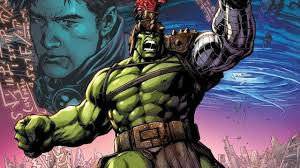
World War Hulk
The consequence of betrayal.
Hulk returns to Earth seeking accountability from those who banished him. A story about rage justified—and what happens when it’s unleashed.
The Immortal Hulk
A modern masterpiece that reimagines Hulk as:
Horror icon
Mythic force
Walking judgment
This run reframed gamma radiation as something darker, older, and more spiritual—making Hulk terrifying again.

Cartoons, TV, Movies, Video Games
Hulk is everywhere because he works everywhere:
The Hulk on Television: From Tragedy to Icon
The Incredible Hulk (1978–1982) — CBS
Starring Bill Bixby as Dr. David Bruce Banner and Lou Ferrigno as the Hulk, this series defined the Hulk for an entire generation.
This version leaned heavily into tragedy. Banner was a nomad, constantly on the run, trying to cure himself while helping strangers along the way. Each episode ended with the now-iconic image of Banner hitchhiking away—lonely, misunderstood, but still compassionate.
Lou Ferrigno’s physical performance gave the Hulk a sad, wounded humanity, while Bixby’s Banner embodied quiet desperation. This interpretation cemented Hulk as a tragic protector rather than a mindless brute.
TV Movies from this era include:
The Incredible Hulk Returns (1988)
The Trial of the Incredible Hulk (1989)
The Death of the Incredible Hulk (1990)
Ferrigno’s Hulk became the visual template that many later adaptations still echo.

Movies
The Hulk in Live-Action Film: Evolution Through the MCU
Hulk (2003) — Directed by Ang Lee
Starring Eric Bana as Bruce Banner, this film leaned deeply into psychology, childhood trauma, and emotional repression.
While divisive, it dared to treat Hulk as a symbolic manifestation of repressed pain rather than a simple monster.

The Incredible Hulk (2008)
Starring Edward Norton, this film rebooted Hulk for the MCU era, emphasizing:
A fugitive Banner
Military pursuit
Abomination as a dark mirror
This film laid the groundwork for Hulk’s integration into the Avengers.

The Marvel Cinematic Universe (2012–Present)
Starring Mark Ruffalo, with Hulk portrayed via motion capture.
Key appearances include:
The Avengers (2012)
Avengers: Age of Ultron (2015)
Thor: Ragnarok (2017)
Avengers: Infinity War (2018)
Avengers: Endgame (2019)
She-Hulk: Attorney at Law (2022)
Ruffalo’s Banner/Hulk arc explored:
Rage as trauma
Acceptance of the self
“Smart Hulk” as reconciliation between intellect and power
Thor: Ragnarok, in particular, embraced Planet Hulk aesthetics, introducing gladiator Hulk and deepening his mythic presence.

Animation
The Hulk in Animation: Strength Across Generations
The Incredible Hulk (1996–1997)
Voiced by Lou Ferrigno (Hulk growls) and Neal McDonough (Bruce Banner), this animated series explored Hulk’s psychology, internal conflict, and his romance with Betty Ross.
The Incredible Hulk (1982)
A more classic Saturday-morning take that introduced younger audiences to Hulk’s world.
The Avengers: Earth’s Mightiest Heroes (2010–2012)
One of the most beloved animated portrayals of Hulk, showing him as:
A reluctant Avenger
A powerhouse in battle
A misunderstood outsider
Hulk and the Agents of S.M.A.S.H. (2013–2015)
A lighter, more action-comedy-focused take that emphasized Hulk’s family of gamma-powered allies.

Guest Appearances
Hulk has appeared across numerous Marvel animated projects, including:
Fantastic Four
Avengers animated series
Marvel crossover specials
Animation often leans into Hulk’s heart, not just his fists.
Video Games
Top 10 Hulk Video Games (Ranked by Impact & Legacy)
The Hulk has always been a natural fit for video games. His raw power, size, and rage-driven gameplay translate perfectly into interactive storytelling.
1. The Incredible Hulk: Ultimate Destruction (2005)
The gold standard. An open-world sandbox where Hulk’s strength felt limitless. Leaping across cities, ripping cars apart, and using the environment as weapons finally captured Hulk’s comic-book power fantasy.
2. The Incredible Hulk (2008)
A spiritual successor to Ultimate Destruction, tied to the MCU film but expanded with free-roaming destruction and improved combat mechanics.
3. Marvel’s Avengers (2020)
Hulk plays a central role, emphasizing his balance between Banner’s guilt and Hulk’s power. Combat-heavy, cinematic, and emotionally grounded.
4. The Incredible Hulk: The Pantheon Saga (2001)
An earlier attempt at giving Hulk scale and destruction, notable for its ambition and darker tone.
5. Hulk (2003)
Based on Ang Lee’s film, featuring comic-inspired panel transitions and psychological themes.
6. Marvel Ultimate Alliance (2006)
Hulk as a playable powerhouse in a team-based RPG that showcased his synergy—and clashes—with other heroes.
7. Marvel Ultimate Alliance 2 (2009)
Expanded Hulk’s combat and tied his role to moral choices in the Civil War storyline.
8. Lego Marvel Super Heroes (2013)
A lighter take, but hugely popular—Hulk smashing Lego cities introduced him to a new generation.
9. Contest of Champions (Mobile)
Hulk’s rage mechanics translate effectively into mobile combat gameplay.
10. Marvel vs. Capcom Series
Hulk’s brute-force fighting style made him a fan-favorite brawler in competitive arcade games.

Special Appearances and Cultural Crossovers
Hulk’s likeness and influence extend far beyond solo projects:
Theme park attractions
Crossover comics
Pop-culture homages
Video game appearances in Marvel brawlers, RPGs, and ensemble titles
Hulk works everywhere because his concept is universal.
Why the Hulk Endures
Because the Hulk is not about smashing.
He is about survival.
He exists at the intersection of:
Trauma and protection
Rage and justice
Fear and love
Hulk stories work because everyone understands what it feels like to:
Be pushed too far
Be misunderstood
Be judged by your worst moments
Want peace but be prepared for war
Hulk doesn’t fight because he enjoys it. He fights because someone has to stand between cruelty and the vulnerable.
Because Hulk is one of the most honest superheroes ever created.
He embodies the thing people are afraid to say out loud:
Anger is real.
Pain is real.
Trauma is real.
And sometimes “being good” means fighting your own storm every day.
Hulk endures because he represents the battle between what you feel and what you choose.
And because, deep down, people recognize this truth:
Sometimes the strongest hero is the one who doesn’t want to fight…but fights anyway.

Rage, Restraint, and Redemption: The Hulk and S.O.L.A.D.™
Bruce Banner and the Hulk remind us of a truth every great hero story eventually confronts: the most dangerous battles are rarely fought against monsters, armies, or cosmic threats—they are fought within the soul. Hulk’s struggle is not simply about rage; it is about restraint. It is about living with power that could destroy everything, and still choosing—again and again—to protect instead of dominate, to endure instead of surrender.
That same struggle lives at the heart of S.O.L.A.D.™: Soldiers of Light Against Darkness™. Like Banner, the Soldiers of Light Against Darkness™ wrestle with forces inside themselves as powerful as the enemies they face. Darkness tempts. Rage beckons. Power demands a price. Every character is tested not only by what stands in front of them, but by what rises within them when fear, anger, and despair press hardest.
True heroism—whether in the Marvel Universe or the S.O.L.A.D.™ saga—is not defined by strength alone. It is defined by choice. By choosing restraint when destruction would be easier. By choosing purpose over impulse. By choosing the light when darkness offers quicker answers. Hulk endures because he represents the eternal war between destruction and meaning. And in S.O.L.A.D.™, that same war is fought with faith, courage, identity, and destiny on the line.
If you are drawn to stories where power has consequences, where heroes are forged under pressure, where inner wars matter as much as cosmic ones—and where darkness never gets the final word—then your journey doesn’t end here. Step into the S.O.L.A.D.™ universe and experience a saga where the fight for light is as personal as it is epic. Discover the novels today at www.tyronetonyreedjr.com/the-shop.


Comments