
Tony’s Superhero Saturdays™: Sidney Prescott — The Final Girl Who Refused to Die


There are horror icons…And then there is Sidney Prescott.
Before the term “elevated horror” became fashionable, before franchises learned to interrogate their own tropes, before audiences expected survivors to be more than screaming victims, Sidney Prescott stood her ground—bleeding, grieving, terrified, and unbroken.
Portrayed by Neve Campbell, Sidney Prescott isn’t just the heart of the Scream franchise—she is its conscience, its moral anchor, and its emotional spine. For nearly three decades, she has endured betrayal, trauma, loss, and relentless violence… and still chose to live.
With Scream 7 arriving February 27, Sidney’s return invites us to look back—not just at a survivor, but at a woman who reshaped what survival means.

The Birth of a New Kind of Final Girl
When Scream debuted in 1996, horror audiences thought they knew the rules.
Final girls were usually:
Passive
Sexually restrained
Reactive rather than proactive
Sidney Prescott shattered that mold.
She was intelligent, emotionally layered, skeptical, sexual on her own terms, and—most importantly—capable of fighting back. She didn’t survive because she was “pure.” She survived because she learned, adapted, and refused to surrender her agency.
Sidney didn’t just run from Ghostface.
She studied him.
She challenged him.
She outlived him.
That made her revolutionary.

Loss as Legacy: What Sidney Has Endured
Sidney’s legend is inseparable from her grief.
Her story begins in trauma:
Her mother, Maureen Prescott, brutally murdered.
Her boyfriend, Billy Loomis, revealed as her tormentor.
Friends and loved ones slaughtered in cycles of violence that never truly end.
Across the franchise, Sidney loses:
Best friends
Romantic partners
Innocent bystanders
Any illusion of a “normal” life
Yet Scream never treats her trauma as spectacle. Instead, Sidney is allowed to process, retreat, heal, and return on her own terms. By Scream 3, she has chosen isolation. By Scream 4, she reclaims her voice. By Scream (2022), she is no longer running—she is protecting others.
Survival, for Sidney, isn’t luck. It’s choice.

Why Sidney Prescott Is the Ultimate Final Girl
Sidney stands apart from other horror survivors for several reasons:
1. She Learns the Rules—and Breaks Them
Sidney understands horror tropes but refuses to be trapped by them. She doesn’t rely on coincidence; she relies on preparation.
2. She Reclaims Power
Sidney confronts her attackers directly—emotionally and physically. She exposes their motives, dismantles their narratives, and denies them the satisfaction they crave.
3. She Evolves
Sidney is never static. Each film shows a different version of survival:
Fear
Withdrawal
Empowerment
Leadership
4. She Refuses to Become What Hunts Her
Unlike many characters consumed by vengeance, Sidney never becomes cruel. She fights to end the cycle—not perpetuate it.
That restraint is heroic.

Sidney Prescott: Family, Bloodlines, and the Life She Protected
Sidney Prescott’s story is rooted in family—not just in what she lost, but in what she ultimately chose to build and protect. Across the Scream franchise, family is both the source of her trauma and the measure of her healing.
The Past: Maureen Prescott and the Origin of the Nightmare
Sidney’s journey begins with the violent murder of her mother, Maureen Prescott, a loss that becomes the catalyst for every Ghostface killing that follows. Over time, the films reveal that Maureen lived a complicated, secretive life—particularly during her years in Hollywood—one that others later weaponize to justify their violence.
For the killers, Maureen becomes an excuse.
For Sidney, Maureen becomes a burden she never asked to carry.
Sidney spends much of her early arc grappling not just with grief, but with the fear that her mother’s past defines her own identity. Her growth begins when she rejects that lie—choosing accountability without inherited guilt.

A Fractured Bloodline: Neil Prescott, Jill Roberts, and Roman Bridger
Sidney’s father, Neil Prescott, survives the initial wave of violence but remains emotionally and physically distant in later films—present, yet unable to fully protect his daughter from the cycle surrounding her.

Her extended family proves even more dangerous. Her cousin Jill Roberts seeks to murder Sidney in order to steal her legacy, and her half-brother Roman Bridger—Maureen’s illegitimate son—attempts to redefine Sidney’s entire existence through resentment and entitlement.


These revelations force Sidney to confront a painful truth: blood does not guarantee safety. In her world, family can be fragile—or weaponized.
Sidney’s refusal to let lineage dictate destiny is one of her most powerful acts of defiance.
The Present: Marriage, Motherhood, and a Chosen Life
By the time of Scream, Sidney Prescott has done something no Ghostface ever expected.
She has built a life.
Sidney confirms that she is married, and the film strongly implies—though does not explicitly confirm—that her husband is Mark Kincaid, the former detective portrayed by Patrick Dempsey in Scream 3. The movie never states his name outright, but long-time fans and supplemental material widely interpret this as a continuation of that relationship.

Importantly, the franchise intentionally keeps her husband off-screen and unnamed, reinforcing that Sidney has drawn a firm boundary between her family and the violence that once defined her life.
Sidney is also a mother of three children:
Two school-age daughters
One younger child
This information is revealed through dialogue in Scream (2022) and later corroborated by official summaries and reference material. The children are never shown, named, or placed in danger—an intentional narrative choice that signals something rare in horror storytelling.

Sidney has broken the cycle.
The Future: Ending the Inheritance of Violence
Sidney’s motherhood is not symbolic—it is revolutionary.
Where Maureen’s life became a catalyst for trauma, Sidney’s life becomes a shield. She refuses to pass fear down to the next generation. She fights not for notoriety, not for legacy, but for privacy, safety, and peace.

In doing so, Sidney accomplishes what no Ghostface ever could:
She survives the story
She refuses the spotlight
She protects what matters most
Her future is no longer defined by screams, masks, or knives—but by choice.
Sidney Prescott does not merely outlive horror.
She outgrows it.
Ghostface: A Monster with Many Faces
What makes Sidney’s journey uniquely harrowing is that Ghostface is never just one villain.
Ghostface is:
A lover
A friend
A relative
A fan
A copycat
A movement
Sidney isn’t hunted by evil incarnate—she’s hunted by human obsession, entitlement, and grievance. Each new killer believes they deserve a story… and Sidney refuses to be their ending.
In doing so, she exposes a chilling truth:
The scariest monsters don’t wear masks—they wear familiarity.

Every Ghostface Unmasked: The Killers, the Motives, and Sidney’s Reckonings
Ghostface is not a single villain—it is a succession of choices made by broken people. Each killer steps into the mask believing they are justified, unique, or destined to “finish the story.” What they ultimately reveal is that obsession, entitlement, and grievance are the true horror.
Below is a complete breakdown of every Ghostface killer so far, and how Sidney Prescott intersects with each chapter of that violence.
Billy Loomis — The Boyfriend (Scream, 1996)
Who he was: Billy Loomis (Skeet Ulrich) was Sidney Prescott’s boyfriend—charming, brooding, and seemingly supportive in the aftermath of her mother’s murder.
Connection to Sidney: Intimate and deeply personal. Billy was Sidney’s romantic partner, trusted confidant, and emotional anchor during her most vulnerable time.
Motivation: Billy blamed Maureen Prescott for his mother’s abandonment after Maureen’s affair with Billy’s father. Rather than confront the adults responsible, Billy redirected his rage toward Sidney—punishing her for her mother’s sins and crafting himself as the avenger of a broken family.
Did Sidney take him down? Yes. Sidney shoots Billy after discovering his betrayal and refuses to be manipulated by his claims of love. Her first kill is not triumphant—it is devastating. But it is necessary.
Why he matters: Billy establishes the franchise’s most important truth: the greatest danger is the one closest to you.

Stu Macher — The Friend (Scream, 1996)
Who he was: Stu (Matthew Lillard) was Billy’s best friend—goofy, erratic, and underestimated.
Connection to Sidney: Indirect but personal. Stu was part of Sidney’s social circle and helped create a false sense of safety.
Motivation: Stu’s motivations are disturbingly shallow. He follows Billy out of peer pressure, thrill-seeking, and a desire to belong. He enjoys the chaos and attention more than the revenge.
Did Sidney take him down? Yes. Sidney and Gale Weathers work together to kill Stu using a television—symbolically destroying him with the very media obsession he embraced.
Why he matters: Stu represents how violence spreads through complicity, not ideology.

Mrs. Nancy Loomis (Debbie Salt) — The Vengeful Parent (Scream 2, 1997)
Who she was: Billy Loomis’s mother (Laurie Metcalf), hiding in plain sight as journalist “Debbie Salt.”
Connection to Sidney: Sidney is the object of her obsession. Mrs. Loomis holds Sidney responsible for Billy’s death, refusing to acknowledge her son’s crimes.
Motivation: Maternal vengeance. Mrs. Loomis reframes Billy as a victim and Sidney as the villain, externalizing blame to avoid confronting her own failures.
Did Sidney take her down? Yes. Sidney shoots Mrs. Loomis after exposing her delusions.
Why she matters: She illustrates how grief can mutate into denial, and how refusing accountability perpetuates violence.

Mickey Altieri — The Fame Seeker (Scream 2, 1997)
Who he was: A film student and serial killer enthusiast (Timothy Olyphant).
Connection to Sidney: Minimal personal connection. Sidney is important to Mickey only as a platform.
Motivation: Mickey wants notoriety. He plans to blame movies for his crimes and become a media spectacle, turning violence into performance art.
Did Sidney take him down? Indirectly. Gale and Sidney confront him; Mrs. Loomis ultimately kills him to tie up loose ends.
Why he matters: Mickey exposes the danger of performative violence and celebrity obsession.

Roman Bridger — The Family Obsession (Scream 3, 2000)
Who he was: Maureen Prescott’s illegitimate son—Sidney’s half-brother (Scott Foley).
Connection to Sidney: Deeply familial. Roman is blood.
Motivation: Roman blames Maureen for rejecting him and Sidney for receiving the love he never had. He manipulates earlier killers and frames himself as the architect of the entire Ghostface legacy.
Did Sidney take him down? Yes. Sidney kills Roman after rejecting his attempt to rewrite her identity through his resentment.
Why he matters: Roman crystallizes the franchise’s theme: blood does not excuse brutality.

Jill Roberts — The Jealous Heir (Scream 4, 2011)
Who she was: Sidney’s cousin (Emma Roberts).
Connection to Sidney: Family—and envy.
Motivation: Jill wants fame without sacrifice. She resents Sidney’s survival narrative and decides to kill her to inherit the spotlight as the “new Sidney.”
Did Sidney take her down? Yes. Sidney survives Jill’s elaborate self-harm scheme and ultimately shoots her.
Why she matters: Jill is perhaps the franchise’s most chilling killer—she represents narcissism fueled by social media culture.

Charlie Walker — The Follower (Scream 4, 2011)
Who he was: A horror film obsessive (Rory Culkin) manipulated by Jill.
Connection to Sidney: None directly.
Motivation: Charlie wants validation, affection, and relevance. He believes killing will earn him love.
Did Sidney take him down? Indirectly. Jill betrays and kills him once he outlives his usefulness.
Why he matters: Charlie shows how radicalization often begins with loneliness.

Richie Kirsch — The Fan (Scream, 2022)
Who he was: Boyfriend (Jack Quaid) of Sam Carpenter, Sidney’s indirect successor.
Connection to Sidney: Sidney is a mythic figure to Richie—a symbol of a franchise he believes belongs to fans.
Motivation: Richie is angry that the Stab films “lost their way.” He believes murder is justified to “fix” the story.
Did Sidney take him down? Sidney plays a key role in confronting Richie alongside Gale and Sam.
Why he matters: Richie represents toxic fandom—the belief that ownership justifies harm.

Amber Freeman — The Devotee (Scream, 2022)
Who she was: Richie’s partner and co-conspirator (Mikey Madison).
Connection to Sidney: Indirect. Sidney represents legacy; Amber wants relevance.
Motivation: Pure fanaticism. Amber wants to be part of something “important.”
Did Sidney take her down? Yes. Sidney and Gale kill Amber together—reclaiming agency from those exploiting their trauma.
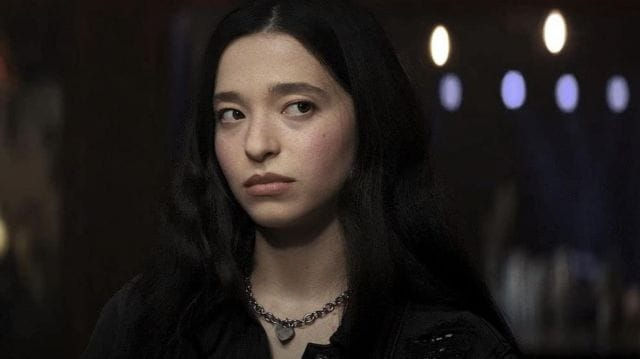
Detective Wayne Bailey, Ethan Landry, Quinn Bailey — The Grieving Family (Scream VI, 2023)
Who they were: Richie Kirsch’s father (Dermot Mulroney) and siblings (Jack Champion and Liana Liberato).
Connection to Sidney: Sidney is absent from this chapter, marking the first Ghostface cycle not directly tied to her.
Motivation: Revenge for Richie’s death.
Did Sidney take them down? No. Sam and Tara Carpenter confront and defeat them.
Why they matter: Sam and Tara being pushed to the forefront underscores Sidney’s evolution—the story can continue without her, but it began with her.

Why Sidney Always Wins
Every Ghostface believes the mask makes them powerful.
Sidney proves the opposite.
She survives because she:
Names the truth
Rejects false narratives
Refuses to carry others’ guilt
Chooses life without surrendering her humanity
Ghostface thrives on obsession.
Sidney survives on clarity.
And that is why—no matter how many faces wear the mask—Sidney Prescott always outlives the monster.

Neve Campbell’s Performance: Why Sidney Endures
Neve Campbell’s portrayal of Sidney Prescott is grounded, raw, and emotionally honest. She never plays Sidney as invincible—she plays her as resilient.
Campbell allows Sidney to:
Cry without shame
Fight without glamor
Heal without spectacle
That authenticity is why fans demanded her return—and why her presence matters more than any twist.
Sidney Prescott isn’t iconic because she’s flashy. She’s iconic because she feels real.

Sidney Prescott’s Absence—and Why Her Return Matters
When Sidney sat out Scream VI, audiences felt it. Not because the new characters lacked merit—but because Sidney represents continuity, history, and accountability.
Her return in Scream 7 signals something important:
The franchise remembers its roots
Survival has weight
Legacy matters
Sidney’s presence reframes the violence. It reminds us that the past isn’t entertainment—it’s consequence.

What We Know So Far About Scream 7
While plot details remain closely guarded, confirmed and reported elements suggest:
Sidney Prescott returns as a central figure
Themes of legacy, motherhood, and long-term survival are expected
The film aims to rebalance the franchise around its original heart
Rather than nostalgia, Scream 7 appears positioned as a reckoning—asking what survival looks like decades later, when the scars never fully fade.
Sidney’s story has never been about escaping horror. It’s about living beyond it.
Sidney Prescott vs. the Horror Genre
Sidney Prescott didn’t just survive horror—she changed it.
Because of her:
Final girls became proactive
Trauma was treated with seriousness
Slasher films learned to self-examine
Survival became a journey, not a reward
She paved the way for characters who fight and feel.

Why Sidney Prescott Is a Superhero
Sidney has no powers. No gadgets. No secret lair.
Her strength is:
Endurance
Discernment
Moral clarity
The courage to keep living
That makes her a superhero in the truest sense.
She shows us that:
Survival is not weakness. Healing is not surrender. And choosing to live—again and again—is an act of defiance.

S.O.L.A.D.™ Parallel: Standing When Darkness Knows Your Name
Sidney Prescott’s story echoes a truth at the heart of S.O.L.A.D.™: Soldiers of Light Against Darkness™—that the most dangerous battles are not always fought in the open, but in the shadows where fear, grief, and identity are tested.
In S.O.L.A.D.™, the Soldiers of Light Against Darkness™ are not spared from darkness. They are targeted by it. Darkness studies them. Learns their wounds. Tries to rewrite their past, claim their future, and convince them that survival itself is an accident—or worse, a mistake. Much like Sidney, these warriors face enemies who wear familiar faces, speak convincing lies, and exploit pain that never fully healed.
Sidney is not protected because she is stronger than everyone else. She endures because she refuses to let darkness define who she is. That same principle governs the Soldiers of Light. They do not win because they are untouched—but because they remain anchored to truth when deception presses in, to purpose when despair tempts them, and to light when darkness insists it deserves the final word.
Scripture reminds us:
“For we wrestle not against flesh and blood, but against principalities, against powers, against the rulers of the darkness of this world.” (Ephesians 6:12)
Ghostface changes faces.
Darkness adapts tactics.
But light endures through discernment, perseverance, and faith.
In both Scream and S.O.L.A.D.™, survival is not just physical—it is spiritual. It is the daily decision to keep standing, to keep choosing truth over fear, and to keep believing that darkness can be resisted, named, and overcome.
Sidney Prescott survives because she refuses to surrender her soul.
And that refusal—to bow, to break, to become what hunts you—is the defining mark of every true Soldier of Light Against Darkness.
Darkness, whether masked or unseen, thrives on repetition. It returns when it believes memory has faded. It studies wounds. It waits for fatigue. And it assumes that survival, given enough time, will give way to surrender.
But Sidney Prescott never surrenders.
That is what makes her story endure.

Final Reflection: Living Beyond the Scream
Sidney Prescott’s greatest victory has never been killing Ghostface.
It has been outliving the narrative designed to consume her.
Again and again, she is offered a role—victim, symbol, spectacle, cautionary tale. And again and again, she refuses to accept it. She does not deny her pain. She does not erase her past. But she also does not allow trauma to become her identity.
That choice—made repeatedly, under pressure, in moments of terror—is what transforms survival into heroism.
Sidney lives beyond the scream.
She lives beyond the mask, beyond the knife, beyond the cycle that insists violence must always have the last word. In a genre that often confuses endurance with luck, Sidney Prescott teaches us that true survival is intentional. It is clarity over chaos. Discernment over despair. Faith—in oneself, in truth, in life—over fear.
As Scream 7 approaches, Sidney’s return is not about nostalgia. It is about legacy. It is a reminder that even when darkness adapts, multiplies, and returns with new faces, light does not need to reinvent itself to remain powerful.
It only needs to stand.
Sidney Prescott stands—not because she is unafraid, but because she has learned that fear does not get to decide who she becomes.
And in that quiet, unyielding resolve, she proves why she is not just a final girl…
…but a hero.


Comments