
Tony’s Superhero Saturdays™: Hellboy: The Demon Who Chose to Be a Hero


Not every hero arrives in bright colors. Some heroes come out of shadows, carrying a massive stone hand, broken horns, a trench coat, a cigar, and enough sarcasm to make monsters regret waking up.
Hellboy has always been different. He does not wear a cape. He does not fly through the sky. He does not stand in front of cameras hoping the world will applaud him. Most people would probably run from him before they ever learned his name. He looks like something pulled from a nightmare — red-skinned, horned, powerful, and built like he could tear through a wall without slowing down.
But that is exactly what makes him special.
Hellboy is a hero because he was born from darkness and still chose to fight for the light. He was summoned to Earth by evil forces. He was meant to become a weapon of destruction. He carries a destiny connected to monsters, demons, ancient prophecies, and the end of the world itself.
Yet he refuses to become what darkness intended. That is the heart of Hellboy. He is not a hero because his past is clean. He is not a hero because he was born into privilege, safety, or acceptance. He is a hero because, again and again, he chooses humanity over destruction. He chooses protection over power. He chooses to stand between innocent people and the things hiding in the dark.
And that makes Hellboy one of the greatest supernatural heroes ever created.
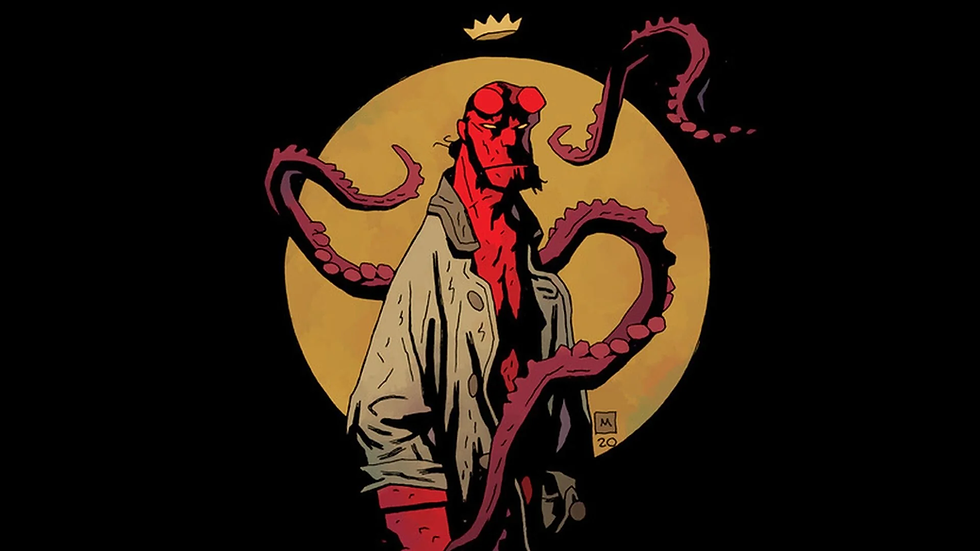
Who Is Hellboy?
Hellboy is the red-skinned paranormal investigator created by comic book legend Mike Mignola. He was brought into the world during World War II through a Nazi occult ritual meant to summon a powerful supernatural weapon. But the plan did not go the way evil intended.
Instead of becoming a servant of destruction, the infant Hellboy was discovered by Allied forces and taken in by Professor Trevor Bruttenholm. Bruttenholm became more than a handler or scientist. He became Hellboy’s father figure. He gave this strange child a name, a home, guidance, education, and the chance to become more than the thing he was born to be.
That decision changed everything.
Hellboy grew up to become an agent of the Bureau for Paranormal Research and Defense, better known as the B.P.R.D. The organization investigates supernatural threats, ancient legends, monsters, curses, haunted places, witches, ghosts, demons, and things most people would rather pretend do not exist.
And when the danger becomes too big, too strange, or too evil for ordinary people to handle, Hellboy is usually the one walking through the door. Not because he is perfect. Not because he has no fear. But because he knows what evil looks like — and he refuses to let it win.
The Right Hand of Doom
One of the most iconic things about Hellboy is his enormous stone right hand, known as the Right Hand of Doom.

At first glance, it looks like the ultimate superhero weapon. It is huge, indestructible-looking, and capable of smashing monsters, punching through walls, and making supernatural enemies rethink every decision that led them into the room.
But the Right Hand of Doom is much more than a weapon. It is connected to Hellboy’s larger destiny. It is tied to ancient prophecy, apocalyptic power, and the possibility that Hellboy could become the force that brings about the end of the world. That means he carries a reminder of his dark destiny with him every day.
Think about that.
Hellboy cannot simply forget where he came from. He cannot pretend there is no darkness connected to his life. He literally carries a piece of that darkness on his arm. But he still chooses good.
That is what gives the character real depth. Hellboy is not someone who has never been tempted by power. He is someone who has every reason to be tempted. He knows he could become something terrifying. He knows there are forces waiting for him to claim his destiny as a destroyer.
Yet he chooses to be the protector.
That is a powerful message. You may carry scars. You may carry pain. You may carry things from your past that seem determined to define you. But like Hellboy, you still get to choose what you do next.
Mike Mignola and the Art of Darkness
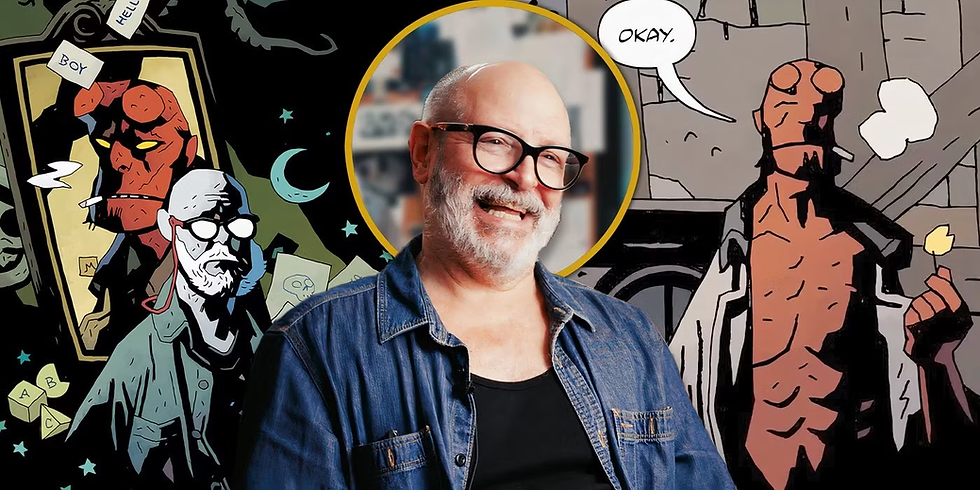
A major reason Hellboy stands apart is the imagination of creator Mike Mignola.
Mignola did not create a world that feels like every other superhero universe. Hellboy is built from folklore, myth, ancient monsters, ghost stories, old churches, haunted forests, secret societies, lost cities, witches, demons, and things that feel like they have been waiting in the darkness for centuries.
The art is a huge part of that atmosphere.
Hellboy comics often use deep shadows, bold shapes, strange creatures, ancient ruins, and striking red-and-black imagery. Mignola’s work does not try to make every page overly realistic. Instead, it feels like you are looking at a nightmare painted with style and purpose.
That visual identity matters because Hellboy stories are not just about action. They are about mood.
A Hellboy comic can make an abandoned house feel dangerous before anything even moves. It can make an old statue feel like it is watching. It can make a dark hallway feel like it contains a hundred years of bad history.
And then Hellboy walks in, makes a sarcastic comment, lights a cigar, and punches the monster in the face. That balance is why the character works so well. Hellboy can be creepy, funny, tragic, action-packed, mysterious, and surprisingly emotional — sometimes all in the same story.
The B.P.R.D.: A Family Built in the Strange
Hellboy may be the face of the franchise, but he is not alone.
The B.P.R.D. gives Hellboy a strange but meaningful found family. These are people and creatures who have all been touched by the supernatural in one way or another. They may not fit into ordinary life, but together they protect the world from threats most people never see.
Professor Trevor Bruttenholm, often called Professor Broom, is the father figure who gave Hellboy a home. He believed that Hellboy could become good before Hellboy had even had the chance to prove it. That faith in him matters because it gave Hellboy something darkness could not understand: love without fear.

Abe Sapien is one of Hellboy’s closest allies. Calm, intelligent, mysterious, and deeply connected to the paranormal world, Abe brings a different kind of strength to the team. Where Hellboy is blunt force and raw instinct, Abe is thoughtfulness, knowledge, and quiet courage.

Liz Sherman carries one of the most dangerous powers in the Hellboy universe: fire. Her ability is incredible, but it is also tied to trauma and fear. Liz’s story shows that power can be frightening when you are still learning to control it. Her bond with Hellboy works because they both understand what it means to feel different from everyone else.

Then there are characters like Johann Kraus, Kate Corrigan, Ben Daimio, Lobster Johnson, and many others who help make the Hellboy universe feel enormous. It is a world full of people carrying secrets, scars, curses, strange gifts, and unfinished business.
But they stand together anyway.
That is what makes the B.P.R.D. so meaningful. They are not a perfect family. They are a family built out of people who understand that the world is stranger and darker than most people know — and who still choose to protect it.

Hellboy and the Power of Choice
The central question in Hellboy’s story is simple: Is he doomed to become the monster everyone fears? The answer is one of the reasons fans love him.
Hellboy is constantly surrounded by people, demons, prophecies, and enemies who tell him what he is supposed to become. They see his horns, his hand, his bloodline, and his supernatural destiny. They look at him and see a weapon. Hellboy looks at himself and chooses something else. That is heroic.
He does not deny that darkness exists inside his story. He does not pretend his past is not complicated. He does not act like he is above temptation, anger, fear, or loneliness. But he refuses to let any of those things have the final word.
Hellboy’s story tells us that origin is not destiny. Your beginning does not have to control your ending. The world may label you. People may expect the worst from you. Circumstances may try to convince you that you are trapped in a pattern. But choice still matters. Character still matters. The direction you decide to walk still matters. Hellboy may have been called into the world by darkness, but he made himself a hero through his choices.

The Comics: Monsters, Myths, and Legendary Stories
Hellboy’s comic book history is rich because the character was built for the page.
The early Hellboy: Seed of Destruction story introduced readers to the strange, supernatural world surrounding him. From there, the mythology expanded through stories involving Rasputin, Baba Yaga, ancient gods, werewolves, witches, giants, ghosts, Nazi occultists, apocalyptic monsters, and legends from around the world.
Stories such as Wake the Devil, The Chained Coffin, Conqueror Worm, The Wild Hunt, The Storm and the Fury, and Hellboy in Hell helped build a world that feels less like a typical comic-book universe and more like a massive library of haunted folklore.
That is one of the things that makes Hellboy special.
A Superman story can take readers to Metropolis. A Batman story can take them to Gotham City. A Spider-Man story can take them swinging through New York. A Hellboy story can take readers to a haunted Russian castle, a cursed Appalachian town, a forgotten temple, a ghost-filled church, a witch’s forest, or the depths of Hell itself. The setting is never just decoration. It becomes part of the danger.
And through all of it, Hellboy remains recognizable. He is still the blue-collar supernatural hero with a huge fist, a stubborn attitude, and a deep instinct to protect people who cannot protect themselves.

Ron Perlman and the Live-Action Hellboy Legacy
For many fans, Ron Perlman is Hellboy.
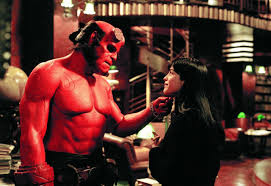
Guillermo del Toro’s 2004 Hellboy film introduced the character to a much wider audience and brought the world of Mike Mignola to life with monster designs, occult mystery, gothic action, humor, and heart. Ron Perlman gave Hellboy the perfect combination of toughness, sarcasm, warmth, and hidden sadness.

Perlman’s Hellboy was not just a monster hunter. He felt like a man who wanted to belong in a world that was never fully ready to accept him. He could be funny, stubborn, reckless, romantic, frustrated, and protective. That gave the character emotional weight.
The 2008 sequel, Hellboy II: The Golden Army, expanded the fantasy side of the universe. It gave audiences more creatures, more mythology, more strange worlds, and one of the most visually imaginative superhero movies of its era.

Guillermo del Toro’s approach understood something important about Hellboy: the monsters should not just be frightening. They should be beautiful, weird, sad, funny, and unforgettable. That is why the films still have such a loyal following. They made Hellboy feel big-screen epic without losing his rough, strange, blue-collar personality.
Hellboy in Animation
Hellboy also found a strong home in animation.
The animated films Hellboy: Sword of Storms and Hellboy: Blood and Iron brought back several familiar voices from the live-action films, including Ron Perlman as Hellboy, Selma Blair as Liz Sherman, Doug Jones as Abe Sapien, and John Hurt as Professor Broom.

These animated stories worked because the Hellboy universe is naturally suited for animation. The strange creatures, mythological villains, haunted landscapes, and supernatural action can become even larger and wilder in animated form.
Sword of Storms leaned into Japanese folklore and ghostly mythology, while Blood and Iron explored vampires, haunted mansions, old legends, and the kind of gothic mystery that fits Hellboy perfectly.

The animated films also reminded fans that Hellboy does not need to be limited to one kind of story. He can work in comic books, live-action horror, fantasy adventure, animation, and video games because the core of the character is strong enough to survive different styles.
No matter the format, Hellboy still feels like Hellboy.
David Harbour, Jack Kesy, and New Versions of Hellboy
The Hellboy legacy has continued through different live-action interpretations.
David Harbour stepped into the role in the 2019 reboot, bringing a bigger, rougher, more intense version of Hellboy to the screen. That film leaned heavily into blood, monsters, mythology, and a more R-rated supernatural world. It also featured Ian McShane as Professor Broom, Milla Jovovich as Nimue, Sasha Lane as Alice, and Daniel Dae Kim as Ben Daimio.

Then came Hellboy: The Crooked Man, with Jack Kesy taking on the role. This version moved in a darker, folk-horror direction, placing Hellboy in a cursed Appalachian setting filled with witches, supernatural terror, and the sinister Crooked Man.

What makes these different interpretations interesting is that Hellboy can survive reinvention. Different actors can bring different energy to him, but the core never changes.
He is still the demon who chooses humanity. He is still the monster who fights monsters. He is still the outsider who protects a world that may never fully understand him.
Hellboy in Video Games
Hellboy has also stepped into the world of video games, where his monster-hunting style feels completely natural.
From earlier games like Hellboy: Dogs of the Night and Hellboy: The Science of Evil to the 2023 game Hellboy Web of Wyrd, players have been able to step into Hellboy’s heavy boots, throw punches with the Right Hand of Doom, explore supernatural environments, and battle creatures pulled from nightmares.

Hellboy Web of Wyrd was especially meaningful because it used a visual style inspired by Mike Mignola’s comic-book art. It also featured the late Lance Reddick as the voice of Hellboy, bringing a powerful new presence to the character.
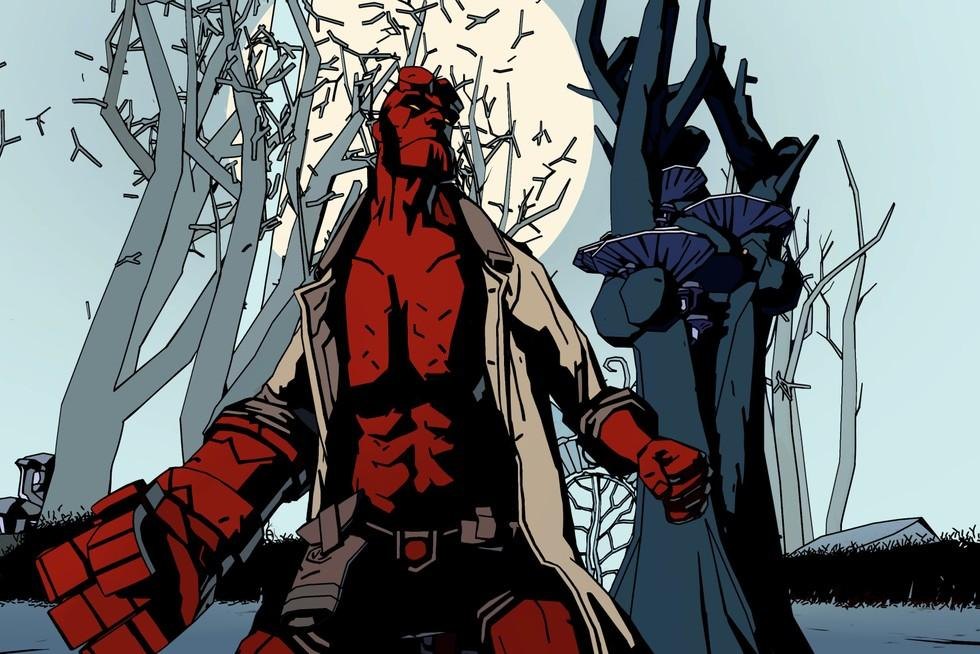
The game reminded fans that Hellboy works perfectly in interactive form. His world is built around mystery, monsters, mythology, and combat. Every old house, secret passage, demon, and cursed object feels like it could become part of a game level.
And let’s be honest: sometimes a giant stone fist is exactly what a monster needs to see coming.
Why Hellboy Still Matters
Hellboy still matters because he represents something deeply human beneath all the horns, monsters, and supernatural chaos.
He represents the struggle to become more than what people expect from you. He represents the idea that being different does not make you dangerous. He represents found family. He represents the possibility that even people who feel strange, broken, rejected, or misunderstood still have something powerful to offer the world.
Hellboy is not polished. He is not perfect. He is not trying to impress anyone. He is tired sometimes. He gets angry. He makes mistakes. He carries grief. He carries the weight of knowing that darkness will always try to claim him. But he keeps showing up.
That is what makes him a hero. Not the fist. Not the guns. Not the sword. Not the horns. The choice. Hellboy keeps choosing to fight for others.
Final Reflection: The Monster Who Protected Humanity
Hellboy proves that a hero does not have to look like the world expects.
Sometimes the hero has red skin. Sometimes the hero has a stone hand. Sometimes the hero walks into haunted places where everyone else is too afraid to go. Sometimes the hero is the person who knows darkness best because darkness once tried to claim them.
Hellboy’s story is ultimately about rejecting the destiny that evil wrote for you. He was supposed to become destruction. Instead, he became protection. He was supposed to bring darkness.
Instead, he became the thing darkness learned to fear.
That is why Hellboy belongs in the superhero conversation. He is not just a demon. He is not just a monster hunter. He is not just a cult-comic icon.He is a hero who proves that the things that make you different can become the very things that help you save others.
And when the monsters come out of hiding, when the shadows start moving, and when the world needs someone willing to walk straight into the dark… Hellboy is already on the way.

Order autographed copies of S.O.L.A.D.: Soldiers of Light Against Darkness™ at www.tyronetonyreedjr.com/the-shop — because the greatest heroes are not defined by where darkness tried to send them, but by the light they choose to bring back.


Comments