
Tony’s Superhero Saturdays™: Isaiah Bradley: The Captain America America Tried to Forget


On this Fourth of July, as the United States marks 250 years since the Declaration of Independence was adopted, America will celebrate with fireworks, flags, cookouts, concerts, parades, family reunions, and speeches about freedom.
And there is nothing wrong with celebration.
There is nothing wrong with loving your country.
There is nothing wrong with being grateful for the people, places, opportunities, sacrifices, faith, family, culture, and communities that have shaped your life.
But a mature love is not blind. A mature love tells the truth. A mature love can celebrate the promise of America while still confronting the ways America has sometimes betrayed that promise. A mature love can honor the flag while refusing to hide the stories of people who bled for a nation that did not always honor them in return. A mature love can say, “This country has done good,” while also saying, “This country still has work to do.”
That is why Isaiah Bradley matters.
Isaiah Bradley is not just another version of Captain America.
He is a fictional character whose story forces readers to wrestle with a painful question: What happens when a nation needs Black people to fight for its freedom, but refuses to fully treat Black people as free?
What happens when a country celebrates courage but hides the courageous?
What happens when a government uses people, damages people, and then acts as though their sacrifice never happened?
Isaiah Bradley is the Captain America America tried to forget. And on America’s 250th birthday, his story deserves to be remembered.

Who Is Isaiah Bradley?
Isaiah Bradley is Marvel Comics’ first Black Captain America.
He was introduced in the 2003 limited series Truth: Red, White & Black, written by Robert Morales and illustrated by Kyle Baker. The story takes readers back to World War II and reveals a hidden chapter of the Super-Soldier program.

Most people know the legendary story of Steve Rogers.
A young man with a good heart is chosen to receive the Super-Soldier Serum. He becomes Captain America. He wears the red, white, and blue. He fights Nazis. He becomes a living symbol of courage, sacrifice, and American ideals.
Isaiah Bradley’s story asks a harder question.
What if the government tried to recreate that serum on Black soldiers? What if Black men were treated as test subjects instead of heroes? What if they were sent into danger with little regard for whether they came home?
That is the world Isaiah Bradley enters.
In Marvel’s story, Isaiah is one of several Black soldiers who are experimented on as the military attempts to recreate the formula that transformed Steve Rogers. The serum kills many of the men. Others suffer. Isaiah survives.
But surviving is not the same as being honored. He is sent on a deadly mission behind enemy lines. He takes a Captain America uniform and shield. He completes what others could not. He becomes a hero in every sense of the word.
And when he returns? He is not celebrated. He is not paraded through the streets. He is not placed on posters. He is punished.
That is the wound at the center of Isaiah Bradley’s story.
A Fictional Story Rooted in Real Pain
Isaiah Bradley is fictional.
But the pain inside his story is not.
Truth: Red, White & Black was created with real American history in its bones. The story reflects the long history of racism in the military, the exploitation of Black bodies in medical experimentation, and the way Black contributions have often been minimized, ignored, or erased from the national story.
That is what makes the series so heavy.
It does not simply say, “What if there was a Black Captain America?”
It asks, “What would America have done to a Black Captain America during World War II?”
Would he have been celebrated?
Would he have been protected?
Would his humanity have been recognized?
Or would he have been used as long as he was useful, then discarded once his sacrifice became inconvenient?
Isaiah Bradley’s story echoes the horror of the Tuskegee syphilis study, in which Black men were subjected to unethical medical abuse and denied the truth about their care. It also echoes the stories of Black soldiers who served bravely in wars while returning home to segregation, discrimination, violence, and a country still unwilling to grant them full equality.
That is why Isaiah’s story is not just comic-book tragedy. It is comic-book truth. It is a reminder that fiction can sometimes say what history books have tried to whisper.

Captain America Is More Than a Shield
Captain America has always represented more than physical strength. The shield is a symbol.
It represents protection.
It represents sacrifice.
It represents standing in front of danger so someone else does not have to.
It represents the idea that power should not be used to dominate the weak, but to defend them.
Steve Rogers represents that ideal beautifully. Sam Wilson represents that ideal in a new generation. And Isaiah Bradley represents what happens when a nation claims to believe in that ideal, but refuses to live by it.
That is why Isaiah’s Captain America matters so much. He wore the uniform before the country was ready to see him in it. He carried the shield before America was willing to admit that Black patriotism was real, powerful, and worthy of honor. He fought for a nation whose systems did not fight for him. And still, he fought.
That is not weakness. That is not blind loyalty. That is courage in its rawest form.
Because Isaiah Bradley’s heroism did not come from a country treating him well. It came from him deciding that evil still needed to be confronted, even when the people in power had failed him.

The America Isaiah Bradley Exposes
America often loves simple stories.
We like stories where the hero is obvious, the villain is obvious, and the ending makes us feel good about ourselves.
But Isaiah Bradley complicates the story.
He reminds us that America can be both beautiful and broken.
It can produce people of extraordinary courage while also building systems that harm the very people who show that courage. It can speak the language of liberty while allowing injustice to live in the shadows. It can celebrate freedom while refusing to tell the full truth about who was denied it.
That does not mean America is beyond hope. It means hope requires honesty. You cannot heal what you will not name. You cannot repair what you refuse to examine. You cannot celebrate freedom fully while ignoring the people who paid for America’s progress with blood, tears, labor, faith, resilience, and sacrifice.
Isaiah Bradley forces us to look at the flag and ask deeper questions.
Who has been protected by this country?
Who has been overlooked?
Who has been honored?
Who has been hidden?
Who has fought for America while still having to fight America?
Those are not anti-American questions. Those are the questions people ask when they want America to become better.

What It Means to Celebrate 250 Years
Two hundred and fifty years is a long time. It is long enough for a nation to change. It is long enough for a nation to grow. It is long enough for a nation to make progress that should be honored.
Slavery was abolished. Segregation was challenged and dismantled through the courage of ordinary and extraordinary people. Voting rights expanded. Black leaders, teachers, pastors, judges, doctors, artists, military members, entrepreneurs, athletes, authors, elected officials, and community builders helped shape the America we know today.
Every step forward matters. Every barrier broken matters. Every child who can dream bigger because someone before them fought matters.
But progress is not permission to stop.
A nation does not become righteous simply because it survived its past. A nation becomes righteous when it continues to confront the ways its past still affects its present.
America at 250 should not only be a celebration of what happened in 1776.
It should also be a reflection on what America means in 2026.
Are we living up to the words we teach children? Are we treating people with dignity? Are we protecting the vulnerable? Are we telling the truth about our history? Are we creating a country where every child can believe that their gifts, their voice, and their future matter?
Isaiah Bradley belongs in that conversation because he represents the people history often tries to hide until someone is brave enough to bring their story back into the light.

Isaiah Bradley and the Cost of Silence
One of the most painful things about Isaiah Bradley’s story is not only what happened to him.
It is what happened after. He was hidden. Silenced. Forgotten.
That kind of silence is its own form of violence.
When a person sacrifices and no one tells their story, the country loses something. When a veteran is ignored, the nation loses part of its conscience. When a Black hero is erased, young people lose the chance to see themselves in the story of courage.
When injustice is hidden, future generations are tempted to repeat it.
Isaiah Bradley is important because he reminds us that silence protects the wrong people.
Silence protects the systems that caused the harm. Silence protects the people who want history to remain comfortable.
But truth protects the future.
Truth gives families language for what happened to them. Truth gives communities the ability to heal. Truth gives young people a fuller picture of the country they are inheriting.
And truth gives America a chance to become more honest, more just, and more worthy of the ideals it claims to represent.
Steve Rogers, Sam Wilson, and Isaiah Bradley
Isaiah Bradley does not diminish Steve Rogers.
He does not take away from Steve’s sacrifice.
Steve Rogers remains one of the greatest heroes in comic-book history because he represents the best version of what America says it wants to be: brave, compassionate, selfless, and willing to stand against tyranny.
But Isaiah reminds us that America has not always extended that same faith, dignity, and protection to everyone.
And Sam Wilson carries that truth into the present.
Sam becoming Captain America matters because he does not put on the shield pretending that America is perfect. He puts on the shield knowing that America is complicated. He knows the history. He knows the pain. He knows the weight that comes with being a Black man carrying a symbol that has not always protected Black people equally.
And he carries it anyway. That is not naïveté. That is courage.
Sam Wilson represents an America that can be challenged and still loved. He represents an America that can be criticized and still called toward its better self. He represents the belief that symbols can change when the people carrying them have the courage to tell the truth.
Isaiah Bradley is part of that legacy. Steve carried the shield. Isaiah carried the wound. Sam carries both the shield and the truth.

Carl Lumbly, The Falcon and the Winter Soldier, and Captain America: Brave New World
For many viewers, Isaiah Bradley became unforgettable through Carl Lumbly’s performance in Marvel Studios’ The Falcon and the Winter Soldier.
Lumbly did not play Isaiah like a simple comic-book cameo or an Easter egg for longtime fans. He played him like a man who had survived betrayal, imprisonment, experimentation, and decades of being erased by the country he once served.
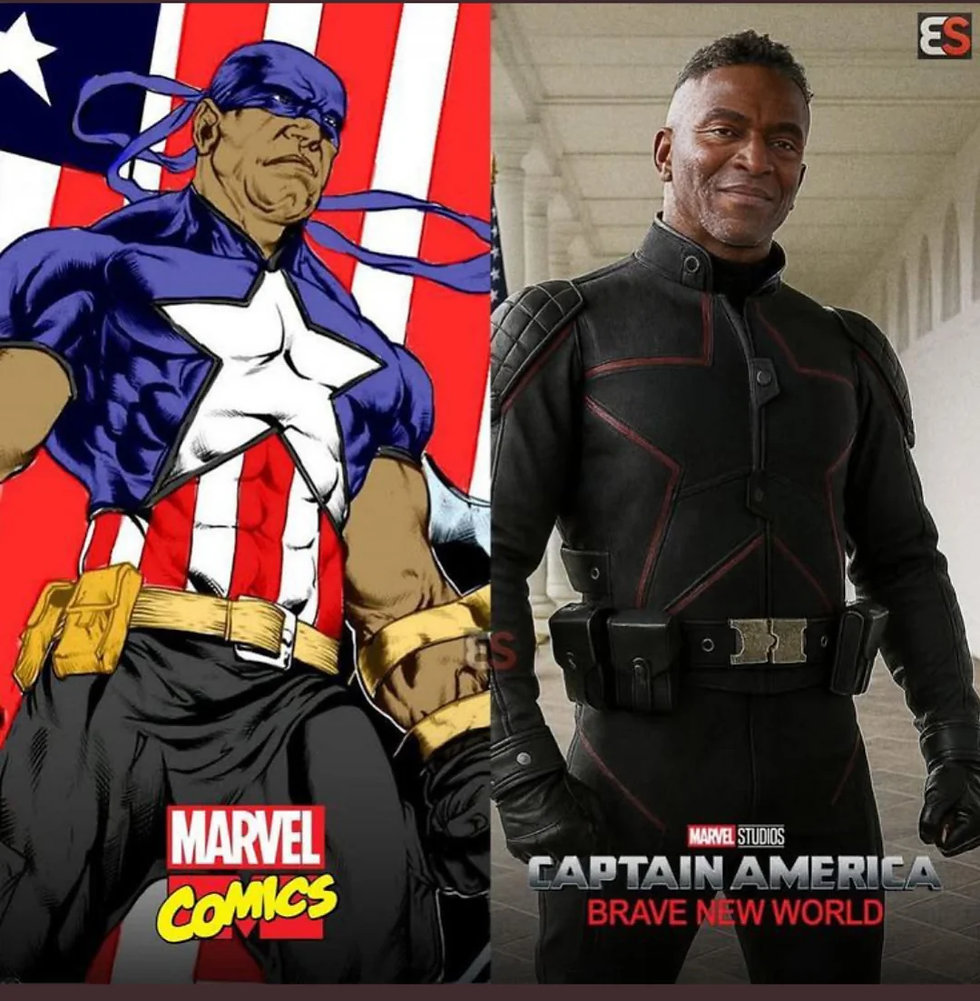
In the series, Bucky Barnes brings Sam Wilson to meet Isaiah because Sam is struggling with what it would mean for a Black man to carry Captain America’s shield. Isaiah’s story immediately changes the conversation. He reveals that he was a Korean War-era super-soldier who had been used by the government, sent into danger, imprisoned for years, and subjected to further experiments after returning home.
His anger is understandable. His pain is understandable. And his distrust of the Captain America symbol is understandable.
Isaiah does not see the shield only as a symbol of hope. He sees it through the eyes of a Black man who was used by his country, hidden by his country, and denied the honor that should have come with his sacrifice. That is why his conversation with Sam hits so hard. Isaiah is not trying to destroy Sam’s dream. He is warning him about the weight of a symbol that has not always protected Black people equally.
That storyline is one of the emotional foundations of The Falcon and the Winter Soldier. Sam cannot become Captain America in a meaningful way without hearing Isaiah’s truth. Isaiah helps force Sam to confront the question at the center of the series: Can a Black man carry the shield while also telling the truth about the country behind it?
Carl Lumbly returned as Isaiah Bradley in Captain America: Brave New World, showing that Isaiah’s story was not meant to be a one-time moment. In the film, Isaiah is living more openly and shares a warmer relationship with Sam Wilson, but he is pulled into danger when he becomes the prime suspect in an attack connected to a larger conspiracy.
That storyline is important because it places Isaiah’s past trauma beside a new kind of threat. He is once again treated as someone people are willing to suspect, use, and discard. But Sam refuses to abandon him. Sam believes Isaiah deserves truth, dignity, and justice, especially after everything that was taken from him.
Their relationship in Brave New World shows how much Isaiah matters to Sam’s Captain America journey. Isaiah is not simply part of the past. He is part of the moral foundation of what Captain America must mean now.
Carl Lumbly brings extraordinary gravity to the role. He gives Isaiah anger without making him cruel, pain without making him weak, and dignity without making him distant. His performance reminds audiences that Isaiah Bradley is not just a symbol of injustice.
He is a man.
A veteran.
A survivor.
A father and grandfather.
A hero whose country failed him.
And a Captain America America should have honored all along.

Elijah Bradley and a Legacy That Continues
Isaiah Bradley’s legacy does not end with him.
His grandson, Elijah Bradley, becomes Patriot, a member of the Young Avengers. That connection matters because it shows how history travels through families. The wounds of one generation often affect the next. But so does the courage.
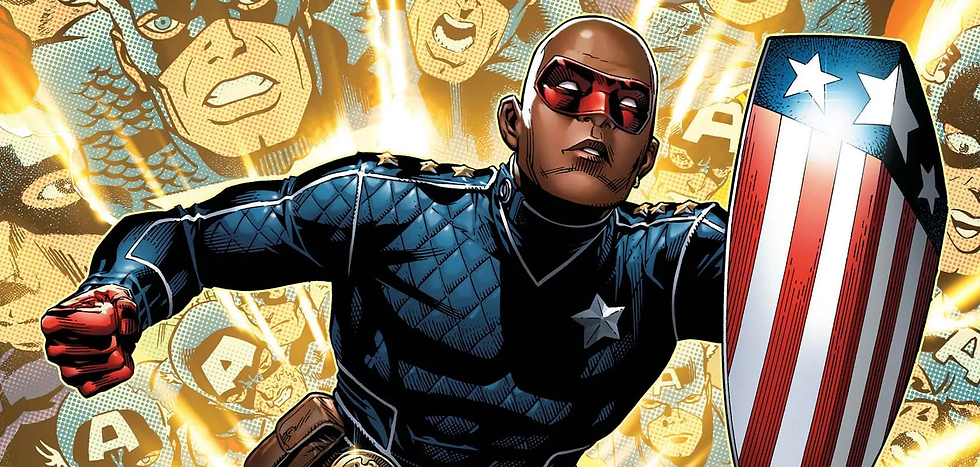
Elijah grows up under the shadow of a story he does not fully understand at first. His grandfather is not celebrated in the way Steve Rogers is celebrated. Isaiah’s heroism is complicated by trauma, secrecy, and the country’s refusal to honor him publicly.
But eventually, Elijah learns the truth. And that truth changes him. That is how legacy works.
Children do not just inherit names. They inherit stories. They inherit pain. They inherit questions.
They inherit strength. They inherit the chance to make different choices.
Isaiah Bradley’s life is a reminder that what we hide from the next generation does not disappear. It only becomes harder for them to understand. But when we tell the truth, we give them a chance to carry the legacy with greater wisdom.
The Patriotism Isaiah Bradley Teaches
Isaiah Bradley teaches a different kind of patriotism.
Not the kind that says America is perfect. Not the kind that gets angry whenever someone brings up injustice. Not the kind that waves a flag while refusing to care about the people living underneath it.
He teaches the kind of patriotism that says America is worth fighting for because America is still unfinished. He teaches the kind of patriotism that believes freedom must include everyone. He teaches the kind of patriotism that understands the country’s greatness is not found in pretending it has never failed.
Its greatness is found in whether it has the courage to admit failure, repair harm, and move forward with greater justice. That is the patriotism we need at 250.
We do not need a Fourth of July that erases Black history. We need a Fourth of July that includes it. We do not need a celebration that acts as though every American experienced freedom the same way. We need a celebration that honors the people who fought to make freedom more real for everyone.
We do not need empty pride. We need purposeful pride. Pride that comes with responsibility. Pride that comes with humility. Pride that comes with a willingness to say, “We have come a long way, but we still have farther to go.”

What Isaiah Bradley Says to Black America
Isaiah Bradley is powerful because he tells Black Americans something that history has often tried to deny:
Your sacrifice matters, even when it is not acknowledged.
Your courage matters, even when it is not celebrated.
Your service matters, even when the country you serve fails to serve you back.
Your story matters, even when people try to bury it.
But Isaiah’s story also carries a warning. Black people should never have to prove their worth through suffering.
We should not have to bleed before people believe we belong. We should not have to be exceptional just to be treated as human.
The beauty of Isaiah Bradley is not that he endured injustice. The beauty is that he did not let injustice erase his humanity.
His story is painful because he deserved better. And every Black child deserves better than a country that asks for their loyalty while withholding its full love.
That is why remembering Isaiah matters. Not so we can stay trapped in pain. But so we can build something better.

Final Reflection: A Captain America Worth Remembering
On America’s 250th birthday, Isaiah Bradley deserves more than a footnote. He deserves a spotlight. He deserves to be remembered as a man who fought against evil, carried the shield, survived what should have broken him, and became a symbol for the Black heroes history tried to hide.
He reminds us that patriotism without truth is performance. He reminds us that celebration without reflection is incomplete. He reminds us that freedom is not just something written on paper.
It is something people must experience in real life.
Isaiah Bradley is the Captain America America tried to forget.
But his story is still here.
His sacrifice is still here.
His truth is still here.
And on this Fourth of July, as fireworks light up the sky and America marks 250 years, let us remember that the nation is not strongest when it hides its wounds.
It is strongest when it has the courage to heal them.
The shield is not only red, white, and blue.
It is also heavy.
It carries history.
It carries pain.
It carries promise.
And Isaiah Bradley reminds us that the real question is not whether America has a legacy.
The real question is whether America is willing to live up to it.

Order autographed copies of S.O.L.A.D.™: Soldiers of Light Against Darkness™ at www.tyronetonyreedjr.com/the-shop — because true heroes do not hide from the darkness in history. They shine a light on it, confront it, and help build a better future.


Comments