
Tony’s Superhero Saturdays™: Lois Lane — The Fearless Voice That Made Superman Matter: Superman Day Special — Celebrating 88 Years of Truth, Courage, and Legacy


Before the cape ever caught the wind… Before the world learned to look up in the sky… Before a symbol of hope was etched into the hearts of generations… There was a woman asking questions no one else had the courage to ask.
There was a woman chasing truth into danger, into corruption, into rooms where power tried to silence her. There was a woman who refused—at every turn—to be ignored, dismissed, or controlled.
Her name is Lois Lane.
And on this Superman Day, as we celebrate 88 years since the debut of Superman, it is only right that we pause and recognize something that history often overlooks: Superman may be the world’s greatest hero… but Lois Lane is the reason his story matters.
Because power inspires awe. But truth inspires change. And Lois Lane has always stood on the side of truth.

The Real Woman Behind the Legend
Lois Lane was never meant to be ordinary. From her very creation, she was rooted in the spirit of real-world courage. One of her primary inspirations was Nellie Bly, a groundbreaking journalist who quite literally risked her life to expose injustice. Bly didn’t write from a distance—she immersed herself in danger, entering institutions, confronting power, and uncovering truths that others were too afraid to pursue.
That same DNA runs through Lois Lane.
She was never written to wait. She was written to move. To investigate. To challenge. To disrupt.
At a time when women were rarely portrayed as assertive professionals in media, Lois Lane walked into the pages of Action Comics #1 and immediately demanded attention—not because of powers, but because of presence.
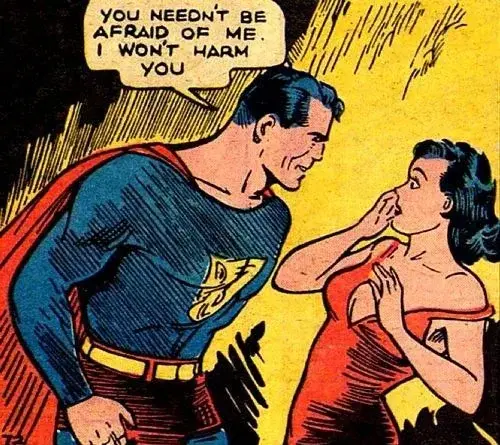
A Woman Ahead of Her Time
To truly understand Lois Lane, you have to understand the era she was born into.
In 1938, most female characters were written as:
Passive observers
Romantic accessories
Characters in need of rescue
Lois Lane broke every one of those expectations. She wasn’t waiting to be saved—she was chasing leads. She wasn’t dependent—she was ambitious.
She wasn’t quiet—she was relentless. She was, in many ways, a blueprint for what strong female characters would eventually become. But what makes Lois remarkable is that she wasn’t reacting to progress. She was leading it.

The Evolution of a Legend
Over the decades, Lois Lane has grown with the world around her, reflecting shifting cultural expectations while never losing her core identity.
In the Golden Age, she was bold but often placed in danger—a reflection of storytelling conventions of the time. Yet even then, her personality refused to shrink.
By the Silver Age, she had become so popular that she headlined her own series, Superman's Girl Friend Lois Lane, proving that audiences weren’t just interested in Superman—they were invested in her.

In the modern era, Lois has fully come into her own as an elite journalist. She is no longer just chasing stories—she is shaping them, breaking them, and holding powerful figures accountable.

She is not adjacent to the narrative. She is central to it.
The Journalist Who Defined Truth
There are fictional reporters…and then there is Lois Lane. She is not just a character who works at a newspaper. She is the embodiment of what journalism is supposed to be.
She asks the questions others avoid. She follows the leads others abandon. She tells the stories others try to bury.
In a world where information is often manipulated, Lois Lane represents something rare: Integrity.
She doesn’t bend to pressure. She doesn’t chase comfort. She doesn’t report what is convenient. She reports what is true.
And that is why real-life journalists have looked to Lois Lane as inspiration—not because she is fictional, but because she represents the highest standard of the profession.
Time and time again, Lois Lane has walked directly into danger in pursuit of the truth.
She has:
Gone undercover to expose organized crime operations tied to Intergang
Investigated Lex Luthor and uncovered corruption within LuthorCorp despite immense personal risk
Traveled into war zones and disaster areas to report firsthand accounts
Challenged government cover-ups involving alien threats and metahuman activity
Risked her life to uncover the truth about Superman himself before ever knowing who Clark Kent really was
Lois doesn’t just report from the sidelines.
She becomes part of the story—because she is willing to go where others won’t.
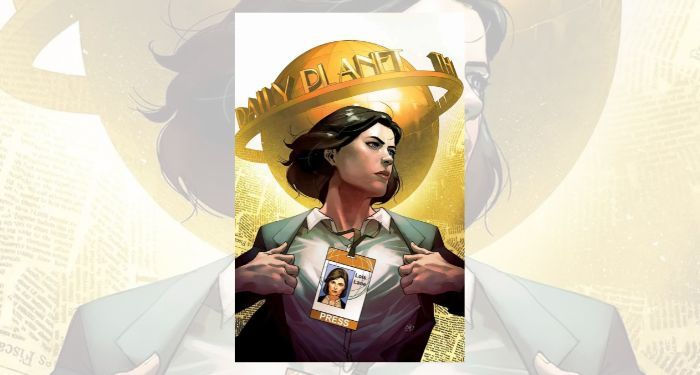
The Relationship That Defined a Universe
At a glance, the relationship between Lois Lane and Superman is often framed as one of the greatest romances in comic book history.
And it is.
But to reduce it to romance alone is to miss what truly makes it powerful.
At its core, the relationship between Lois Lane and Superman is about balance—two individuals who represent different kinds of strength, coming together to create something greater than either could achieve alone.
Superman represents power in its most visible form. He can lift buildings, stop disasters, and protect the world from threats beyond human comprehension.
But Lois represents a different kind of power—the kind that doesn’t rely on strength or flight, but on clarity, conviction, and truth.
Where Superman saves the world physically, Lois helps save it intellectually.
She challenges him. She questions him. She refuses to blindly accept anything, even from the man the world calls a hero.

And that is precisely why Superman needs her. Lois ensures that power remains accountable, that even the strongest being on Earth never loses sight of the values that make him a hero in the first place.
What makes their relationship truly unique, however, is Lois’s ability to see beyond the symbol. While the world looks up to Superman, Lois looks directly at Clark Kent. She recognizes the man behind the power—the vulnerability, the humility, and the humanity that define him more than his abilities ever could.
This dynamic has played out in countless ways across comics, television, and film. In some versions, Lois uncovers Clark’s identity through sheer intelligence, piecing together clues others overlook. In others, Clark chooses to reveal himself, trusting her not just with his secret, but with his truth. In either case, the result is the same:
Their relationship is built on trust.

And that trust transforms their connection from something romantic into something foundational.
In modern interpretations, their partnership evolves even further—into marriage, into parenthood, into a shared life that reflects not just love, but unity.
Together, they raise their son, Jon Kent, instilling in him the same values that define both of them: strength guided by compassion, and truth guided by courage.
Ultimately, Lois Lane is not defined by her connection to Superman.
But Superman is undeniably shaped by his connection to Lois Lane.
Because no matter how high he flies or how far he travels, she is the one who keeps him grounded—not in weakness, but in purpose. And that is what makes their relationship one of the most important in all of storytelling...

Lois Lane on Screen: A Legacy of Performances
Few characters in comic book history have been portrayed across as many generations, mediums, and cultural eras as Lois Lane.
What makes that legacy so remarkable is not simply the number of women who have played her, but the way each actress has preserved Lois’s core identity while reflecting the time in which she appeared. No matter the decade, Lois Lane remains fearless, intelligent, ambitious, and impossible to ignore.
The earliest actresses to bring Lois Lane to life helped establish the foundation of the character long before superhero media became a cultural juggernaut. Noel Neill and Phyllis Coates gave audiences a Lois who was sharp, daring, and determined in the early television era, proving that even in black-and-white broadcasts, she was far more than a bystander in Superman’s world. Their portrayals made it clear that Lois belonged in the story not because Superman needed someone to rescue, but because the narrative needed someone brave enough to chase the truth.


Then came Margot Kidder, whose performance in Superman: The Movie became iconic for generations. Kidder’s Lois was witty, fast-talking, vulnerable, impulsive, romantic, and endlessly alive.
She gave the character electricity. For many fans, she remains the defining cinematic Lois Lane because she captured both the professional drive of the reporter and the emotional spark that made her chemistry with Superman unforgettable.

In the 1990s, Teri Hatcher brought a different energy to the role in Lois & Clark: The New Adventures of Superman. Her version of Lois was confident, charismatic, and emotionally engaging, with a sharper focus on romance and newsroom chemistry. Hatcher’s performance reminded audiences that Lois Lane could be glamorous and warm without losing her edge.

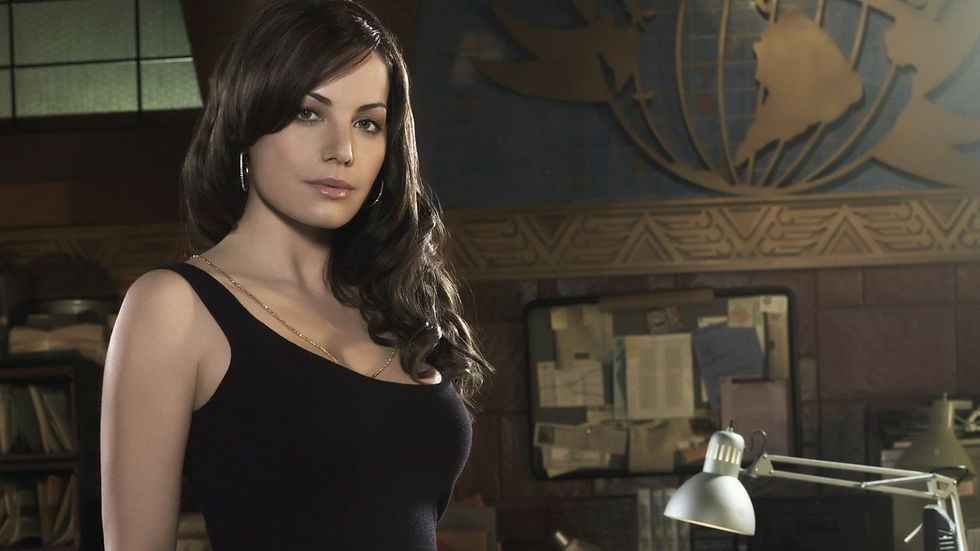
Erica Durance, in Smallville, gave viewers the chance to watch Lois grow into the legend. Her portrayal leaned into sarcasm, independence, fearlessness, and natural chemistry with Clark Kent. Because Smallville explored an earlier chapter in the Superman mythos, Durance’s Lois felt fresh and evolving, while still clearly carrying the same unstoppable spirit that defines the character.
Amy Adams then grounded Lois Lane in modern realism in Man of Steel and its follow-up films. Her Lois was highly competent, deeply investigative, and emotionally mature. Rather than simply orbiting Superman’s story, Adams’ version often drove it forward by uncovering truths others missed and confronting the world with a journalist’s eye for what power tries to hide.

On television, Elizabeth Tulloch has brought even more maturity and dimension to Lois in Superman & Lois, portraying her as not only a fearless journalist but also a wife and mother balancing truth, family, and responsibility. Her performance shows how Lois evolves without losing her essence. She is still driven. Still brave. Still impossible to silence.

And now, the legacy continues with Rachel Brosnahan, who plays Lois Lane in James Gunn’s Superman. DC officially lists Brosnahan in the cast, and DC’s own coverage highlights the chemistry between her Lois and David Corenswet’s Clark Kent/Superman, describing them as a modernized take on one of fiction’s most famous romantic pairings. Her inclusion matters because it places Lois at the beginning of a new cinematic era for DC, once again proving that no reinvention of Superman is complete without the woman who helps define his humanity.

Across film, television, and animation, Lois Lane has remained one of the rare characters who can be reinterpreted endlessly without losing what makes her timeless. She changes with the world, but she never loses her nerve. And that is why every great Superman era ultimately needs a great Lois Lane.
Lois Lane in Animation: A Timeless Voice of Courage
Animation has played a major role in keeping Lois Lane relevant across generations, often preserving the purest version of who she is: fearless, intelligent, ambitious, and impossible to silence.
One of the earlier animated portrayals came from the Ruby-Spears era with Superman, where Lois Lane was voiced by Ginny McSwain. Even in this more straightforward, action-driven series, Lois maintained her defining traits—curiosity, determination, and a refusal to stay on the sidelines—helping reinforce her role as more than just a supporting character.

One of the most beloved portrayals came in Superman: The Animated Series, where Dana Delany voiced Lois with exactly the right blend of sharp wit, confidence, and emotional depth. For many fans, this remains one of the definitive versions of Lois Lane because it captured her as a journalist first—quick-thinking, relentless, and fully capable of standing in the middle of danger without losing her edge.

Lois also appeared throughout the wider DC animated universe, including Justice League and related projects, where she continued to serve as Superman’s emotional grounding force. Even when she wasn’t the focus, her presence mattered because she consistently reminded Clark—and the audience—of the human stakes behind the spectacle.
More recently, Alice Lee has voiced Lois in My Adventures with Superman, bringing a younger, more energetic interpretation to the role. This version leans into Lois’s ambition, curiosity, and hunger to prove herself, while still preserving the core traits that have always defined her.

Across animated films and series, different actresses have brought their own touch to Lois Lane, but the essence never changes. She is always the voice asking harder questions, pushing further, and refusing to back down. Animation has helped ensure that every new generation meets Lois not as a side character, but as what she has always been: a hero of truth.
Lois Lane as Superwoman: When Truth Meets Power
Across the many versions of Lois Lane, there are moments where the question shifts from what she does in a world of heroes to what happens when she becomes one. In several alternate storylines, Lois takes on the mantle of Superwoman, gaining abilities similar to Superman. Whether through temporary transformations or alternate realities, these stories do not change who Lois is—they reveal her more clearly.
Even when granted power, Lois remains grounded in the identity that has always defined her. She continues to operate as a journalist first, guided by instinct, curiosity, and an unwavering commitment to truth. Power does not distract her, nor does it redefine her priorities. Instead, it becomes another tool—one she approaches with the same discipline and accountability she brings to her reporting.
What makes these Superwoman interpretations so compelling is that they confirm something essential about Lois Lane. Her strength has never been dependent on abilities, titles, or proximity to heroes. It has always come from her clarity of purpose and her refusal to compromise who she is. When she gains power, she does not become extraordinary—she proves that she always was.
In the end, whether she is holding a pen or wielding the same abilities as Superman, Lois Lane operates from the same place: purpose, truth, and responsibility. And that consistency is what makes her not just a great character, but a true hero in any form she takes.

Love, Choice, and Identity
To understand Lois Lane, you have to understand this: her story has never been about who she loves.
It has always been about how she chooses.
Across decades of storytelling, Lois Lane has been romantically linked to some of the most powerful and influential men in the DC Universe—but what defines those relationships is not their status. It’s the way Lois navigates them with independence, clarity, and unwavering standards.
At the center of it all is her relationship with Clark Kent, and by extension, Superman. What makes their connection iconic is not just love—it’s recognition. Lois doesn’t fall for Superman because he can fly. She chooses Clark because he is grounded, compassionate, and real. When she learns the truth, that choice becomes even more meaningful: she is not choosing power—she is choosing character.
That distinction defines everything else.
In some continuities, Lois becomes romantically involved—and even married—to Lex Luthor. These stories are less about romance and more about contrast. Luthor represents influence and control, while Lois represents truth and independence. Sometimes the relationship fractures under that tension. Other times, it simply reveals—more clearly—what Lois values and what she cannot accept.
Lois has also shared connections with other heroes, including Oliver Queen (Green Arrow) and Arthur Curry (Aquaman) in Smallville, reflecting a period of exploration rather than definition. In Superman: The Animated Series, her dynamic with Bruce Wayne (Batman) highlights intellectual compatibility, but also underscores a deeper difference—Bruce operates from control, while Lois thrives on truth.
Even in more grounded relationships, including characters like Jeb Friedman, Lois remains consistent. She does not settle. She does not compromise her identity. She does not lose herself.
And that is the pattern across every version of Lois Lane: she does not chase love. She chooses it—intentionally, thoughtfully, and on her own terms. She values honesty over image. Character over power. Truth over comfort. Because no matter who stands beside her… Lois Lane never stops standing as herself.

Lois Lane’s Family: The Foundation Behind the Fearlessness
You have to look at where she comes fro
Across comics, television, and film, Lois’s family shifts in detail, but not in impact. She is consistently shaped by a foundation that demands strength, independence, and resilience.
Her father, Sam Lane, is most often portrayed as a high-ranking military officer—disciplined, demanding, and driven by duty. That influence is evident in Lois’s fearlessness and composure under pressure. Whether their relationship is strained or respectful, his presence helps explain why Lois doesn’t hesitate in the face of danger.

Her mother’s role varies more dramatically—and that variation matters. In some versions, she is absent or deceased, contributing to Lois’s emotional self-reliance and independence. In others—particularly in the comics and Lois & Clark: The New Adventures of Superman—her mother is alive and actively involved, adding warmth and grounding to Lois’s life. Whether through presence or absence, that maternal influence helps shape Lois’s emotional core.

Her sister, Lucy Lane, provides contrast. Where Lois is driven and career-focused, Lucy is often more emotionally expressive. Their relationship—sometimes close, sometimes strained—adds a human layer to Lois’s story, reminding us that even the strongest individuals navigate personal complexity.
But Lois Lane’s legacy expands most powerfully through the family she creates.
In modern continuity, she and Clark Kent raise Jon Kent, shaping a child who carries both Kryptonian power and human values. In Superman Returns, she is the mother of Jason, raising him in secrecy while navigating the truth of his origins.

In Superman & Lois, she balances journalism with raising Jonathan and Jordan, showing that her strength extends far beyond the newsroom.

Alternate realities deepen that legacy. In Injustice, Lois is pregnant, and her loss reshapes Superman’s entire moral path. In Superman: Secret Identity, she raises daughters with extraordinary abilities, reinforcing her role in shaping the next generation. And in a parallel world of Superman & Lois, she is married to John Henry Irons and is the mother of Natalie, proving that across timelines, Lois Lane remains central to family, identity, and legacy.


Across every version, one truth remains:
Lois Lane does not just come from strength— she creates it. She raises her children with the same values she lives by:
Courage.
Clarity.
Truth.
And in doing so, she doesn’t just report on the future— she helps shape it.
The Work Family: The Daily Planet and the People Who Shape the Story
If Lois Lane’s personal family is her foundation, the Daily Planet is where her voice becomes a force. This is more than a workplace. It is her proving ground. Her battlefield. Her second family.
At the center is Perry White, the editor who demands results and respects those who deliver them. Lois does. Their relationship is built on trust—he pushes, she produces, and when it matters, he backs her.
Then there’s Clark Kent, her partner long before he’s known as Superman. In the newsroom, they compete, collaborate, and sharpen each other. Lois doesn’t see Clark as secondary—she sees him as someone who understands that the truth always comes first.
Jimmy Olsen brings heart and perspective. As a photographer, he captures what Lois uncovers, often learning from her instincts while reminding the team why the work matters.
Beyond them, the Planet’s broader staff adds depth. Ron Troupe provides professionalism and balance. Steve Lombard brings energy and contrast, sometimes clashing with Lois but always contributing to the dynamic. And Cat Grant reflects the tension between storytelling and image, highlighting different approaches to media and influence.
Together, they form more than a newsroom. They form a system that challenges Lois, sharpens her, and pushes her forward. Because at the Daily Planet, stories aren’t handed out. They are chased.
They are fought for. They are earned. And at the center of it all— is Lois Lane.

Top 10 Lois Lane Moments
Lois Lane’s legacy is built on moments that defined not just her character, but the entire Superman mythos.
Her debut in Action Comics #1
Discovering Clark Kent’s identity
Leading investigations against Lex Luthor
Her emotional strength in The Death of Superman
Winning the Pulitzer Prize
Choosing Clark Kent over Superman
Becoming a mother to Jon Kent
Standing up to global power structures
Risking her life for a story
Remaining the moral center of Superman’s world
Why Lois Lane Is the Greatest Comic Book Journalist Ever
No other fictional journalist has had the cultural impact of Lois Lane.
She represents:
Courage under pressure
Relentless pursuit of truth
Ethical integrity
Fearless questioning of authority
She is not just reporting stories.
She is shaping history.

Her Voice, Her Power
Lois Lane’s words have always carried weight.
“I’m a reporter. I go where the story is.”
“Truth is the only thing that matters.”
“I don’t need powers to stand up for what’s right.”
And perhaps the most telling words about her come from Clark himself:
“She’s the best reporter I’ve ever known.”
S.O.L.A.D.™ Parallel: Truth as Light
In S.O.L.A.D.™: Soldiers of Light Against Darkness™, the battle between light and darkness is not just fought with power—it is fought with truth.
Lois Lane embodies that principle. She shines light where others hide. She exposes darkness where others ignore it. She fights—not with strength—but with truth.
Final Reflection: The Voice That Cannot Be Silenced
Superman may be the symbol, but Lois Lane is the voice—and that distinction is what makes their story timeless. While Superman inspires the world with strength, Lois changes it with truth. She represents the kind of power that doesn’t come from flight or force, but from conviction—the courage to ask difficult questions, confront uncomfortable realities, and speak when others would rather stay silent.
For decades, Lois Lane has walked into rooms where she was underestimated, challenged, and sometimes even threatened, and still, she chose to stand firm. She didn’t wait for permission. She didn’t soften her voice. She pursued the truth with a relentless clarity that made her impossible to ignore. That is her legacy—not just as a journalist, but as a force.
In a world filled with noise, distraction, and competing narratives, Lois Lane reminds us that truth still matters—and that the people willing to fight for it matter even more. She is not just part of Superman’s story; she is the reason it resonates, the human anchor that gives his power purpose. Because a symbol may inspire the world, but a voice has the power to awaken it—and Lois Lane has been doing exactly that for generations.


Comments