
Tony’s Superhero Saturdays™: Nightcrawler: The Mutant Who Proved Faith Can Survive Rejection


Imagine being judged as evil before you ever have the opportunity to do good. Imagine walking into a room and watching people recoil in fear, not because of something you have done, but because of how you look. Now imagine refusing to return their hatred, choosing instead to remain compassionate, joyful and faithful despite having every reason to become bitter.
That is the remarkable story of Kurt Wagner, better known to generations of X-Men fans as Nightcrawler.
With blue fur, glowing yellow eyes, pointed ears, three-fingered hands, a prehensile tail and an appearance often compared to a demon, Nightcrawler looks like someone straight out of a supernatural horror story. Yet behind that frightening exterior lives one of Marvel Comics' most compassionate, humorous and spiritually grounded heroes.
Kurt has been feared, hunted, misunderstood and rejected because of his appearance. He has encountered people who would sooner call him a monster than learn his name. Nevertheless, he continues to believe in goodness, friendship, forgiveness and the possibility of redemption.
For this week's Tony's Superhero Saturdays™, we're celebrating a hero whose greatest strength may not be teleportation, agility or swordsmanship, but his determination to remain loving in a world that has not always loved him back.

From a Frightened Outcast to an X-Man
Nightcrawler was created by writer Len Wein and artist Dave Cockrum, making his Marvel Comics debut in Giant-Size X-Men #1 in 1975. His introduction was part of the groundbreaking revival that brought together an international team of mutants, including Storm, Colossus and Thunderbird, alongside established characters such as Wolverine and Cyclops.
Kurt Wagner's story begins in Germany, where his unusual appearance causes others to fear him. He grows up connected to the circus, developing extraordinary acrobatic skills that complement his natural mutant abilities. In his earliest X-Men story, terrified villagers hunt him because they believe his appearance makes him something unnatural and dangerous. Professor Charles Xavier eventually offers him a place among the X-Men, introducing Kurt to a family that understands the pain of being rejected for simply existing.
Nightcrawler's abilities make him an extraordinary superhero. He can teleport through space, disappearing and reappearing with his distinctive BAMF! and the smell of brimstone. His agility, reflexes, wall-clinging abilities and remarkable swordsmanship make him dangerous in battle. However, those powers are only part of what makes him memorable. Kurt possesses something that cannot be measured by how quickly he moves or how many opponents he defeats: an enduring belief that his worth is not determined by other people's fear.

Faith Behind the Frightening Face
One of Nightcrawler's defining characteristics is his Christian faith, particularly his Catholic beliefs. Across many stories, Kurt prays, wrestles with moral questions and seeks spiritual understanding while living in a world that often associates his appearance with evil.
That contradiction is what makes his character so compelling.
Nightcrawler looks like the very creature some people believe he should fear, yet his personality repeatedly challenges their assumptions. His faith does not make him immune to uncertainty, sadness or disappointment. He has questioned his purpose, wrestled with suffering and confronted the complicated relationship between religion and those who use religious language to justify prejudice.
But Kurt's spiritual journey reminds us that faith is not measured by outward appearances, nor should another person's fear determine someone's relationship with God.
In 1 Samuel 16:7 (NKJV), Scripture reminds us: "For the LORD does not see as man sees; for man looks at the outward appearance, but the LORD looks at the heart."
Consider how powerfully that Scripture speaks to Nightcrawler's story. People see his unusual appearance and assume they know his character. Yet Kurt's actions reveal kindness, courage, sacrifice and an extraordinary willingness to protect those who might never offer him the same protection.
His story challenges believers and nonbelievers alike to examine the prejudices that prevent them from seeing the humanity in others.

The Family He Found and the Family He Never Knew
Nightcrawler's family history is among the more complicated stories in the X-Men universe. His connection to the shape-shifting Mystique has been central to his mythology for decades, while the 2023 comic X-Men Blue: Origins substantially redefined his parentage, revealing Mystique and Destiny as his biological parents.
These revelations added new dimensions to Kurt's lifelong struggle with identity, abandonment and belonging. His family history may be complicated, but it does not determine the kind of person he chooses to become.
His relationships with the X-Men frequently provide the emotional foundation he lacked elsewhere. Wolverine, whose personality often contrasts sharply with Kurt's warmth and spirituality, becomes one of his closest friends. Their friendship demonstrates that people with profoundly different personalities, experiences and beliefs can still form deep bonds of mutual respect.
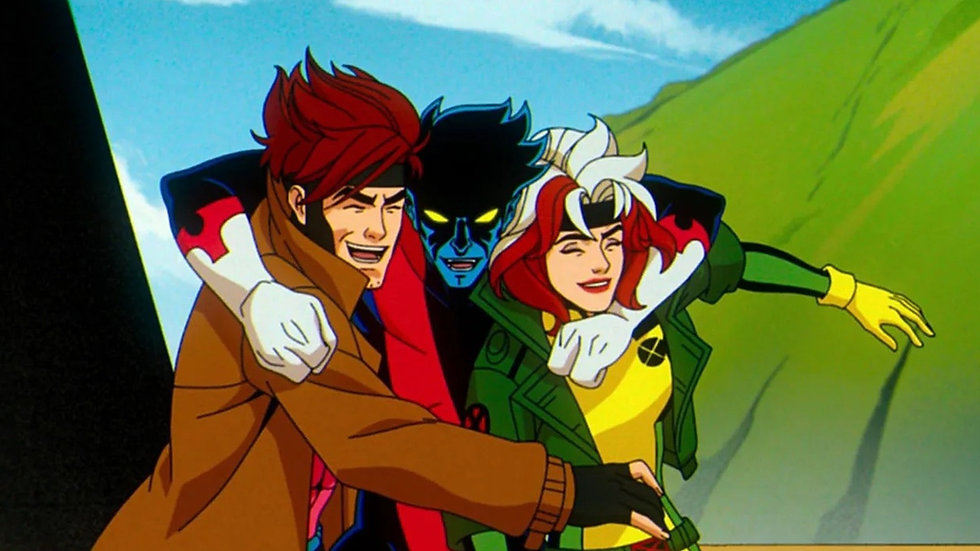
Kurt's connections to Storm, Colossus, Rogue and other members of the X-Men also remind us that family is not always limited to biology. Sometimes family consists of the people who recognize your worth when others refuse to look beyond your differences.
For Nightcrawler, belonging is not simply about finding people who tolerate his appearance. It is about finding people who know his heart.
The Joyful Swashbuckler Who Refuses to Become Bitter
One of the most refreshing aspects of Nightcrawler is that he refuses to allow suffering to consume his personality. Kurt enjoys adventure, friendship, humor and the theatrical excitement of being a superhero. His acrobatic movements and swordsmanship frequently resemble the exploits of classic swashbuckling heroes.
He jokes with teammates, enjoys dramatic entrances and approaches danger with a sense of adventure that can feel almost surprising given his painful history. That joy should never be mistaken for ignorance. Kurt understands cruelty because he has experienced it firsthand. He understands rejection because people have rejected him. Nevertheless, he refuses to allow bitterness to become the center of his identity.
His outlook offers a valuable lesson about resilience. People who have experienced discrimination, abandonment or rejection are not required to surrender their capacity for joy. They can acknowledge painful experiences without allowing those experiences to dictate every future relationship.
Nightcrawler's optimism is especially meaningful because it coexists with courage. He does not simply smile at injustice; he fights against it while trying to preserve the compassion that makes him different from those who would harm him.

Nightcrawler in Movies, Animation and Beyond
Nightcrawler has become an unforgettable presence outside comic books, particularly through his portrayals in live-action films and animation.
Actor Alan Cumming brought Kurt Wagner to life in X2: X-Men United (2003), delivering a memorable portrayal that emphasized his religious convictions, gentleness and frightening appearance. His spectacular opening attack at the White House demonstrated just how dangerous his teleportation abilities could be, while his quieter moments revealed a compassionate man whose appearance concealed a deeply sensitive soul.

Kodi Smit-McPhee later portrayed a younger Nightcrawler in X-Men: Apocalypse (2016) and Dark Phoenix (2019), emphasizing Kurt's youth, uncertainty and growing confidence as an X-Man.

Animation has also been important to his popularity. Nightcrawler appeared in X-Men: The Animated Series, voiced by Adrian Hough, and returned in X-Men '97, again voiced by Hough. His appearances highlight his faith, sense of belonging, acrobatic abilities and commitment to protecting others. Earlier, X-Men: Evolution introduced a younger Kurt, voiced by Brad Swaile, whose humor, friendships and desire for acceptance brought a different dimension to the character.


Across these adaptations, Nightcrawler repeatedly reminds audiences that someone can look frightening without being cruel, while another person can appear completely ordinary and still harbor hatred.
Why Nightcrawler Still Matters
Nightcrawler's story remains relevant because prejudice is not confined to comic books. People continue to face mistreatment because of their appearance, race, disabilities, religious beliefs, backgrounds and circumstances they did not choose.
Kurt's experiences invite us to examine how quickly we judge others and how often we confuse unfamiliarity with danger. His faith also raises meaningful questions about how believers treat people who look, speak, worship or live differently from themselves.
It is easy to speak about love when surrounded by people who agree with us. Nightcrawler's example becomes more challenging when love must be extended to someone who fears us, misunderstands us or has treated us unjustly.
That does not mean abandoning boundaries or tolerating abuse. It means refusing to allow hatred to dictate our character.
Nightcrawler's greatest victories often come when he chooses compassion without surrendering his convictions. His life demonstrates that kindness and strength are not opposites, and that faith can inspire courage without becoming a weapon against others.

Final Reflection: God Sees the Heart
Nightcrawler could have allowed the world's rejection to define him. He could have accepted the labels placed upon him, embraced bitterness and responded to hatred with hatred. Instead, Kurt Wagner continues striving to become the kind of person his faith calls him to be.
His appearance may frighten strangers, but his actions have saved countless lives. His unusual abilities make him an extraordinary X-Man, but his compassion, loyalty and spiritual convictions make him a hero worthy of admiration.
There is something deeply meaningful about a character who looks like a demon yet consistently challenges people to recognize goodness, mercy and humanity. Nightcrawler reminds us that our outward appearance does not determine the condition of our hearts, that rejection does not have to destroy our faith and that being misunderstood does not prevent us from living with purpose.
We may not be able to control every judgment people make about us, but we can decide how we respond, what we believe and how we treat others.

And perhaps that is Nightcrawler's most important lesson: the world may misunderstand what it sees on the outside, but it does not have the final authority to determine who we are on the inside.
Order autographed copies of S.O.L.A.D.™: Soldiers of Light Against Darkness™ at www.tyronetonyreedjr.com/the-shop — because true heroes are not defined by appearances, but by the courage, compassion and faith they demonstrate when darkness challenges the light within them.




Comments