
Tony’s Superhero Saturdays™: Swamp Thing: The Monster Who Became More Human Than the World Around Him


Some heroes are born from stars. Some are chosen by gods. Some are trained in secret temples, bitten by radioactive spiders, gifted with rings, covered in armor, or wrapped in capes and symbols that tell the world they have come to save it.
And then there is Swamp Thing.
He rises from the muck, the moss, the roots, the rot, the water, the green silence of forgotten places and the pain of a man who lost everything. He does not look like the hero people expect. He does not arrive polished, clean, charming, or easy to understand. He looks like something people would run from before they ever asked whether he was there to protect them.
Swamp Thing is one of DC Comics’ most powerful and unusual heroes because his story asks a question that goes deeper than superpowers: What does it really mean to be human? Is humanity found in the body, or is it found in memory, love, compassion, sorrow, sacrifice and the choices we make when the world calls us a monster?
For this edition of Tony’s Superhero Saturdays™, we are spotlighting Swamp Thing — the creature who came from tragedy, became a guardian of nature, and proved that sometimes the thing people fear most may be the very thing standing between them and destruction.

Who Is Swamp Thing?
Swamp Thing is one of DC’s greatest horror-superhero creations. The character was created by writer Len Wein and artist Bernie Wrightson, first appearing in the early 1970s before evolving into one of the most thoughtful, haunting and literary figures in comic-book history.
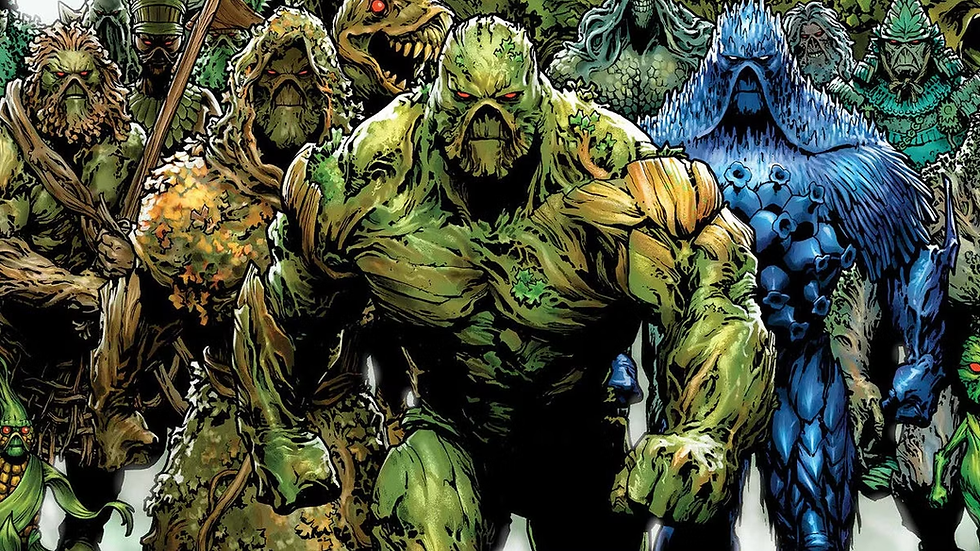
The most famous version of Swamp Thing is connected to Alec Holland, a brilliant scientist whose work is destroyed by sabotage. After an explosion in his laboratory, Holland runs into the swamp, and what emerges from that tragedy is no ordinary man. It is a massive plant-like being with memories, emotions, pain and a deep connection to the natural world.
At first, Swamp Thing appears to be a man transformed into a monster. That idea alone is powerful. A scientist becomes the very thing science cannot explain. A man who studied life becomes something caught between life, death and nature itself. But over time, the mythology deepened into something even stranger and more profound.
Swamp Thing is not simply a man in a monster’s body.
He is a creature connected to the Green, the elemental force that links all plant life on Earth. That connection makes him more than a tragic accident. It makes him a protector of the natural world, a defender of the balance between humanity and creation, and a being whose power stretches far beyond the swamp where he was born.
That is why Swamp Thing has lasted. He is not just another monster. He is a myth.

The Horror of Becoming Something Else
The horror of Swamp Thing is not just that Alec Holland becomes a creature.
The horror is that he wakes up and realizes the world may never see him the same way again.
That kind of transformation cuts deep. Many superhero stories are about gaining powers and learning how to use them. Swamp Thing is different because his transformation feels like loss before it feels like strength. He loses his old body. He loses his old life. He loses the simple ability to walk into a room and be recognized as human.
That makes his story emotionally rich.
Imagine carrying memories of love, work, identity and purpose, but being trapped in a form the world calls monstrous. Imagine having a heart capable of compassion, but a face that makes people scream. Imagine wanting to protect humanity while humanity debates whether you are even a person.
That is the ache inside Swamp Thing.
He forces readers to look beyond appearance. He challenges the lazy way people define humanity by surface, comfort and familiarity. He asks whether a being covered in moss and mud can be more human than the people in suits who exploit, poison and destroy the world around them.
The answer, again and again, is yes.

The Green: Nature Has a Voice
One of the most important concepts in Swamp Thing’s mythology is the Green.
The Green is not just a power source. It is not just plant control. It is not simply the ability to make vines move or trees grow. The Green is a spiritual and elemental network connecting plant life across the planet. Through it, Swamp Thing becomes tied to something ancient, living and larger than himself.
That makes his powers feel different from many superheroes. He is not just strong. He is connected. He can grow through vegetation. He can regenerate. He can travel through plant life. He can feel the living world in ways ordinary humans cannot. The swamp is not merely his home. It is part of him. The trees are not simply scenery. They are witnesses. The roots are not dead things underfoot. They are memory, warning and life.
Swamp Thing reminds us that nature is not just background. It is not just something to clear, sell, pollute or ignore. Nature is alive. Nature responds. Nature remembers. And in Swamp Thing’s world, nature eventually sends a protector when human arrogance becomes too destructive.
That is one of the reasons the character feels more relevant now than ever. We live in a time when people are still arguing over the value of the Earth while storms grow stronger, land changes, water is threatened and communities suffer from the consequences of greed. Swamp Thing makes nature personal. He gives the wounded world a voice.
And that voice does not whisper forever.

Alan Moore and the Story That Changed Everything
Swamp Thing became one of the most important comic-book characters of all time through the legendary work of Alan Moore, along with artists such as Stephen Bissette, John Totleben and Rick Veitch. Their run on The Saga of the Swamp Thing transformed the character from a tragic monster-hero into something deeper, stranger and more philosophical.
The famous story “The Anatomy Lesson” changed the way readers understood Swamp Thing. It did not simply continue his origin. It reexamined it. It asked whether Swamp Thing was really Alec Holland transformed into plant matter, or something far more unsettling: a plant elemental that believed it was Alec Holland because it absorbed his memories.
That revelation is brilliant because it shifts the entire emotional center of the character.
If Swamp Thing is not truly Alec Holland, then who is he? Is he a copy? Is he a ghost made of leaves? Is he a memory wearing roots? Is he less real because his body is different? Or is he real because he feels, chooses, grieves and loves?
That is what elevated Swamp Thing. The story was not only about a monster in a swamp anymore. It became a meditation on identity, consciousness, memory, grief, ecology, spirituality and what makes a soul recognizable.
That is why Alan Moore’s Swamp Thing run is still discussed with reverence. It proved that superhero comics could be horror, literature, philosophy and social commentary without losing their emotional power.

Abby Arcane and the Humanity of Love
Swamp Thing’s relationship with Abby Arcane is one of the emotional centers of his story.
Abby is important because she sees beyond the monster. She does not reduce Swamp Thing to his appearance. She connects with the being inside the vines, mud and moss. Through her, the story becomes more than horror. It becomes a strange, tender and sometimes heartbreaking love story.
That matters because love in Swamp Thing is not easy.
This is not a simple romance between two beautiful people in a bright world. This is love in the shadows. Love in the fog. Love in a place where humanity, monstrosity, nature and spirit all blur together. Abby’s bond with Swamp Thing challenges what love is allowed to look like and who is considered worthy of being loved.
That is powerful.
Many people know what it feels like to be seen only for their damage, their scars, their differences or the parts of themselves that make others uncomfortable. Swamp Thing’s story says that real love sees deeper. It sees the person beneath the fear. It sees the soul beneath the surface.
Abby becomes a witness to Swamp Thing’s humanity, even when the world struggles to recognize it. And sometimes that is what love does best. It testifies that something beautiful still exists where others only see brokenness.

Anton Arcane: Corruption Wearing a Human Face
Every great horror hero needs an enemy who reveals what true monstrosity looks like. For Swamp Thing, one of those enemies is Anton Arcane.
Arcane is often presented as a scientist, sorcerer, manipulator or seeker of unnatural power. He is obsessed with control, immortality, experimentation and bending life to his will. On the surface, he may appear more human than Swamp Thing. But morally, spiritually and emotionally, Arcane is often far more monstrous.
Swamp Thing looks frightening, but he protects life. Arcane looks human, but he violates life. Swamp Thing is connected to the natural order. Arcane tries to corrupt it. Swamp Thing struggles with what he is. Arcane is often proud of what he has become.
That is one of the central truths of the character’s world: monsters are not always the ones with claws, vines or strange bodies. Sometimes the real monster is the person who can destroy lives, poison land, manipulate people and still look ordinary while doing it.
Swamp Thing teaches us not to judge evil by appearance alone. Sometimes the thing in the swamp has a heart. Sometimes the real monster signs paperwork.

Swamp Thing as Environmental Hero
Swamp Thing is one of the most important environmental heroes in comics because his connection to nature is not symbolic only. It is physical, spiritual and personal. He does not protect the Earth because it is fashionable. He protects it because he is part of it.
That gives his environmental message weight. He is not lecturing humanity from a distance. He is the consequence of humanity’s arrogance. His very existence asks what happens when science, greed, pollution and violence collide with the living world.
Swamp Thing makes the environment feel sacred without making the story soft. His world is full of rot, insects, murky water, death and decay. But that is part of the point. Nature is not always clean and pretty. It is powerful, messy, terrifying and alive. The swamp is not beautiful because it is comfortable. It is beautiful because it is part of the balance of life.
Too often, people only value nature when it looks like a postcard. Mountains, beaches, flowers and sunsets are easy to admire. Swamps are different. They are muddy, strange, wet, crawling and misunderstood. But they are also full of life, protection, filtration, habitat and mystery.
Swamp Thing gives dignity to the places people overlook. He reminds us that what looks ugly to one person may be essential to life itself.

The 1982 Movie: Wes Craven Brings Swamp Thing to the Screen
Swamp Thing made his way to the big screen in the 1982 film directed by Wes Craven. That alone makes the movie interesting because Craven is one of horror’s most important filmmakers, known for shaping the genre through works such as The Last House on the Left, The Hills Have Eyes, A Nightmare on Elm Street and later Scream.
The 1982 Swamp Thing movie leaned into the character’s creature-feature roots while still carrying the tragic romance and science-gone-wrong energy of the comics. Ray Wise portrayed Alec Holland, Adrienne Barbeau played Alice Cable, Louis Jourdan portrayed Anton Arcane, and Dick Durock brought Swamp Thing to physical life.
That film may not have the depth of Alan Moore’s later comic run, but it matters because it introduced the character to a wider audience. It gave fans a live-action Swamp Thing, a swampy horror-adventure atmosphere and a sense that this strange DC character could live outside the comic page.
There is something charming about that movie’s practical creature energy. It belongs to an era when superhero films were still trying to figure out what they could be. It was not polished like modern comic-book cinema, but it had atmosphere, sincerity and a willingness to embrace the weirdness.
And Swamp Thing should be weird. That is part of his power.

The Return of Swamp Thing and Cult Appeal
In 1989, The Return of Swamp Thing brought the character back to theaters with a lighter, campier tone. Dick Durock returned as Swamp Thing, and the film leaned more into comic-book adventure and creature-feature fun than deep horror or tragedy.
Some fans prefer their Swamp Thing darker, more gothic and more philosophical. That is understandable. But the sequel still has a place in the character’s history because it reflects another side of the franchise: its cult appeal.
Swamp Thing has always existed in a strange space between superhero, horror, romance, fantasy, environmental fable and monster movie. That means different adaptations have emphasized different parts of him. Some versions focus on horror. Some focus on action. Some focus on tragedy. Some lean into weird adventure.
Swamp Thing can be terrifying, heartbreaking, thoughtful, strange or even campy depending on the story being told. But the strongest versions always return to the same central idea: this creature may look like a monster, but he is fighting to protect life.

Swamp Thing on Television
Swamp Thing also found a home on television.
The live-action Swamp Thing series that aired in the 1990s gave the character a longer-running screen presence. Dick Durock returned again as Swamp Thing, giving him a level of continuity across adaptations that longtime fans still recognize. The series allowed audiences to spend more time in his world, exploring conflicts with Anton Arcane, strange science, supernatural danger and the ongoing loneliness of a creature caught between humanity and something else.
There was also a short-lived animated Swamp Thing series in the early 1990s, connected to the toyline of that era. While it was brief, its existence is fascinating because it shows how much range the character had. Swamp Thing could appear in horror comics, live-action creature films, television drama, animation and action figure aisles.
That may sound unusual, but it makes sense. Children are often drawn to monsters who are not really evil. There is something compelling about a creature who looks scary but protects people. That kind of hero gives young viewers a different message: do not assume the frightening-looking figure is the villain, and do not assume the clean-looking figure is good.
That is a lesson worth learning early.

The 1991 Animated Series: Swamp Thing Goes Saturday Morning
In 1991, Swamp Thing made the unlikely leap from gothic horror comics to Saturday-morning television with a short-lived animated series produced by DIC Animation City. The cartoon aired on Fox Kids and lasted only five episodes, but it remains one of the strangest and most fascinating adaptations in the character’s history. Designed partly to promote Kenner’s 1990 Swamp Thing action-figure line, the series transformed the darker, more mature comic-book mythology into a colorful environmental adventure aimed at younger viewers.
The animated series followed Alec Holland as Swamp Thing, protector of the Louisiana wetlands, as he battled Anton Arcane and a group of mutated villains known as the Un-Men. While the cartoon softened much of the tragedy, horror and philosophical depth associated with the comics, it retained the character’s connection to nature and emphasized messages about pollution, environmental destruction and humanity’s responsibility to protect the planet. Its exaggerated villains, toy-inspired transformations and memorable theme song gave the show a distinctly early-1990s identity.
Although five episodes were far too few for the series to fully develop its world, the cartoon introduced Swamp Thing to children who may never have encountered the comics or the live-action films. Today, it stands as a nostalgic curiosity—a brief period when one of DC’s darkest and most unconventional characters became an environmental superhero on Saturday-morning television.

The 2019 Series: Horror, Mystery and a New Generation
The 2019 Swamp Thing series brought the character back with a darker horror tone, stronger production values and a deep sense of atmosphere. Set in Marais, Louisiana, the series followed Abby Arcane as she investigated a mysterious swamp-borne illness and uncovered terrifying secrets tied to the swamp.
Crystal Reed played Abby Arcane, Andy Bean portrayed Alec Holland, and Derek Mears physically embodied Swamp Thing. The cast also included Virginia Madsen, Will Patton, Kevin Durand, Jeryl Prescott, Jennifer Beals, Maria Sten and Ian Ziering.
The series captured a key truth: Swamp Thing works best when the swamp itself feels alive. The 2019 version understood the importance of mood. The water looked dangerous. The trees looked watchful. The rot felt meaningful. The horror was not only in monsters jumping from the dark, but in the sense that something ancient and powerful was stirring beneath the surface.
Even though the series was short-lived, it earned a passionate following because fans saw the potential. It gave Swamp Thing the horror treatment many had been waiting for. It treated the character seriously, not as a joke or a gimmick. It understood that his world should be frightening, beautiful and tragic all at once.

Toys, Action Figures and the Strange Power of Monster Heroes
Swamp Thing also has a history in toys, video games and collectibles, especially through the 1990s action figure line connected to the animated series. That may seem surprising at first because Swamp Thing is such a strange and moody character. But in another way, it makes perfect sense.

Children love monsters. But not only because monsters are scary. Children love monsters because monsters can represent feelings adults do not always know how to explain. They can represent being different, being misunderstood, being strong, being feared, being lonely or being more powerful than people realize.
As an action figure, he looks like something pulled from the deepest corner of imagination. Vines, bark, moss, muscles, claws and strange eyes make him visually unforgettable. He is a creature kids can immediately understand as powerful, but his story gives that power meaning.

The toys matter because they show how Swamp Thing crossed from horror comics into pop culture. He was not just a character for comic readers. He became something children could hold in their hands, move across the floor, battle against villains and imagine as the protector of a world full of danger.
That is how legends grow.
They move from page to screen to toy shelf to memory.
Swamp Thing and the Justice League Dark Side of DC
Swamp Thing also belongs naturally in DC’s supernatural corner, the same strange neighborhood where characters like John Constantine, Zatanna, Deadman, Etrigan the Demon, Doctor Fate and the Justice League Dark often operate.

That matters because DC is not only about bright capes and city skylines. DC also has haunted houses, cursed objects, demons, ancient magic, cosmic forces, monsters, ghosts and realms that do not obey normal rules.
Swamp Thing is one of the bridges between superhero storytelling and horror storytelling. He can stand beside Superman in one kind of story and confront nightmares from the depths of the Earth in another. He can appear in a Justice League crisis, then return to a quiet swamp where one whisper from the trees means something is wrong.
He is not limited to one kind of threat. He can fight mad scientists, demons, corporate polluters, ancient evils, supernatural plagues and the darker impulses of humanity itself.
Swamp Thing reminds us that heroism does not always happen in the daylight. Sometimes it happens beneath branches, under storm clouds, beside black water, where no one is watching but the trees.
The Upcoming DCU Possibility
Swamp Thing is also part of the developing DC Studios conversation, with a film announced as part of the new DCU’s “Gods and Monsters” chapter. That is exciting because Swamp Thing is one of the rare characters who could bring true gothic horror into a superhero universe without feeling forced.
A great Swamp Thing movie cannot simply be a superhero film with vines. It needs atmosphere. It needs sorrow. It needs body horror, mystery, beauty, grief and awe. It needs to understand that Swamp Thing is not just “the plant guy.” He is a tragic, spiritual, terrifying and compassionate figure whose world should feel both earthy and mythic.
The best version of a modern Swamp Thing film would not be afraid of silence. It would let the swamp breathe. It would let the trees feel ancient. It would let the creature be frightening before he becomes comforting. It would understand that the horror of Swamp Thing is not only what he becomes, but what humanity becomes when it forgets reverence for life.
In a superhero world full of punches, portals and explosions, Swamp Thing offers something different. He offers roots. He offers rot. He offers mystery. He offers the voice of the Earth asking whether humanity still remembers how to listen.

What Swamp Thing Represents
Swamp Thing represents the humanity people miss when they judge too quickly. He represents the wounded Earth. He represents grief that grew into purpose. He represents the overlooked places and people society dismisses because they do not look polished, profitable or easy to understand. He represents the truth that life can come out of rot.
The swamp is full of decay, but decay is not only death. It is also part of renewal. What falls apart can feed what grows next. What sinks into the mud can become part of something living. What seems like an ending can become transformation.
A man’s life appears to end in fire, water and horror. But something rises. Something remembers. Something protects. Something becomes more connected to life than the people who once thought they understood it.
That is why Swamp Thing is a powerful hero. He is not clean, easy or simple. But neither is life.
Why Swamp Thing Still Matters
Swamp Thing still matters because the world still struggles to recognize life in forms it does not understand. People still judge by appearance. Systems still destroy what they think they can use. Corporations still poison land and water for profit. Communities still suffer when powerful people treat nature like a disposable object. And too many people still think being different means being less worthy of dignity.
Swamp Thing speaks to all of that. He reminds us that what is ugly to the arrogant may be sacred to creation. He reminds us that the Earth is not silent just because humans stop listening. He reminds us that the strongest guardians may come from the places people ignore. He also gives us a deeply personal message: you are not finished just because life changed your form.
That is a word for somebody. You may not look like what you used to look like. You may not live the life you thought you would live. You may have been changed by trauma, grief, loss, sickness, disappointment or betrayal.
But changed does not mean useless. Changed does not mean soulless. Changed does not mean powerless. Sometimes the thing that changed you also awakened a deeper connection to purpose.
That is Swamp Thing. He is not what he was. But he is still alive. He is still protecting. He is still becoming.

Final Reflection: The Soul Beneath the Moss
Swamp Thing is one of the greatest examples of why superhero stories matter.
He forces us to look at a creature and ask whether we are seeing clearly. Are we judging by the surface? Are we afraid because he is dangerous, or because he is different? Are we calling him a monster because of what he is, or because his existence exposes what we have become?
That is the brilliance of the character. He turns the mirror back on humanity. The question is not only whether Swamp Thing is human. The question is whether we are.
Do we protect life?
Do we honor creation?
Do we care for the wounded?
Do we see dignity beneath difference?
Do we listen when the Earth groans?
Do we recognize that the places we overlook may be holding life together?

Swamp Thing may rise from the mud, but his story reaches higher than most people expect. He is horror, but he is also hope. He is tragedy, but he is also transformation. He is a monster by appearance, but a guardian by choice.
And that is why he belongs in the superhero conversation. Because sometimes the hero does not descend from the sky. Sometimes the hero rises from the swamp.
Order autographed copies of S.O.L.A.D.™: Soldiers of Light Against Darkness™ at www.tyronetonyreedjr.com/the-shop — because true heroes are not defined by how the world sees them, but by the light, life and purpose they choose to protect.



Comments