
Tony’s Timeless Thursdays™: Indiana Jones: The Man, The Myth, The Hat—Why Harrison Ford’s Greatest Hero Still Shapes Adventure Cinema More Than 40 Years Later


Introduction: Adventure, Destiny, and the Man in the Fedora
Family, every now and then, cinema gives us a character who becomes more than a role, more than a franchise, more than a story. They become a feeling. A spark. A memory lodged deep in the heart.
Indiana Jones is one of those characters.

From the moment we first saw the silhouette — the whip, the jacket, the fedora casting that iconic shadow — we knew we were witnessing something timeless. Something powerful. Something daring.
When Raiders of the Lost Ark exploded onto the screen in June 1981, the world didn’t just get a movie. It got an icon. Harrison Ford didn’t simply play a character — he stepped into myth-making. He breathed life into a man who was always in over his head yet never out of his depth.
Indiana Jones was:
rugged but vulnerable,
brave but flawed,
brilliant but human,
heroic but relatable.
He wasn’t invincible. He wasn’t a superhero. He stumbled, he bled, he panicked, he groaned, he got hurt, he complained — and he still pushed forward.
And that’s what made him unforgettable.
George Lucas imagined him, Steven Spielberg refined him, and Harrison Ford transformed him into a legend—Indiana Jones became the modern myth born from the minds of two dreamers and the heart of one extraordinary actor.

Four decades later, adventure films are still chasing the formula that Spielberg, Lucas, and Ford created. And they’re still coming up short.
Today, for Tony’s Timeless Thursdays™, we’re going deeper than ever — exploring the full cinematic legacy of Indiana Jones, the novels, the comics, the games, the TV show, the mythology, the influence, and the spirit of a man who became the gold standard for adventure storytelling.
So grab your hat. Grab your whip. Adventure is calling.
Chapter I — Raiders of the Lost Ark (1981): When Cinema Found Its Hero Again
When Raiders premiered, audiences were immediately swept away into a world where history, faith, mythology, and pulse-pounding action collided with Steven Spielberg’s signature magic.
The plot was simple yet electrifying — archaeologist and adventurer Dr. Henry “Indiana” Jones battles Nazis to recover the Ark of the Covenant, the biblical chest that once held the Ten Commandments and the presence of God.
But the power of the film wasn’t just in its story…It was in how it felt.
Spielberg crafted something primal. Lucas tapped into pulp serials he adored as a boy. Lawrence Kasdan wrote dialogue that crackled with humor and grit. And Harrison Ford delivered a performance that made the entire thing real.
Indy wasn’t polished. He wasn’t flawless. He barely escaped death by improvisation, desperation, and instinct. He made it up “as he went along,” as he famously said.
And perhaps the most brilliant choice of all?

The Ark — a relic of divine, terrifying, untouchable power.
Indiana Jones does not wield it.He does not control it.He does not use it.
He respects it.
Spielberg once said the ending of Raiders was a lesson:
“There are things man is not meant to possess. Some truths belong only to God.”
It’s one of the few blockbusters where the hero wins not by action — but by reverence.
Raiders instantly changed cinema. It revived the adventure genre.It revitalized practical stunts. It redefined action pacing. It reminded audiences that fun could still be intelligent, spiritual, and mythic.
Harrison Ford’s Indy became the ultimate cinematic hero — not because he was perfect, but because he kept going, no matter how bruised or battered.

Chapter II — Temple of Doom (1984): Darkness, Dreas, and the Testing of a Hero
Three years later, Spielberg and Lucas decided not to replicate Raiders… but to go darker.
Much darker.
Set before Raiders, Temple of Doom unleashes Indy into a terrifying underworld of child slavery, black magic, possession, and the demonic cult of Mola Ram.
The film divided critics but ignited fans. It showed Indiana Jones under spiritual and psychological attack. It took him through actual hell.

But in its darkest moments, something beautiful happened:
Indy chose compassion.
He didn’t fight for glory. He didn’t fight for a relic. He didn’t fight for himself.
He fought for the stolen children.
Temple of Doom revealed the soul of the character — the vulnerability beneath the swagger, the moral code beneath the sarcasm.
It also gave us one of the greatest child characters in cinema: Short Round.
And it gave us spectacle after spectacle:
the Shanghai escape,
the raft freefall,
the bug-infested chamber,
the mine cart chase,
the rope bridge finale,
“INDY! COVER YOUR HEART!”
Temple may be the darkest chapter — but it forged the hero we meet in the next one.
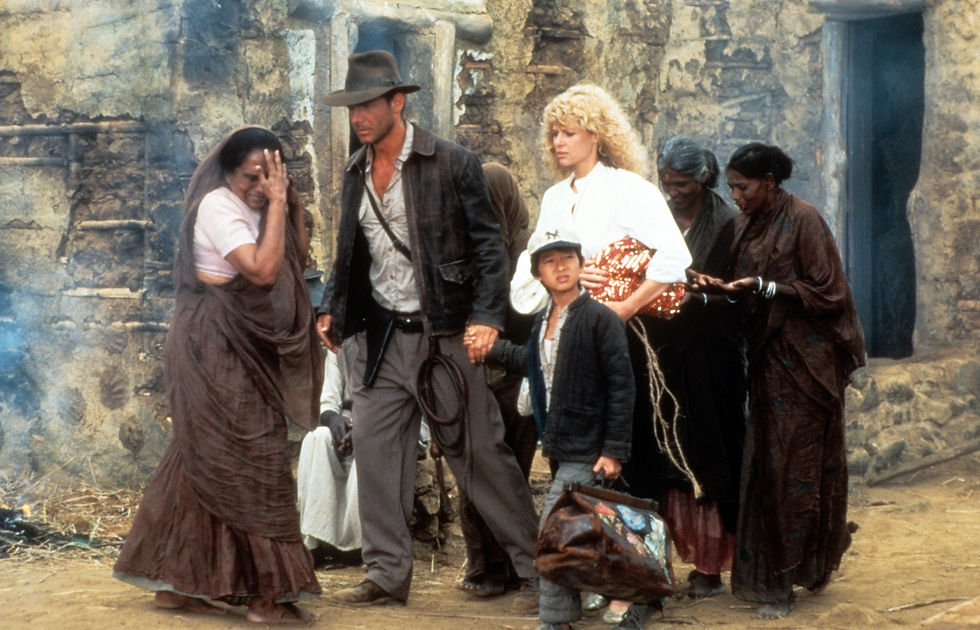
Chapter III — THE LAST CRUSADE (1989): A QUEST FOR HEALING
If Raiders is the soul and Temple is the test, then Last Crusade is the heart.
Indy’s relationship with his father, Professor Henry Jones Sr., played by the legendary Sean Connery, delivered one of the greatest emotional arcs in any adventure film.
The search for the Holy Grail becomes a backdrop for the search for something deeper:
Reconciliation. Forgiveness. Connection. Understanding.

Connery and Ford’s chemistry was unmatched — awkward, witty, heartfelt, explosive, hilarious, and deeply human. This wasn’t just an adventure movie. It was a story about fathers and sons, faith and doubt, purpose and legacy.
And the film’s ending — “Let it go…” — remains one of Spielberg’s most poetic moments.
Last Crusade was the perfect conclusion to a perfect trilogy.
The late River Phoenix also starred as a teenage Indiana Jones.
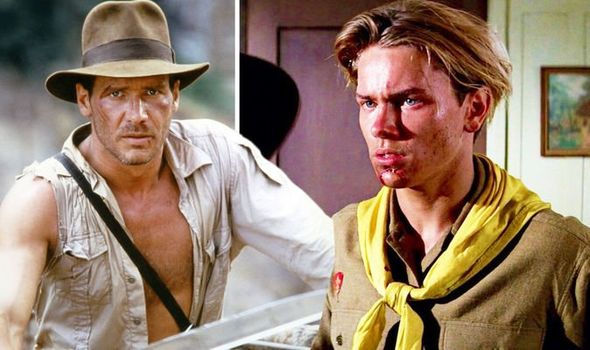
Spielberg even said:
“Last Crusade is about coming home.”

And it was… until Hollywood came calling again.
Chapter IV — Kingdom of the Crystal Skull (2008): A Return to the Old Hero
Nineteen years after Last Crusade, Ford put the fedora back on—and audiences discovered that age had not dulled his charisma, humor, or grit.
Set in the 1950s, Indy faces Soviet villains, reconnects with Marion Ravenwood, and discovers he has a son — Mutt Williams.

The film wasn’t perfect. But it wasn’t without joy.
Ford was still magnetic. Marion’s return was triumphant. The warehouse sequence, the motorcycle chase, the sword fight, and Indy’s classic snark proved the magic hadn’t completely faded.

And at its core was an older Indy grappling with legacy — a theme that would become central in the next film.
Chapter V — Dial of Destiny (2023): The Final Adventure
Dial of Destiny is many things:
a meditation on aging,
a story of regret and grief,
a final heroic stand,
a farewell to a legend.
Indy faces a Nazi scientist attempting to rewrite history through Archimedes’ mysterious dial. Alongside his goddaughter Helena Shaw, Jones embarks on one last journey.

But the emotional weight lies in the quieter revelations:
Indy’s son Mutt died in Vietnam
the grief destroyed his marriage
he lost his purpose
he doesn’t know how to live in a world that has moved on
And then — the ending.
The moment Marion returns. The re-creation of the famous “Where doesn’t it hurt?” scene. The gentle, emotional closing of a mythology that shaped millions.

Dial of Destiny is not perfect. But it is honest. It is the goodbye Indy deserved.
Chapter VI — The Young Indiana Jones Chronicles: The Making of a Hero
In the early 1990s, George Lucas produced a bold television experiment: The Young Indiana Jones Chronicles, starring Corey Carrier, Sean Patrick Flanery, and George Hall.
It wasn’t just a prequel. It was a history lesson. An educational epic. A global adventure designed to teach the real history behind the myth.

The show followed young Indy through:
World War I trenches
Egyptian explorations
revolutions
political intrigue
spiritual growth
encounters with historical icons from Picasso to T.E. Lawrence
Harrison Ford even guest-starred as an older Indiana Jones.

It added depth to the character — showing how he learned languages, honed his skills, developed his moral compass, and shaped his worldview.
The series won 10 Emmy Awards and remains one of Lucasfilm’s most underrated projects.

Chapter VII — The Novels: Expanding the Mythos
Indiana Jones’ literary adventures expanded his lore far beyond the screen.
Rob MacGregor’s novels
The first major author to flesh out Indy’s early adulthood.
Titles like:
Indiana Jones and the Peril at Delphi
The Dance of the Giants
The Seven Veils
These books explored archaeology, mythology, and Indy’s personal growth.

Max McCoy’s novels
Darker, more complex, spiritually richer.
Including:
Indiana Jones and the Philosopher’s Stone
Genesis Deluge
The Secret of the Sphinx
These have some of the deepest spiritual and supernatural explorations in the Indy canon.

James Rollins’ novelization of Kingdom of the Crystal Skull
One of the best film novelizations ever written, adding depth to the story and lore.

Junior novels
Including Young Indy tie-ins that enriched his early life.

This selection represents the major literary pillars that expanded Jones into a full mythology.
Chapter VIII — The Comics: A Whip-Cracking Legacy
Indy’s comic history is rich and beloved.
Marvel Comics
In the 1980s, Marvel released:
Raiders of the Lost Ark adaptation
Indiana Jones and the Temple of Doom adaptation
And the seminal ongoing series: The Further Adventures of Indiana Jones
This series deepened the character and told stories fans still consider essential.

Dark Horse Comics
In the 1990s and 2000s, Dark Horse took the baton and delivered masterpieces.
The most acclaimed:
Indiana Jones and the Fate of Atlantis (an official sequel to the game)
Thunder in the Orient
Arms of Gold
Spear of Destiny
Shrine of the Sea Devil
The Young Indiana Jones Chronicles
These comics are the expanded universe at its best — pulpy, archaeological, mystical, and thrilling.

Chapter IX — The Video Games: Indy in the Digital Age
Indiana Jones has a deep gaming legacy, from arades to hand-held games — and one of the greatest games of all time.
Indiana Jones and the Fate of Atlantis (1992)
Ask fans and they’ll tell you: This point-and-click adventure is the best Indy story never filmed.
It has:
Nazis,
ancient civilizations,
Atlantis lore,
puzzles,
three different story paths,
perfect character writing.
Spielberg himself approved the game’s story.

Indiana Jones and the Emperor’s Tomb (2003)
A cinematic action-adventure that perfectly captured Ford’s vibe — from the punches to the humor.
LEGO Indiana Jones
A playful, beloved celebration of the franchise.

Indiana Jones and the Staff of Kings (2009)
A flawed game with flashes of greatness — and the final LucasArts Indy game before Disney.
AND NOW: Indiana Jones and the Great Circle (2024
From Bethesda and MachineGames.
This upcoming title is a massive next-gen epic featuring:
Harrison Ford’s likeness
globe-trotting adventure
Rome, the Himalayas, the Vatican, and more
archaeological mystery
classic Indy wit
spiritual relics
stunning cinematic visuals
first-person immersion
This may become the next great Indy classic.

Chapter X — The Merchandise: Icons you Can Hold
Indy’s legacy extends into the hands and hearts of fans.
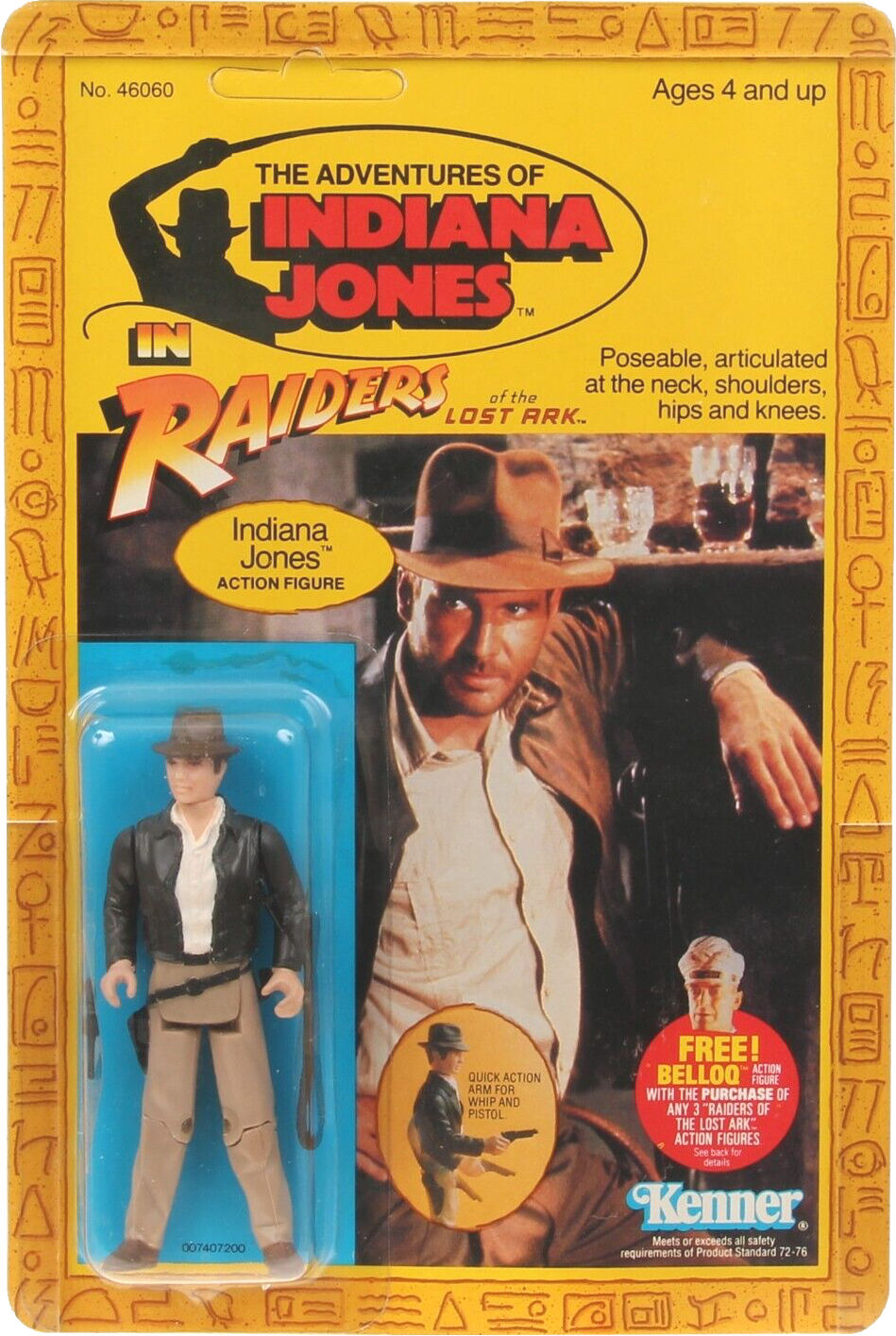
Kenner’s 1982 toy line
The Holy Grail (pun intended) of collectors:
Indy
Marion
Cairo Swordsman
German Mechanic
Belloq
The Streets of Cairo playset
The Well of Souls playset
Hasbro Retro modern series
High-quality figures replicating every film.
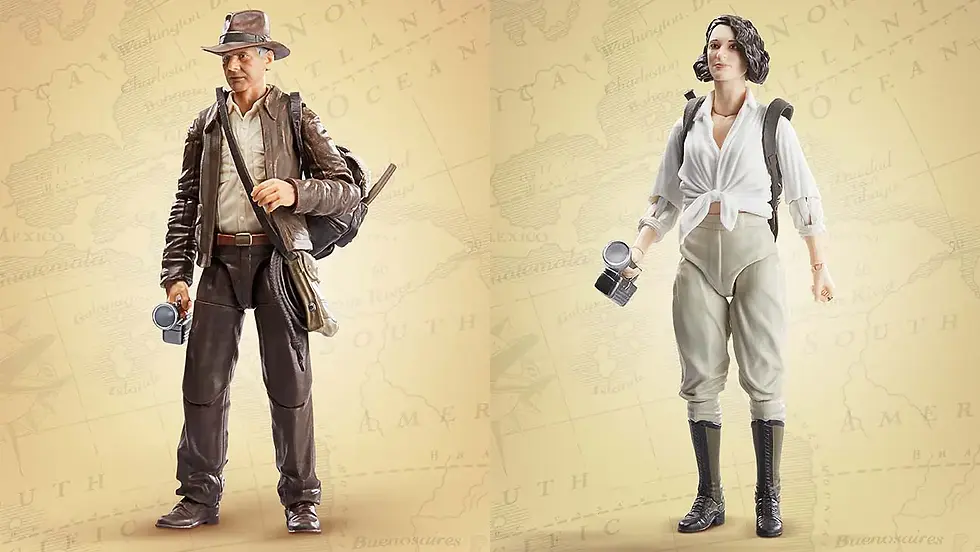
Prop replicas
Fans can buy:
the fedora
the bullwhip
the jacket
the Sankara Stones
the Grail Diary
the fertility idol
the Staff of Ra headpiece
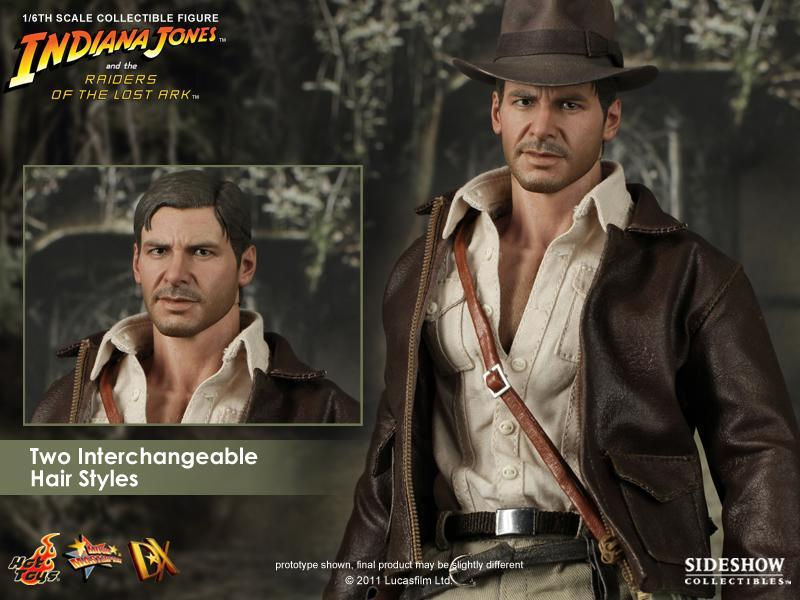
Hot Toys
Indy fandom is interactive — a lived experience.

Chapter XI — The Music: The Sound of Adventure
John Williams didn’t just create a theme. He created a sonic identity.
“The Raiders March” is one of the most recognizable pieces in music history — a heroic, triumphant, unstoppable anthem.
His other themes:
Marion’s Theme
The Ark’s Theme
The Grail Theme
The Dial Theme
…each drips with emotion, spirituality, mystery, and grandeur.
Williams once described the score as:
“Music for the spirit of adventure.”
A perfect summary of Indy himself.
Chapter XII — Cultural Impact: Why Indy Still Reigns Supreme
Indiana Jones is not just a character. He is a blueprint.
Without Indy, there is no:
Lara Croft/Tomb Raiderharted
Nathan Drake/Unc
Rick O’Connell (The Mummy)
Ben Gates (National Treasure)
Flynn Carsen (The Librarian)
Jack Sparrow
Jungle Cruise
The Da Vinci Code

Every modern adventure film borrows from Spielberg and Lucas’s formula:
exotic locales
myths made real
ancient traps
archaeological puzzles
monsters or spirits
chases
charming reluctant heroes
But none of them have surpassed Indy.Because none have Harrison Ford.
Ford gave Indy something none of the clones can replicate:
Humility.
Humanity. Humor. Heart.
He felt authentic. He felt real. He felt attainable.He felt flawed. He felt like us — just braver.
That is why Indiana Jones’ shadow still stretches across the genre. No one has matched him.
Final Chapter — The Legacy of Indiana Jones
Across five films, a TV series, dozens of books, hundreds of comics, and new video games yet to come, Indiana Jones remains one of the greatest fictional characters ever created.
He is:
the explorer of the unknown
the seeker of truth
the man fighting darkness with courage
the academic who became a warrior
the flawed hero who kept going
Indiana Jones is an idea — that the world is still full of mystery, wonder, danger, and destiny.

He shows us that you don’t need powers to be powerful. You don’t need perfection to be heroic. You don’t need certainty to take a leap of faith.
You just need a spark. A purpose. A calling.
You just need heart.
From Indiana Jones to S.O.L.A.D.™
And that’s why I love writing S.O.L.A.D.™: Soldiers of Light Against Darkness™.
Because like Indy:
Kevin and Juanita fight the forces that threaten humanity.
They battle evil with faith, courage, and conviction.
They face mysteries, spiritual forces, and impossible odds.
They walk into danger not because they’re fearless, but because they care.
Indiana Jones searched for relics that shaped history. The Soldiers of Light Against Darkness™ battle forces that want to destroy it.
Indy followed his calling. Angelo™ and Angeline™ follow their destiny.
Both stories remind us that light always wins — even when the world goes dark.
If you want to continue your own adventure, your own journey into mystery, courage, faith, and destiny…
✨ Order your autographed copies today at www.tyronetonyreedjr.com/the-shopand dive into a world where heroes rise, evil trembles, and the light never fades.


Comments