
Tony’s Timeless Thursdays™: Mister Rogers’ Neighborhood: The Gentle Show That Taught Generations They Were Worth Loving


Some television shows entertain us for a season. Some make us laugh for a few years. Some become part of the background noise of childhood and fade away as we grow older.
Then there are shows like Mister Rogers’ Neighborhood, a program so gentle, sincere and emotionally wise that it did more than fill time on television. It helped raise hearts.
For generations of children, Fred Rogers was not just a man on a screen. He was a trusted neighbor. He was the calm voice in a noisy world. He was the grown man who looked into the camera and spoke to children as if they mattered, because he believed they did. He did not talk down to them. He did not rush them. He did not mock their fears, dismiss their feelings or turn childhood into one long commercial break.
He made space.
That was the power of Mister Rogers’ Neighborhood. It gave children permission to feel, wonder, ask, imagine, learn and grow. It taught them that kindness was not weakness, that emotions were not shameful, that neighbors mattered and that being loved did not require being perfect.
That is why this show remains timeless.
Because in a world that keeps getting louder, Fred Rogers still whispers something many people desperately need to hear: "You are special. Just by being you."

The Neighborhood Felt Like a Safe Place
One of the reasons Mister Rogers’ Neighborhood worked so beautifully is because it made safety feel simple. Fred Rogers would enter the house, sing “Won’t You Be My Neighbor?”, change into his cardigan, switch into his sneakers and welcome viewers into a world where nothing had to be rushed. That routine mattered. Children knew what was coming. The repetition gave the show a rhythm that felt steady, comforting and secure.
That may seem small, but to a child, predictable kindness can be powerful. The world can feel big, confusing and frightening when you are young. Adults move fast. Rules change. Emotions feel overwhelming. Questions pile up. But in Mister Rogers’ house, things slowed down. He took his time. He named things. He explained things. He listened, even though the children watching him were on the other side of the screen.
That was part of his genius. Fred Rogers understood that television could either overstimulate children or settle them. He chose to settle them. He did not need loud graphics, frantic pacing or constant jokes. He trusted that children were capable of paying attention if someone treated them with respect.
That respect made the neighborhood feel like home.

Fred Rogers Made Kindness Look Strong
It is easy to mistake gentleness for weakness when the world celebrates volume, sarcasm and domination. But Fred Rogers showed that gentleness can be one of the strongest forces a person carries.
He was not gentle because he was naïve. He was gentle because he understood people. He knew children had fears. He knew adults had wounds. He knew families faced hard seasons. He knew the world could be cruel, confusing and unfair. But instead of adding more harshness to the noise, he chose tenderness.
That choice was radical.
Fred Rogers did not perform kindness as a brand. He lived it as a calling. His voice, his pace, his questions and his presence all communicated the same message: people are worthy of care. Children are worthy of honesty. Feelings are worthy of language. Neighbors are worthy of attention.
That is why his work still matters. In a culture where many people confuse cruelty with confidence, Mister Rogers’ Neighborhood reminds us that strength does not always roar. Sometimes strength sits beside a child, ties a shoe, sings softly and says, “I like you as you are.”
That kind of strength can change a life.
He Taught Children How to Understand Their Feelings
One of the most important things Mister Rogers’ Neighborhood did was help children understand emotions. Fred Rogers knew that children feel deeply, even when they do not have the words to explain what is happening inside them. Anger, jealousy, fear, sadness, confusion, loneliness and insecurity can be frightening when nobody helps you name them.
Fred helped children name them. He talked about being mad. He talked about being scared. He talked about missing people. He talked about feeling different. He talked about making mistakes. He talked about wanting attention. He talked about the hard things children often feel but may not know how to express.
That mattered because he never made emotions feel dirty. He did not tell children they were bad for having angry thoughts or fearful questions. He helped them understand that feelings are part of being human, but feelings do not have to control what we do.
That lesson is still needed today. Children need emotional language. Adults need emotional language too.
A lot of grown people are still trying to heal from feelings nobody helped them name when they were young. That is one reason Mister Rogers still reaches adults so deeply. When we hear him now, we realize he was not only talking to the children we used to be. In many ways, he is still talking to the wounded places we carried into adulthood.

The Neighborhood of Make-Believe Gave Imagination a Purpose
The Neighborhood of Make-Believe was one of the most memorable parts of the show. The trolley would arrive, the music would shift and viewers would enter a world filled with puppets, kings, queens, tigers, owls, cats, neighbors and wonderfully strange personalities.
There was King Friday XIII with his royal pride and formality. Queen Sara Saturday brought warmth and grace. Daniel Striped Tiger carried tenderness, insecurity and emotional honesty. X the Owl loved learning. Henrietta Pussycat had her own sweet language and personality. Lady Elaine Fairchilde was bold, unpredictable and sometimes difficult, but never disposable. There were human neighbors too, including Lady Aberlin, who helped connect fantasy and real emotion.
The brilliance of Make-Believe was that it was never just random puppet play. It gave children a safe way to explore real issues through imagination. The characters could be jealous, afraid, bossy, confused, lonely or excited, and through their stories, children could see their own feelings at a distance. That distance made big emotions easier to understand.
Fantasy was not an escape from reality on Mister Rogers’ Neighborhood. Fantasy was a way to process reality. That is what great storytelling does.

Daniel Tiger Became One of the Show’s Greatest Legacies
Daniel Striped Tiger was one of the most beloved characters in the Neighborhood of Make-Believe because he represented the tender, shy and uncertain parts of childhood. Daniel was not loud like some of the other characters. He often felt vulnerable. He worried. He questioned whether he was good enough. He needed reassurance.
That made him deeply relatable.
Years later, Daniel’s legacy continued through Daniel Tiger’s Neighborhood, the animated spin-off that introduced a new generation of children to the emotional lessons Fred Rogers cared about so deeply. That continuation matters because it shows that the heart of Mister Rogers’ Neighborhood did not die with the original show. The format changed, the animation changed and the audience changed, but the mission remained familiar: help children understand themselves and others with kindness.
That is what a true legacy does. It grows without losing its roots.
Daniel Tiger’s continued popularity proves that children still need what Mister Rogers offered. They still need calm instruction. They still need songs that help them manage feelings. They still need stories that teach empathy, patience and self-control. They still need adults who believe emotional growth is just as important as academic achievement.

Fred Rogers understood that long before it became a popular conversation.
Mr. McFeely Made “Speedy Delivery” Unforgettable
You cannot talk about Mister Rogers’ Neighborhood without mentioning Mr. McFeely. Played by David Newell, Mr. McFeely brought energy, humor and warmth to the neighborhood. His famous “Speedy Delivery!” became one of the show’s most memorable catchphrases, and his visits often helped move episodes into new discoveries. He might bring a film, a package, a lesson or an invitation to explore how something worked.
Mr. McFeely represented the joy of connection. He was the neighbor who showed up. He delivered more than mail. He delivered curiosity, surprise and friendship. That is part of what made the show’s world feel so alive. Mister Rogers did not live in isolation. He had neighbors. He had visitors. He had friends. He had people who brought their gifts, skills, personalities and stories into the space.
The show quietly taught that community is built through ordinary visits, ordinary conversations and ordinary kindness repeated over time. That is a powerful message.

The Real-Life Visits Made the World Feel Bigger
One of the beautiful things about Mister Rogers’ Neighborhood was the way Fred Rogers took children into the real world. He visited factories, musicians, dancers, artists, workers, restaurants, studios, farms and community spaces. He showed children how crayons were made, how people created music, how different jobs worked and how many kinds of gifts people bring into the world.
Those segments were not flashy, but they were fascinating. They taught children to pay attention. They showed that the world is full of people doing meaningful work, often behind the scenes. They made ordinary processes feel wonderful because Fred Rogers approached them with genuine curiosity.

That curiosity was contagious. He could make a simple field trip feel special because he treated the people he met with dignity. Whether he was speaking with an artist, a factory worker, a musician or a child, he gave them his full attention. That modeled something beautiful: every person has something worth learning from. That is a lesson many adults still need.
Officer Clemmons and the Pool Scene Still Matter
One of the most powerful moments in the history of Mister Rogers’ Neighborhood involved Fred Rogers and Officer Clemmons, played by François Clemmons, cooling their feet together in a small pool.
At a time when racial tension and segregation still shaped American life, the image of a white man and a Black police officer sharing water together on children’s television carried deep meaning. Fred Rogers did not deliver a loud speech around it. He simply showed a picture of dignity, friendship and equality. That quietness made it powerful.
Children watching may not have understood every social implication, but they understood kindness. They understood welcome. They understood that Officer Clemmons belonged in the neighborhood. They understood that friendship could be simple, warm and human.
That moment remains one of the clearest examples of how Fred Rogers used gentleness to confront ugliness. He knew that children learn from what they see. So he showed them something better.
That is still one of the reasons his work deserves honor.

The Show Was Not Afraid of Hard Topics
People sometimes remember Mister Rogers’ Neighborhood as soft, but soft does not mean shallow.
Fred Rogers addressed hard topics with remarkable care. He talked about death, divorce, fear, anger, disability, war, assassination, mistakes, change and loss in ways children could understand. He did not pretend the world was always safe. He did not tell children hard things were not real. He helped them face difficult realities without overwhelming them.
That is an incredible balance. Children do not need adults to lie to them. They need adults to tell the truth in ways they can carry. Fred Rogers understood that. He believed children deserved honesty, but honesty needed compassion. He offered reassurance without pretending pain did not exist.
That is why his words still bring comfort after tragedy. His famous reminder to “look for the helpers” continues to circulate whenever the world feels frightening because it gives people a place to put their eyes when fear wants to take over. That wisdom is timeless.

The Music Was Gentle, Honest and Deep
Music was central to Mister Rogers’ Neighborhood. Fred Rogers wrote many of the songs himself, and those songs carried the emotional heart of the show. They were often simple enough for children to understand, but deep enough for adults to feel years later.
Songs like “Won’t You Be My Neighbor?”, “It’s You I Like” and “Sometimes People Are Good” were not just cute melodies. They were little lessons wrapped in music. They helped children remember emotional truths. They gave language to feelings. They made kindness singable.
Johnny Costa’s piano work also gave the show its distinctive musical identity. His jazz-influenced playing brought beauty, warmth and sophistication to a children’s program without ever making it feel too adult. The music respected young ears. It did not assume children needed everything watered down.
That is one of the hidden reasons the show still feels so special. The music did not manipulate emotions. It nurtured them.
The Cardigan and Sneakers Became Symbols
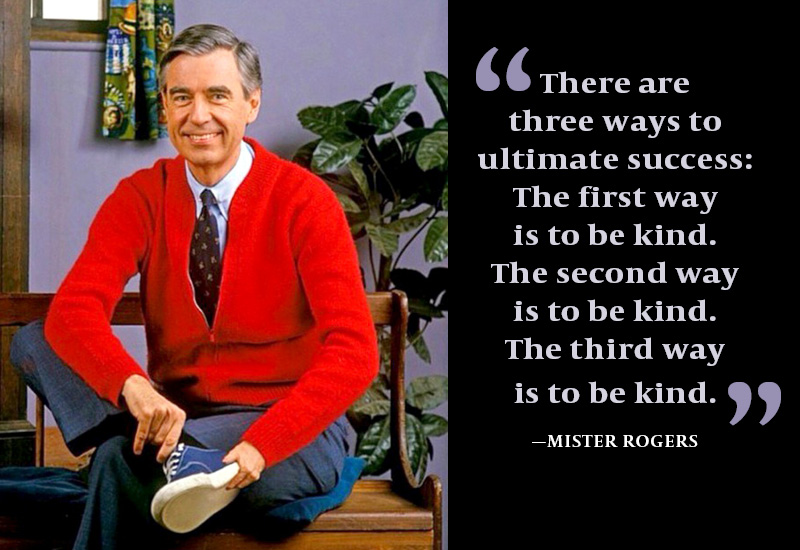
Fred Rogers’ cardigan and sneakers became two of the most recognizable images in television history. On the surface, they were simple wardrobe choices. But over time, they became symbols of welcome.
The cardigan said, “I am staying awhile.” The sneakers said, “I am ready to be comfortable with you.” That opening routine helped children transition into the emotional space of the show. It was calm, familiar and intentional. Fred was not rushing onto the screen to perform at them. He was entering the room to be with them.
That distinction matters. Everything about the routine said, “You are safe here. You are welcome here. I have time for you.” In a busy world, having someone make time for you can feel like love.

The Voice and Puppetry Work Deserves More Credit
Fred Rogers was not only the host of the show. He was also the voice and heart behind several beloved puppet characters, including Daniel Striped Tiger, King Friday XIII, Queen Sara Saturday, X the Owl and Lady Elaine Fairchilde.

That is remarkable because each character carried a different emotional function. Daniel was tender and unsure. King Friday was formal and proud. X the Owl was curious and studious. Lady Elaine was wild, disruptive and bold. Through those characters, Fred Rogers could explore different parts of human personality and emotion without making the show feel like a lecture.
The puppets gave him a way to speak to children from multiple angles. Sometimes children needed Mister Rogers to explain something directly. Other times, they needed Daniel Tiger to feel afraid so they could see fear handled gently. Sometimes they needed Lady Elaine to act out so they could understand misbehavior without feeling condemned.
That was not simple children’s entertainment. That was emotional craftsmanship.
The Documentaries and Films Proved His Legacy Never Left
Decades after the original show ended, Fred Rogers’ impact continued through documentaries, books, interviews and dramatic portrayals. The documentary Won’t You Be My Neighbor? reminded audiences how deeply his work shaped children’s television and emotional development. The film A Beautiful Day in the Neighborhood, starring Tom Hanks as Fred Rogers, introduced another generation to the man behind the cardigan and the power of his presence.

The reason these projects connected with audiences is simple: people are still hungry for what Fred Rogers represented.
They are hungry for kindness that is not fake.
They are hungry for patience that is not performative.
They are hungry for adults who can speak gently without sounding weak.
They are hungry for a world where people are seen, heard and valued.
Fred Rogers gave people a glimpse of that kind of world, and once you have seen it, you do not forget it.
Why the Show Still Matters Today
Mister Rogers’ Neighborhood still matters because children still need emotional safety, and adults still need reminders of what emotional safety looks like.
We live in a world of noise, outrage, comparison and speed. Children are growing up surrounded by screens, pressure and anxiety. Adults are overwhelmed too. Everybody is moving fast, reacting fast, judging fast and forgetting how to slow down long enough to care well.
Fred Rogers’ message feels almost revolutionary now because it asks us to do the opposite. Slow down. Listen. Be kind. Name your feelings. Care for your neighbor.
Remember that every person has worth. That is not childish. That is mature. That is not outdated. That is needed.

The Spiritual Bridge to S.O.L.A.D.™: Soldiers of Light Against Darkness™
At first glance, Mister Rogers’ Neighborhood and S.O.L.A.D.™: Soldiers of Light Against Darkness™ may seem like completely different worlds. One is a gentle children’s program built around kindness, feelings and neighborhood connection. The other is a spiritual action-adventure universe filled with light, darkness, courage, calling and supernatural battles.
But the connection is real.
Fred Rogers understood that darkness does not always arrive with monsters, explosions or visible enemies. Sometimes darkness shows up as fear, loneliness, shame, cruelty, rejection, anger, confusion and the lie that a person is not worthy of love.
That is why his work mattered. He fought darkness with gentleness. He fought fear with truth. He fought loneliness with presence. He fought shame by telling children they were valuable as they were.
In S.O.L.A.D.™: Soldiers of Light Against Darkness™, the battle between light and darkness is often more dramatic and supernatural, but the heart of the fight is still deeply human. Ordinary people must discover who they are, what they believe, who they can trust and whether they have the courage to stand for light when darkness pushes back.
Fred Rogers reminds us that not every Soldier of Light Against Darkness™ carries a sword. Some carry a song. Some carry a kind word. Some carry patience. Some carry compassion. Some carry the courage to look into a child’s eyes and say, “You matter.” That kind of light still matters.

Final Thoughts: Won’t You Be My Neighbor?
At the end of the day, Mister Rogers’ Neighborhood remains one of the most important shows in television history because it understood something many programs still miss: children are people.
Not future people. Not incomplete people. Not little consumers.
People.
Fred Rogers honored that truth. He gave children his attention, his imagination, his music, his faith in their worth and his belief that kindness could shape the world one neighbor at a time.
That is why we still remember the cardigan. That is why we still remember the sneakers. That is why we still remember the trolley. That is why we still remember Daniel Tiger, King Friday, Lady Elaine, Mr. McFeely, Officer Clemmons and the Neighborhood of Make-Believe.
And that is why, decades later, so many adults still tear up when they hear that familiar invitation. Because some part of us remembers what it felt like to be welcomed.
Some part of us remembers what it felt like to be seen. Some part of us still needs to hear that we are loved just as we are.
That is the timeless gift of Mister Rogers’ Neighborhood. It did not just ask us to watch. It asked us to become better neighbors.


Comments