
🕶️ Tony’s Timeless Thursdays™: The Matrix Reloaded — When Freedom Isn’t What It Seems


There are sequels that continue a story, and then there are sequels that challenge everything you thought you understood about it. The Matrix Reloaded does the latter. Where the original film introduced audiences to the concept of illusion versus reality, Reloaded goes further—it dismantles certainty. It forces viewers to confront a deeper, more unsettling possibility: what if awakening is only the beginning of another layer of control?
Released in 2003, this film didn’t simply raise the stakes—it expanded the battlefield. What once felt like a clear war between humans and machines becomes something far more complex. Systems within systems. Control hidden inside perceived freedom. And a truth that becomes harder to define the closer you get to it.
🎬 The Plot — A War Within a System That Already Knows You
Picking up after Neo’s acceptance of his role as “The One,” The Matrix Reloaded thrusts us into a world on the brink of destruction. Zion, the last human city, is preparing for an inevitable attack as machines dig relentlessly toward its core. There is urgency in every decision, weight in every moment, and a looming sense that time is running out.
But while the physical war intensifies, the real conflict unfolds on a much deeper level. Neo, Morpheus, and Trinity continue their mission inside the Matrix, seeking a way to stop the machines before Zion falls. Their journey leads them to key figures within the system—the Keymaker, the Merovingian, and ultimately the Architect—each representing different layers of control embedded within the Matrix itself.
What begins as a mission to save humanity slowly transforms into something far more complicated. The prophecy of “The One,” which once seemed like a beacon of hope, begins to unravel. Neo’s purpose is no longer as clear as it once appeared. Instead of being the solution, he begins to realize he may be part of the system’s design.
And that realization changes everything.

🎭 The Cast — Performances That Carry the Weight of Complexity
As the narrative deepens, so do the performances, and what makes The Matrix Reloaded so compelling is how each actor carries not just a character, but an idea, a philosophy, a piece of the system itself.
Keanu Reeves evolves Neo into a character burdened not just with power, but with responsibility and uncertainty. His portrayal reflects a man who has gained abilities but lost simplicity. Every decision now carries consequences that ripple beyond himself, and that internal weight is visible in every choice he makes.
Laurence Fishburne continues to anchor the story as Morpheus, whose unwavering belief in prophecy is now tested in ways it never was before. His faith, once seen as an unshakable strength, begins to feel like something that must be examined. What happens when belief is challenged by truth? And what does it mean to stand firm when everything around you suggests you may have been wrong?
Carrie-Anne Moss gives Trinity an emotional depth that grounds the film amidst its philosophical weight. She is not simply a warrior within the system—she is a reminder of what makes humanity worth preserving. Her connection to Neo becomes more than romantic; it becomes symbolic of something the system cannot fully control or predict: genuine, selfless love.
Hugo Weaving transforms Agent Smith into something far more dangerous than a controlled enforcer. No longer bound by the system’s rules, Smith becomes a virus within the Matrix itself—multiplying, evolving, and driven by a purpose that reflects chaos rather than order. His presence shifts the dynamic of the story, introducing a threat that even the machines did not anticipate.
But Reloaded expands its world by introducing characters who represent entire philosophies within the system. The Merovingian, portrayed by Lambert Wilson, embodies the concept of causality. He is not concerned with prophecy or destiny—he believes in cause and effect, in control through understanding the chain of events. To him, choice is an illusion, and power lies in predicting outcomes before they occur. His presence adds a layer of complexity to the narrative, challenging the very idea that free will exists at all.
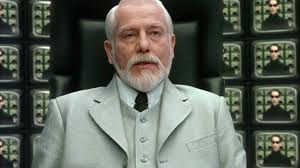
Opposite him stands The Architect, portrayed by Helmut Bakaitis, the ultimate representation of systemic control. Where others operate within the Matrix, the Architect designed it. His calm, calculated explanation of the system strips away every illusion of hope that has been built up to that point. He doesn’t fight Neo—he dismantles him intellectually, revealing that even “The One” is part of a repeating cycle designed to maintain balance. In that moment, the audience is forced to confront a reality just as unsettling as Neo’s: that even rebellion can be engineered.
Together, this expanded cast does more than move the story forward—they deepen it. Each performance adds a new dimension to the central conflict, transforming The Matrix Reloaded into not just a continuation, but a philosophical evolution of everything the first film introduced.
🧿 Symbolism — The Illusion Within the Illusion
If the first film introduced symbolism, Reloaded amplifies it. Every character, every setting, every decision reflects a larger idea about control, choice, and perception.
The Matrix itself is no longer just a prison—it is revealed to be a system designed to maintain balance. Even rebellion has a purpose within it. This shifts the narrative from a simple “good versus evil” dynamic to something far more intricate: a controlled ecosystem where even opposition serves the system’s survival.
Neo’s journey becomes symbolic of awakening beyond the first level of truth. It is one thing to realize the world is an illusion. It is another to realize that even the path to freedom may be manipulated. His struggle represents a deeper level of consciousness—one that forces him to question not just reality, but the structures behind it.
The recurring imagery—mirrors, reflections, duplication, and repetition—reinforces this idea. Nothing exists in isolation. Everything is connected, calculated, and intentional.
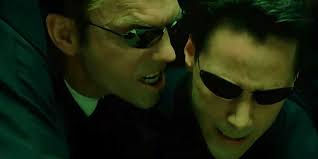
⛓️ Control vs. Choice — The Core Conflict Reimagined
At the heart of The Matrix Reloaded is a redefinition of choice. In the original film, choice appeared to be the key to freedom. Take the red pill. Wake up. Break free.
But Reloaded complicates that idea.
What if your choices were predicted? What if they were expected? What if they were necessary for the system to continue?
The Architect’s revelation reframes everything. Choice is no longer a symbol of freedom—it becomes a mechanism of control. The system allows choice because it stabilizes human behavior. It creates the illusion of autonomy while maintaining order.
This forces both Neo and the audience to confront a difficult question: if your choices are part of a design, are they truly yours?
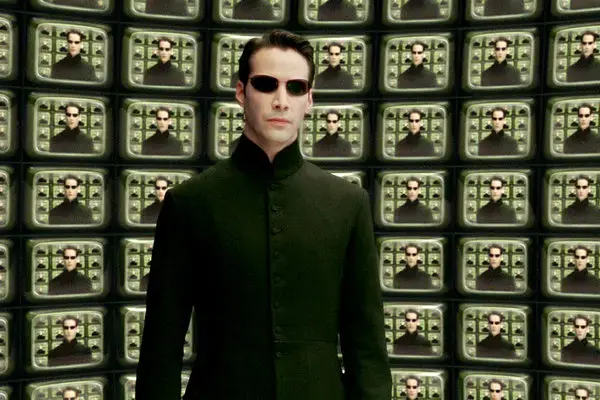
🧠 The Architect — Truth Without Comfort
The introduction of the Architect is one of the most significant moments in the entire trilogy. He does not fight. He does not threaten. He simply explains—and in doing so, dismantles everything.
The Architect reveals that Neo is not unique. He is part of a recurring cycle, a necessary anomaly that allows the system to reset itself. Zion has been destroyed and rebuilt multiple times. The prophecy is not hope—it is control disguised as destiny.
This moment shifts the narrative from external conflict to internal crisis. Neo is no longer just fighting machines; he is wrestling with the meaning of his own existence. His purpose, once clear, is now uncertain.
And that uncertainty is where the real tension lies.
❤️ Love vs. Logic — The Decision That Broke the Cycle
Faced with a calculated system and a predetermined outcome, Neo is given a choice: follow the path laid out for him and ensure the continuation of humanity, or defy it to save Trinity.
This is where Reloaded reveals its emotional core. Neo chooses Trinity. Not because it is logical. Not because it is strategic. But because it is human.
This decision represents something the system cannot fully account for—genuine emotional connection. Love becomes the variable that disrupts the equation, the force that introduces unpredictability into a controlled system.
And in that moment, Neo stops being just “The One.” He becomes something more.
🌍 Zion — Humanity Worth Fighting For
Zion is more than a setting—it is a symbol of what remains when everything artificial is stripped away. It is flawed, imperfect, and vulnerable, but it is real.
The scenes within Zion—its unity, its culture, its humanity—serve as a reminder of what is at stake. The battle against the machines is not just about survival; it is about preserving identity, connection, and the essence of what it means to be human.
When the machines attack, the conflict becomes tangible. The abstract ideas of control and freedom collide with physical reality. And in that collision, we see the resilience of humanity.
🎬 The Action — Spectacle With Substance
Reloaded elevated action filmmaking to another level, but what makes it stand out is that the action always serves the story. The Burly Brawl is not just a showcase of power—it highlights the growing instability of the system. The freeway chase is not just thrilling—it represents the chaos that emerges when control begins to break down.
Every sequence is layered with meaning. Movement becomes metaphor. Conflict becomes commentary. And that is what separates this film from others that followed in its wake.
🔁 Why The Matrix Reloaded Still Matters Today
Years later, The Matrix Reloaded continues to resonate because its questions have only become more relevant. In a world shaped by algorithms, digital identities, and invisible systems of influence, the idea of controlled choice feels less like fiction and more like reality.
The film challenges viewers to look beyond surface-level understanding. To question not just what they see, but how it is presented. To recognize that awareness is not the end of the journey—it is the beginning.
The deeper truth is this: Freedom is not given. It is chosen. And sometimes… it must be chosen again and again.
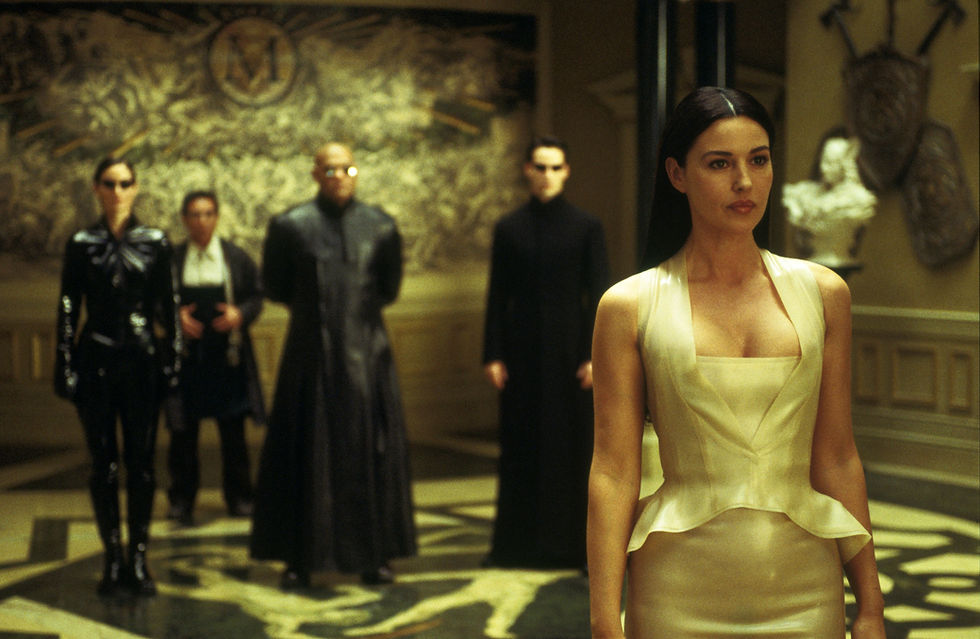
✨ The Spiritual Bridge to S.O.L.A.D.™
In S.O.L.A.D.: Soldiers of Light Against Darkness™, the battle between light and darkness operates on a level that goes beyond what is visible. Just like in Reloaded, the struggle is not always physical—it is spiritual, psychological, and deeply personal.
Kevin and Juanita’s journey mirrors Neo’s in one critical way: the realization that truth is layered, that purpose requires growth, and that not every path is as straightforward as it seems.
The greatest battles are not always fought with strength alone.
They are fought with discernment, faith, and the courage to choose differently.
💥 Final Thought
The Matrix Reloaded didn’t come to give answers. It came to complicate them. It reminds us that understanding the system is only part of the journey. The real challenge lies in navigating it, questioning it, and ultimately choosing who we will be within it.
So the question is no longer whether you are awake. The question is: What will you do with that awareness?


Comments