
Tony’s Timeless Thursdays™: Batman Beyond: The Superhero Cartoon That Predicted the Future


Some superhero stories entertain audiences for a few years and quietly fade into nostalgia. Others become timeless. And then there are the rare stories that somehow grow more powerful, more emotional and more relevant the older the audience becomes. Batman Beyond is one of those stories.
When the series debuted as a two-part pilot Sunday, January 10, 1999, on The WB network, many fans did not know what to expect. Batman: The Animated Series had already become one of the greatest superhero cartoons ever created. To many fans, that version of Batman was Batman. The noir-inspired atmosphere, the mature storytelling, the unforgettable villains and especially Kevin Conroy’s legendary portrayal of Bruce Wayne had set a standard that felt almost impossible to top. Entertainment Weekly has described Batman Beyond as one of the boldest additions to DC animated mythology, following rebellious 17-year-old Terry McGinnis as he takes up the mantle from an older, bitter Bruce Wayne in 2039.
So when audiences heard that Warner Bros. wanted to create a futuristic Batman with a teenage successor wearing a high-tech suit in a cyberpunk Gotham City, some fans immediately rolled their eyes. To older viewers especially, it sounded like one of those desperate “extreme” reinventions studios attempt when they think younger audiences need louder visuals, sleeker costumes and more futuristic gadgets to stay interested. But what nobody realized at first was this: Batman Beyond was not trying to replace Batman. It was trying to explore what Batman leaves behind.
The Premise Was Brilliantly Human
The genius of Batman Beyond is that beneath all the futuristic technology, flying cars and neon skylines is an incredibly emotional idea: What happens when Bruce Wayne gets old? Not temporarily defeated. Not magically de-aged. Not rebooted. Old. Physically weaker. Emotionally isolated. Alone inside a giant mansion haunted by memories, regrets and silence.
The opening episode immediately establishes that time has finally done what no villain could ever accomplish. It forced Batman to stop being Batman. Watching Bruce Wayne pull a gun during a desperate confrontation because his body can no longer keep up is still one of the most shocking moments in Batman history because it represents the exact line Bruce never wanted to cross. When he realizes the symbol no longer means what it once did, he walks away. That moment is devastating because the show understands something many superhero stories avoid: even legends age.
That emotional setup gave the series weight from the very beginning. This was not just a new costume, a new toy line or a new Batman for a new generation. This was a story about time, failure, pain and legacy. It showed viewers that the war on crime took something from Bruce Wayne that he could never fully get back, even after he survived it.

Terry McGinnis Was the Perfect Successor Because He Wasn’t Bruce Wayne
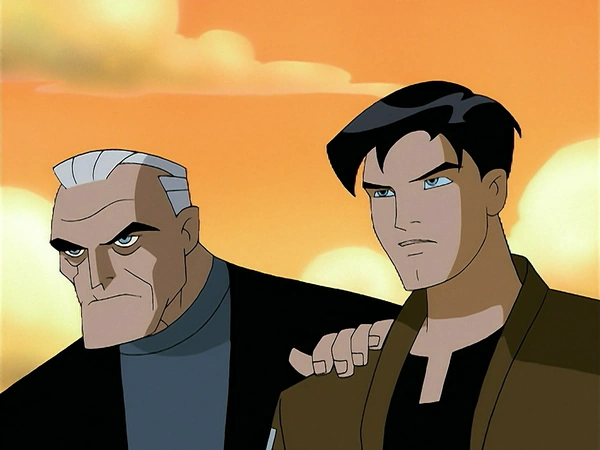
One of the smartest creative decisions the show ever made was refusing to turn Terry McGinnis into a Bruce Wayne clone. Terry was not cold and calculating. He was not emotionally shut down. He was not polished, perfectly trained or endlessly prepared. He was impulsive, sarcastic, emotional, reckless at times and very much a teenager still figuring himself out.
That is exactly why audiences connected with him. Terry felt human. His struggles with family, identity, anger, grief and responsibility made him relatable in ways that contrasted beautifully with Bruce’s hardened worldview. Bruce saw parts of himself in Terry, while Terry constantly challenged Bruce’s cynicism and emotional isolation.
At times, their relationship felt like a father-and-son dynamic wrapped inside a superhero story about legacy and trauma. Bruce was not the easiest mentor. Terry was not the easiest student. But together, they made each other better. Bruce gave Terry discipline, strategy and purpose. Terry gave Bruce something he had lost a long time ago: hope.
Neo-Gotham Was One of the Coolest Animated Cities Ever Created
Visually, Batman Beyond was absolutely stunning. Neo-Gotham felt alive in a way few animated cities ever have. The massive skyscrapers, glowing neon lights, futuristic gangs, flying vehicles and overwhelming technological atmosphere created a version of Gotham City that felt dangerous, exciting and strangely believable.
Looking back now, parts of the show feel almost prophetic. The series explored corporate greed, surveillance technology, artificial intelligence, media obsession, youth culture driven by trends, massive wealth gaps and emotional disconnection in a tech-heavy society. What once looked like exaggerated science fiction increasingly resembles reality.
That is one reason the show has aged so gracefully while many other futuristic cartoons feel trapped in their era. Batman Beyond did not just imagine a future with cool gadgets. It imagined a world where technology moved faster than morality, where corporations gained frightening influence and where young people were constantly surrounded by noise but still deeply lonely.

The Voice Cast Was Absolutely Legendary
Part of what made Batman Beyond feel so emotionally powerful was the quality of the voice acting. This was not a cast treating the material like “just a cartoon.” The actors approached the series with genuine emotional weight, helping elevate the storytelling far beyond typical superhero animation of the era.
Will Friedle as Terry McGinnis/Batman
Many audiences already loved Will Friedle from Boy Meets World, where he played the hilarious and lovable Eric Matthews, so hearing him step into the role of a futuristic Batman initially surprised some fans. But Friedle delivered one of the strongest superhero voice performances of his generation, giving Terry humor, vulnerability, frustration and swagger all at once. His DC résumé also grew beyond Terry, as he later voiced Kyle Rayner/Green Lantern in Justice League and Blue Beetle in Batman: The Brave and the Bold, making him one of those actors with multiple superhero identities across DC animation.

He gave Terry humor, vulnerability, frustration and swagger all at once. Terry sounded like a teenager trying to survive overwhelming pressure rather than a perfect superhero, and that emotional realism made audiences connect with him immediately. Friedle also mastered the balance between Terry’s normal teenage personality and the deeper, more intimidating Batman voice he developed while in costume. Over time, Terry stopped feeling like “the new Batman.” He became his own Batman.
Kevin Conroy as Bruce Wayne
Kevin Conroy was already the definitive voice of Batman for generations before Batman Beyond, but this series gave him some of his richest emotional material. Here, he was not simply playing Batman. He was playing a man haunted by decades of sacrifice, violence, regret and loneliness.
This Bruce Wayne feels exhausted by life itself. There is bitterness in him. There is grief. There is emotional distance. Yet underneath all that pain is still a man who cannot stop trying to save people. Conroy’s performance made older Bruce Wayne feel tragic without ever making him weak. His chemistry with Terry became the emotional foundation of the entire series and remains one of the greatest mentor-student dynamics in superhero storytelling.
Conroy later continued voicing Batman across animated projects, video games and even appeared as a live-action Bruce Wayne in The CW’s Crisis on Infinite Earths, which makes his Batman Beyond performance feel even more meaningful because it shows what happens when the man behind the legend survives long enough to face his own legacy.

Cree Summer as Max Gibson
Max Gibson became one of the series’ most lovable additions because she brought warmth, intelligence and humor into Terry’s increasingly dangerous life. Cree Summer’s energetic performance made Max instantly charismatic while also giving Terry someone he could emotionally trust outside of Bruce Wayne.

Max mattered because she was not just “the friend who knows the secret.” She was smart enough to challenge Terry, brave enough to help him and grounded enough to remind him that he still needed human connection outside the suit.
Summer is also animation royalty, with a superhero voice résumé that includes work connected to Superman: The Animated Series, Young Justice, Batman: The Brave and the Bold, Superman: Doomsday and the Batman: Arkham universe, making her presence in Batman Beyond part of a much larger animation legacy.
Lauren Tom as Dana Tan
Dana Tan represented something Bruce Wayne never truly mastered — the possibility of balancing heroism with a healthy emotional life. Lauren Tom’s performance helped ground Terry’s world and reminded audiences that relationships remain one of Batman’s greatest challenges regardless of the era.
Dana also helped the audience remember that Terry was still young. Beneath the suit, the missions and the danger, he was still trying to keep a relationship alive, go to school, deal with his family and live something close to a normal life.
Tom also voiced Kai-Ro, the future Green Lantern, which gives her a cool double connection to Terry’s world: she helped shape both his personal life and the future Justice League side of the Batman Beyond universe.

Stockard Channing and Angie Harmon as Barbara Gordon
Seeing Barbara Gordon older, wiser and serving as Gotham’s police commissioner added emotional continuity to the larger Batman mythos. Stockard Channing voiced Barbara in the series, while Angie Harmon voiced her in Batman Beyond: Return of the Joker. That casting gave Barbara strength, intelligence and lingering emotional history, especially during conversations involving Bruce Wayne and the wounds left behind by the old Bat-family.
Barbara’s presence mattered because she was one of the few people who could look Bruce in the eye and speak to him as someone who knew the cost of his crusade firsthand. She was not intimidated by the legend. She had lived inside it.

Teri Garr and Ryan O’Donohue as Mary and Matt McGinnis
Teri Garr voiced Terry’s mother, Mary McGinnis, while Ryan O’Donohue voiced his younger brother, Matt. Their roles helped keep Terry connected to something Bruce Wayne had lost: family. Mary and Matt gave Terry a civilian world worth protecting, and they reminded viewers that this new Batman was not operating from a place of total isolation.
That difference between Terry and Bruce became one of the show’s most important emotional contrasts. Bruce had Wayne Manor and the Batcave. Terry had a home, a mother and a little brother who still needed him.

The Villain Voice Cast Was Just as Strong
A Batman show is only as strong as its rogues’ gallery, and Batman Beyond had the difficult task of creating new villains for a new era while still living in the shadow of Joker, Two-Face, Penguin, Catwoman, Mr. Freeze and the rest of Batman’s legendary enemies. Amazingly, the show pulled it off by giving Neo-Gotham villains who reflected futuristic fears while casting actors who made them memorable.
Sherman Howard as Derek Powers/Blight
Sherman Howard voiced Derek Powers, the corrupt businessman who became Blight, one of Terry’s most visually striking and personal enemies. Howard already had DC villain credibility before Batman Beyond, having played Lex Luthor on the syndicated Superboy television series from seasons 2–4. That connection makes his role as Blight even more fun for longtime DC fans because he went from portraying one of Superman’s greatest enemies in live action to voicing one of Terry McGinnis’ most dangerous enemies in animation.
Blight worked because he was not just a glowing radioactive monster. He was corporate greed with a pulse. His villainy was tied directly to the death of Terry’s father, making him both a physical threat and an emotional wound. Blight represented power without accountability, a businessman so consumed by ambition that even his monstrous transformation felt like the natural outcome of who he already was.

Shannon Kenny as Inque
Shannon Kenny voiced Inque, one of the most dangerous and visually creative villains in the entire series. Inque’s liquid body made her almost impossible to fight in a traditional way, and her episodes forced Terry to think differently than Bruce often had to.
Inque was not just strong. She was unpredictable. She could slip through spaces, reshape herself and turn a fight into a nightmare in seconds. Kenny’s performance gave the character a cold, calculating edge that made her feel genuinely dangerous.

Chris Mulkey as Walter Shreeve/Shriek
Chris Mulkey voiced Walter Shreeve, better known as Shriek, a sound engineer whose technology allowed him to weaponize sound itself. Shriek’s episodes often felt unsettling because his powers attacked perception, balance and sanity. He was not simply throwing punches at Batman. He was turning the world around Terry into an unstable weapon.
That made Shriek one of the show’s most effective futuristic villains. In a world drowning in noise, he became noise made deadly.

Jon Cypher as Dr. Ira Billings/Spellbinder
Jon Cypher voiced Spellbinder, one of the most fascinating villains in the series because his power was rooted in illusion, fantasy and psychological manipulation. Spellbinder trapped people inside realities they wanted more than their actual lives, which makes him feel even more relevant now in an age of digital escapism, virtual identities and addictive technology.
Spellbinder was ahead of his time because he understood something frightening: people can become prisoners of what they wish were true.

Henry Rollins as Mad Stan
Henry Rollins brought wild, explosive energy to Mad Stan, the anti-establishment chaos agent who famously wanted to blow up everything he believed was corrupt. Mad Stan could be funny, intense and frightening all at once because his rage felt exaggerated but not entirely unfamiliar.
He was a villain built out of frustration with systems, institutions and modern life. That made him both ridiculous and strangely recognizable.
Rollins also voiced Bonk in Batman Beyond: Return of the Joker, giving him two memorable connections to the world of Batman Beyond.

Michael Ansara as Mr. Freeze
Michael Ansara returned as Mr. Freeze in the unforgettable episode “Meltdown,” bringing tragic dignity back to one of the greatest villains from Batman: The Animated Series. His appearance in Batman Beyond reminded viewers that the future had not erased the emotional pain of Bruce Wayne’s era.
That episode remains one of the best examples of how Batman Beyond honored the past without becoming trapped by it.

Mark Hamill as The Joker
It is impossible to discuss animated Batman history without acknowledging how unbelievably brilliant Hamill’s Joker became over the years. In Return of the Joker, Hamill delivered one of the darkest and most chilling performances of his career. His Joker shifts effortlessly between hilarious and horrifying. One moment he is making jokes. The next moment he is psychologically destroying someone.
That unpredictability made him terrifying. Many fans still consider Hamill’s Joker the definitive version of the character because he fully captured the madness, intelligence, cruelty and twisted theatricality that make Joker such a compelling villain.

Arleen Sorkin as Harley Quinn
Arleen Sorkin’s appearance in Return of the Joker is another beautiful DC legacy connection because she was the original voice of Harley Quinn, a character created for Batman: The Animated Series before becoming one of DC Comics’ biggest icons. Having her return as Harley in Return of the Joker makes the movie feel even more connected to the heart of the animated Batman universe.

Michael Rosenbaum as Ghoul
Michael Rosenbaum voiced Ghoul in Batman Beyond: Return of the Joker, which is a fun DC connection because many superhero fans know him best as Lex Luthor from Smallville. He also became one of the defining voices of Wally West/The Flash in Justice League and Justice League Unlimited, giving him rare DC range as both a beloved hero and a twisted villain. That makes his appearance in Return of the Joker even cooler because Rosenbaum brought Superman, Justice League and Batman Beyond energy into one unforgettable animated universe.

Frank Welker as Ace and Woof
Frank Welker voicing Ace the Bat-Hound is a wonderful animation-history detail because Welker is one of the most prolific voice actors ever. Generations know him as the longtime voice of Fred Jones and later Scooby-Doo himself, which makes his connection to Ace even more fun for animation fans. In Return of the Joker, he voiced both Ace and Woof, meaning one of the greatest voices in cartoon history helped bring both Bruce Wayne’s loyal dog and one of the Jokerz gang’s monstrous members to life.

The Villains Reflected Fears About the Future
The brilliance of the show’s villains is that they were not just cool visually. They reflected anxieties about where society was heading. Blight represented corporate corruption and environmental recklessness. Inque represented identity, instability and the loss of solid form. Shriek represented technology weaponized against the senses. Spellbinder represented escapism and psychological manipulation. Mad Stan represented rage at systems that feel too big and too broken to fix.

That is why the rogues of Batman Beyond worked. They were not simply futuristic knockoffs of classic Batman villains. They were threats born from Neo-Gotham itself.
Return of the Joker Changed Everything
Then came Batman Beyond: Return of the Joker, and suddenly the franchise went from respected to legendary. Many fans already loved the series, but the movie elevated Batman Beyond into one of DC animation’s most emotionally powerful chapters.
The movie finally answered one of the biggest questions hanging over the series from the beginning: What happened to the Joker? The answer was darker, more tragic and more disturbing than many fans expected from animated superhero storytelling. The story reveals that Joker had kidnapped and psychologically tortured Tim Drake, the former Robin, slowly breaking him mentally and emotionally while turning him into a twisted “Joker Junior.” The movie’s plot centers on Terry facing Joker’s mysterious return decades after the villain was believed dead, while Bruce, Barbara Gordon and Tim Drake carry the trauma of the past.
That flashback remains one of the most disturbing moments in DC animation history because it shows Batman failing to protect one of the people he loved most. It also explains so much about the older Bruce Wayne we see in Batman Beyond. His isolation did not happen by accident. It was built by loss, guilt and emotional devastation.
SPOILER WARNING!!! GO WATCH THE MOVIE IF YOU HAVEN'T FIRST!!!
The film also brilliantly contrasts Bruce and Terry’s approaches to being Batman. Bruce fought Joker with fear, intimidation and silence. Terry realizes Joker cannot psychologically handle being mocked, challenged and laughed at. That discovery leads to one of the greatest final confrontations in Batman history because Terry does something Bruce rarely did. He gets under Joker’s skin.
Terry does not beat Joker by becoming Bruce. He beats Joker by being Terry.
That is powerful storytelling.
Terry McGinnis Refused to Stay in One Cartoon
One of the clearest signs of Batman Beyond’s lasting popularity is that Terry McGinnis did not disappear when the animated series ended. Instead, he became a permanent part of DC mythology.
DC continued Terry’s adventures across several comic book projects, including Batman Beyond, Batman Beyond Unlimited, Justice League Beyond and other future-set stories. DC announced Batman Beyond Unlimited as a monthly print series that collected digital-first Batman Beyond and Justice League Beyond chapters, with Terry McGinnis joining a future Justice League in those stories.
The comics expanded Neo-Gotham, deepened Terry’s relationships and gave fans more stories about what it meant for him to carry the Batman mantle. Batman Beyond: Hush Beyond placed Terry and an elderly Bruce Wayne in a case tied to Bruce’s past and Terry’s future, while Batman Beyond Unlimited brought in the Jokerz and the future Justice League.
That comic book expansion matters because very few “next generation” legacy characters survive beyond their original adaptation. Terry did more than survive. He endured. Fans continued asking for him, buying his stories and treating him as a legitimate Batman rather than a temporary experiment.

Terry’s Appearances in Other DC Animated Stories Made Him Feel Bigger
Terry’s importance also grew through other DC animated appearances. The Justice League Unlimited episode “Epilogue” became especially important because it served as a spiritual conclusion to Batman Beyond and revealed deeper truths about Terry’s connection to Bruce Wayne. The episode centers on Terry seeking answers from Amanda Waller and has often been treated by fans as one of the most emotional chapters in the larger DC Animated Universe.
That episode gave Terry’s story even more weight because it connected his future to the broader legacy of Batman, the Justice League and the DC Animated Universe itself. It showed that Terry was not a side experiment. He was part of something much larger.
He also crossed over with other heroes in the DCAU’s future timeline, including appearances connected to Justice League Unlimited and the wider world that grew out of Batman: The Animated Series, Superman: The Animated Series, Static Shock and Justice League. Entertainment Weekly has noted that the DCAU became a landmark animated universe that expanded from Batman into Superman, Static Shock, Justice League and Justice League Unlimited.
That is what makes Terry so fascinating. He began as a risky reinvention and became a character who could stand alongside the larger DC legacy.
Fans Still Want a Live-Action Batman Beyond Movie
For years, fans have begged DC Studios for a live-action Batman Beyond movie, and honestly, the demand makes perfect sense. The concept is practically built for modern cinema: an aging Bruce Wayne, a futuristic Gotham, a younger Batman, cyberpunk visuals, emotional mentorship, legacy storytelling, psychological villains and questions about technology and humanity.
The story already feels cinematic. In a modern era where audiences have embraced multiverse storytelling, legacy heroes and older protagonists passing the torch, Batman Beyond honestly feels more possible now than ever before.
The wild thing is that Hollywood keeps searching for the next fresh superhero angle when one of the best ideas is already sitting right there in the Batcave. Give fans Neo-Gotham, Terry McGinnis, an older Bruce Wayne and a strong emotional story about legacy, and the excitement would be immediate.

Why Batman Beyond Still Matters
The reason Batman Beyond endures is because it understood something deeply important: the future can be frightening, but hope still matters. The world of Neo-Gotham is chaotic, corporate, technologically overwhelming and emotionally disconnected, yet the series still believes one person choosing to stand against darkness can make a difference.
That optimism is powerful, especially now. Batman Beyond never pretended the world was getting easier. It simply believed that new heroes could still rise when old ones could no longer fight the same way. That message is what keeps the series timeless.

The Spiritual Bridge to S.O.L.A.D.™: Soldiers of Light Against Darkness™
One reason Batman Beyond resonates with me so deeply is because beneath the futuristic action is a larger story about mentorship, responsibility, legacy and continuing to fight darkness even when the world evolves around you.
Bruce Wayne understands something painful but true: evil changes forms over time, and heroes must continue rising to meet it. That same struggle between light and darkness, legacy and corruption, fear and purpose can also be found throughout my S.O.L.A.D.™ universe.
If you enjoy stories with layered heroes, emotional stakes, supernatural warfare and larger-than-life battles between good and evil, I truly believe you’ll enjoy S.O.L.A.D.™: Soldiers of Light Against Darkness™.
Signed copies are available here: The S.O.L.A.D.™ Shop www.tyronetonyreedjr.com/the-shop
That may be why Batman Beyond still feels so timeless after all these years. Beneath the futuristic suit, neon skyline and cyberpunk action was a deeply human story about aging, mentorship, regret and hope. It reminded audiences that while the world may change, the fight against darkness never truly ends.


Comments