
Tony's Timeless Thursdays™: Black Sitcom Mothers Who Shaped Generations


There are television characters…
And then there are television mothers.
The kind who didn’t just raise fictional children — they helped raise us.
Before social media. Before streaming binges. Before algorithm parenting advice.
There were Thursday nights. There were living room couches. There were family lessons delivered between laugh tracks.
And at the center of so many of those lessons stood Black mothers — strong, elegant, humorous, disciplined, loving, flawed, and fiercely protective.
Tonight, we honor four of the most iconic:
Florida Evans
Clair Huxtable
Harriette Winslow
Vivian Banks
These weren’t just sitcom mothers.
They were pillars.
Florida Evans (Good Times) – Strength in the Storm
If you grew up watching Good Times, you didn’t just see poverty — you saw dignity inside of it.
Florida Evans, portrayed by Esther Rolle, was grace under pressure.
She was faith when the rent was due. She was order in a chaotic Chicago housing project. She was the anchor when James Evans was wrestling with pride and unemployment.
One of the most gut-wrenching episodes in sitcom history remains James’s death. When Florida cries:
“Damn! Damn! DAMN!”
It wasn’t just grief. It was exhaustion. It was frustration. It was the cry of a Black woman who had held her family together through storms and now had to stand alone.
Florida disciplined her children firmly but never without love. She corrected J.J.’s foolishness. She challenged Michael’s radicalism. She protected Thelma’s dreams.
In an era where many television portrayals flattened Black families into caricature, Florida Evans stood as proof that strength does not require wealth.
Her power came from conviction.
She prayed. She worked. She endured.
And for many Black households in the 1970s, she felt painfully familiar.

Clair Huxtable (The Cosby Show) – Excellence with Elegance
Then came Clair Huxtable.
And the entire television landscape shifted.
An accomplished attorney. A wife. A mother of five. A woman who could deliver a legal argument with surgical precision and then turn around and eviscerate her husband with wit.
Clair wasn’t struggling to survive — she was thriving.
One of her most iconic scenes is the conversation with Theo when he says he doesn’t need good grades because he’ll just be “regular people.”
Clair’s response?
Measured. Calm. Unapologetic.
She makes him calculate the cost of “just getting by.” She forces him to see that comfort without effort is an illusion.
She demanded excellence — not because of ego, but because she understood the world her children would face.
One of Clair Huxtable’s most powerful moments comes when Vanessa lies about going to see the band “The Wretched” and secretly travels to Baltimore instead. When Vanessa returns home, Clair doesn’t yell — she lowers her voice and delivers calm, controlled disappointment. She makes it clear the real issue isn’t the concert, but the broken trust. In true Clair fashion, the lesson wasn’t loud — it was precise: integrity matters, and once trust is damaged, it takes time to rebuild.
Clair Huxtable redefined what America saw when it looked at a Black mother:
Professional
Educated
Fashionable
Emotionally intelligent
Fully respected by her husband
She was not a stereotype. She was not comic relief.
She was balance.
And for an entire generation, she became the blueprint of what dignified Black motherhood looked like in prime time.

Harriette Winslow (Family Matters) – Steady Love in the Suburbs
Harriette Winslow didn’t get the flashiest monologues.
But she may have been the most quietly consistent.
While Carl Winslow delivered the booming reactions and comedic timing, Harriette delivered grounding. Stability. Perspective.
She worked. She mothered. She reasoned. She mediated. She stood up for herself.
And she did so in a household that gradually became less about everyday Chicago life and more about Steve Urkel’s inventions and chaos.
What many fans remember — and what makes her legacy even more unique — is that Harriette Winslow was portrayed by two actresses over the course of the series.
The original Harriette, played by Jo Marie Payton, defined the role for nearly the entire run. Her voice, her composure, her emotional warmth shaped how audiences understood the Winslow household.
In the final season, the role was recast and portrayed by Judyann Elder.
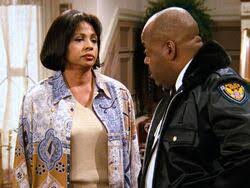
For many viewers, it was jarring. Not because the new portrayal lacked strength — but because Jo Marie Payton had become so deeply associated with the character. Her Harriette felt like family. When she stepped away, audiences felt it.
Yet through all those changes — recasts, tonal shifts, disappearing siblings — Harriette remained the emotional thermostat of that household.
She corrected without humiliating. She supported without smothering. She partnered Carl instead of competing with him.
Her motherhood felt accessible. Real. Present.
Sometimes the most powerful mothers aren’t the ones with dramatic speeches.
They are the ones who keep the house standing when everything else shifts.
Vivian Banks (The Fresh Prince of Bel-Air) – Grace, Identity, and Evolution
Vivian Banks was layered.
An educator. An artist. A woman of power, intellect, and grace.
And like Harriette Winslow, Vivian Banks was also portrayed by two different actresses over the course of the show’s run.
The original Vivian — portrayed by Janet Hubert — brought a fiery, commanding presence. She was strong-willed, sharp, politically aware, and unapologetically bold.
Her dance episode remains iconic — a reminder that she wasn’t just “Aunt Viv.” She was once a vibrant performer with dreams beyond domestic life.
Later seasons introduced a new Vivian portrayed by Daphne Maxwell Reid. This version leaned softer, calmer, more maternal in tone.

The shift was noticeable.
Fans debated it. Commentators analyzed it. But regardless of portrayal, Vivian’s core remained:
She defended her family fiercely. She valued education deeply. She did not tolerate disrespect.
One of the most powerful moments remains when she and Uncle Phil confront Will about responsibility and maturity. Or when she stands firm against racism, refusing to allow wealth to insulate them from cultural awareness.
Vivian Banks showed that Black motherhood could exist in affluence without abandoning cultural grounding.
She showed evolution — not just as a character, but as representation.
And whether you preferred Original Aunt Viv or Later Aunt Viv, her role in shaping Will — and the Banks children — cannot be denied.
Why These Mothers Matter
They shaped how we saw:
Discipline
Marriage
Work ethic
Faith
Excellence
Identity
They weren’t perfect.
They were human.
And that’s why they lasted.
Each one represented a different economic and cultural context:
Florida: survival
Clair: ascension
Harriette: stability
Vivian: identity in success
Together, they formed a mosaic of Black womanhood rarely seen before on mainstream television.
The Emotional Legacy
For many viewers:
Florida sounded like grandma.
Clair sounded like mom.
Harriette sounded like your aunt.
Vivian sounded like the teacher who believed in you.
These characters entered homes weekly. They didn’t just entertain; they instructed.
They modeled how to:
Apologize
Hold boundaries
Demand respect
Show tenderness
Navigate grief
Protect children spiritually and emotionally
And whether we realized it or not, they were building something in us.
A Spiritual Parallel: Mothers as Guardians of Light
Now allow me to transition.
When I write Soldiers of Light Against Darkness™, I often explore the tension between:
Corruption and conviction
Temptation and discipline
Pride and humility
Chaos and order
But what fuels the heroes?
What anchors them before the battles?
It is upbringing.
It is moral formation.
It is someone — often a mother — who planted truth early.
Think about it:
Before warriors pick up swords, they learn right from wrong at kitchen tables.
Before heroes confront darkness, someone teaches them what light looks like.
Florida Evans’ faith.
Clair Huxtable’s excellence.
Harriette Winslow’s steadiness.
Vivian Banks’ intellectual courage.
Those are not just sitcom traits.
Those are origin-story ingredients.
In Soldiers of Light Against Darkness™, the battles are cosmic.
But the foundation is personal.
The fight between good and evil doesn’t begin in the sky.
It begins in the home.
The Timeless Truth
Generations change. Technology changes. Culture shifts.
But motherhood — particularly the strength of Black motherhood — remains one of the most consistent forces in shaping resilience.
These sitcom mothers were fictional.
But their impact was real.
They shaped expectations. They elevated standards. They redefined what dignity looked like on screen.
Closing Reflection
As we remember Florida, Clair, Harriette, and Vivian, we are not simply revisiting television history.
We are acknowledging the architects of character.
The women who modeled:
Strength without cruelty.
Authority without arrogance.
Love without weakness.
And if we are to raise the next generation of warriors — whether in fiction or in life — we must remember what they taught us.
Light is learned.
Character is cultivated.
And every hero, somewhere in their past, heard a mother’s voice guiding them toward the right path.
That legacy lives on.
Not just in reruns.
But in every story about good standing against darkness.
Including mine.


Comments